
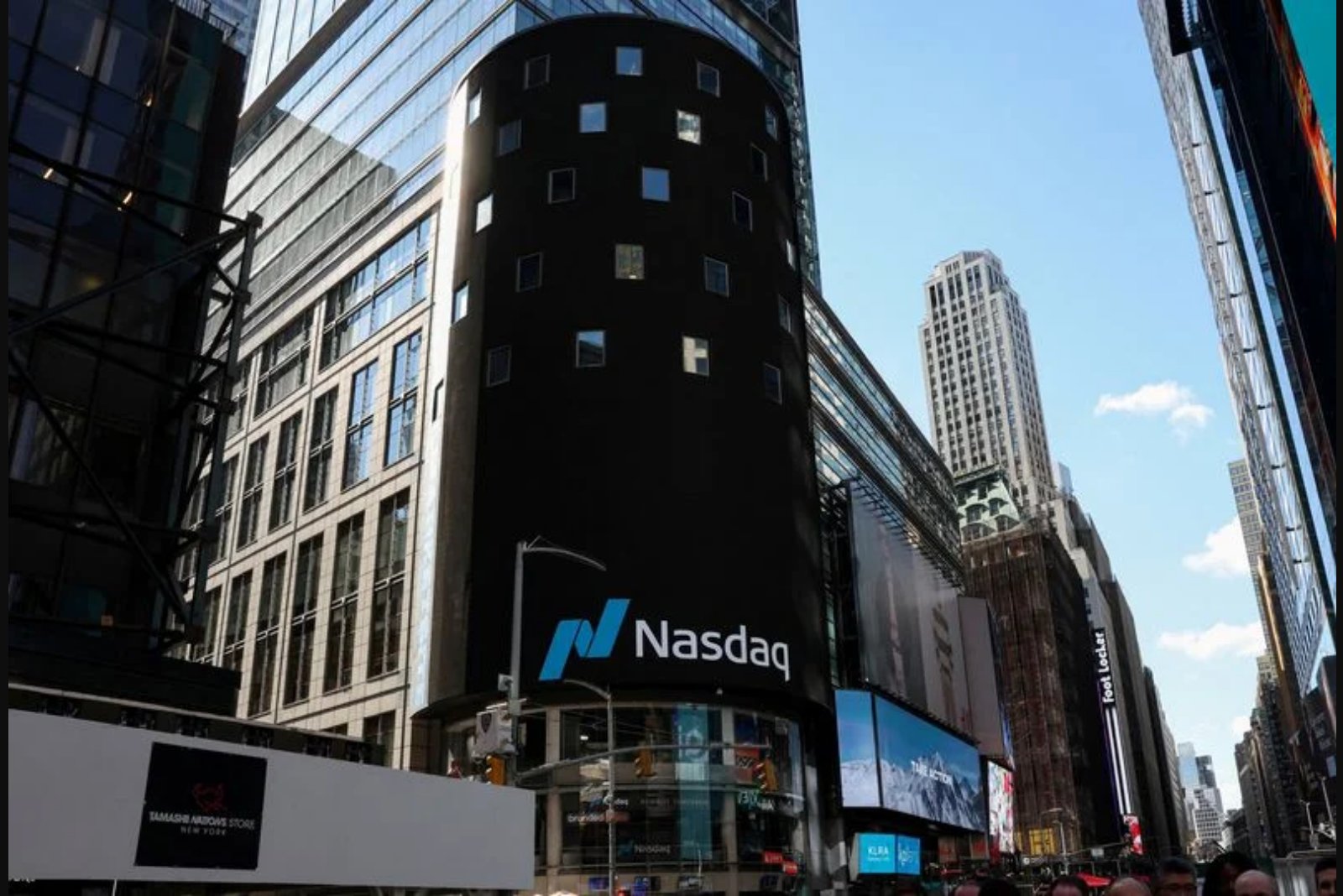
Contracts tied to the tech-heavy Nasdaq moved lower by roughly 2% on Tuesday, pacing losses among Wall Street futures as traders digested growing expectations of further Federal Reserve tightening and rising worries that debt-financed corporate spending on artificial intelligence could be more expensive in a higher-rate environment.
Global equity markets were pressured after a selloff on Wall Street in the prior session, with shares in Europe and Asia also slipping. Commodity markets were not spared: crude oil and precious metals retreated alongside equities.
At 03:33 a.m. ET, futures were down across the board: Dow E-minis were off about 372 points, or 0.71%; S&P 500 E-minis had lost 101.25 points, or 1.34%; and Nasdaq 100 E-minis were down 693.25 points, or 2.25%.
Market participants have shifted toward pricing in more aggressive Fed action. The CME Group’s FedWatch Tool shows traders now expect a cumulative 50 basis points of rate hikes by December, up from a view of a single 25 basis point move two weeks earlier, reflecting a greater tilt toward hawkish policy under the central bank’s new leadership.
The short-term U.S. Treasury yield also reacted. The two-year note’s yield eased about 4 basis points to 4.19%, after reaching a four-month high on Monday.
Technology stocks tied to artificial intelligence came under renewed scrutiny as investors questioned whether current valuations are sustainable amid higher borrowing costs. The report noted that elevated AI stock valuations - which ran up earlier this quarter following ceasefire developments in the Middle East - could be vulnerable while financing becomes pricier.
In the chip sector, momentum persisted on the prior trading day. The Philadelphia SE Semiconductor Index reached a record high on Monday, and Micron’s forthcoming results, due on Wednesday, were flagged as a potential barometer for memory and AI chip demand.
Activity among large-cap technology names was mixed but broadly negative. The write-up highlighted that a recent high-profile entrant into the bond market, Elon Musk’s SpaceX - which had mounted a large IPO earlier this month despite reporting net losses the prior year - saw its stock fall 16% on Monday. Major tech names also saw steep declines, with shares of Alphabet, Meta, Microsoft and Amazon.com all dropping sharply.
Geopolitical developments remained part of market-watchers’ focus. The United States granted a 60-day waiver of sanctions on Iran following an initial round of talks under a nascent peace deal, an action accompanied in the report by a quote from President Donald Trump that he will "do what I have to do" if Iran fails to uphold its commitments.
Looking to the immediate economic calendar, market attention will turn to a set of private-sector business activity surveys for June, followed by the closely watched Personal Consumption Expenditures price index on Friday. Economists cited in the article expect the PCE price index to rise to 4.1%, which would be more than double the Fed’s long-run target.
Clear summary
Nasdaq-linked futures fell about 2% as investors repriced the odds of additional Fed rate hikes and weighed the possibility that higher borrowing costs will make corporate AI spending more expensive. Broader U.S. futures and commodity prices also declined, chip stocks showed strength the prior day, and major tech and megacap names experienced sharp losses.
Key points
- Nasdaq 100 E-minis were down 2.25%, leading futures declines while S&P and Dow contracts also fell.
- Traders now expect 50 basis points of Fed hikes by December, up from one 25 basis point hike priced two weeks ago.
- Chip stocks rallied earlier, with the Philadelphia SE Semiconductor Index at a record high; Micron results on Wednesday may shed light on memory and AI chip demand.
Risks and uncertainties
- Monetary policy risk - stronger expectations for Fed tightening could increase financing costs and pressure valuation-sensitive sectors such as AI-related tech and other growth stocks.
- Corporate financing risk - companies that rely on debt to fund AI investments may face higher costs, potentially curbing capital spending in technology and related sectors.
- Geopolitical risk - developments in the Middle East and the U.S. decision to waive sanctions on Iran for 60 days add near-term uncertainty for markets and commodities.