
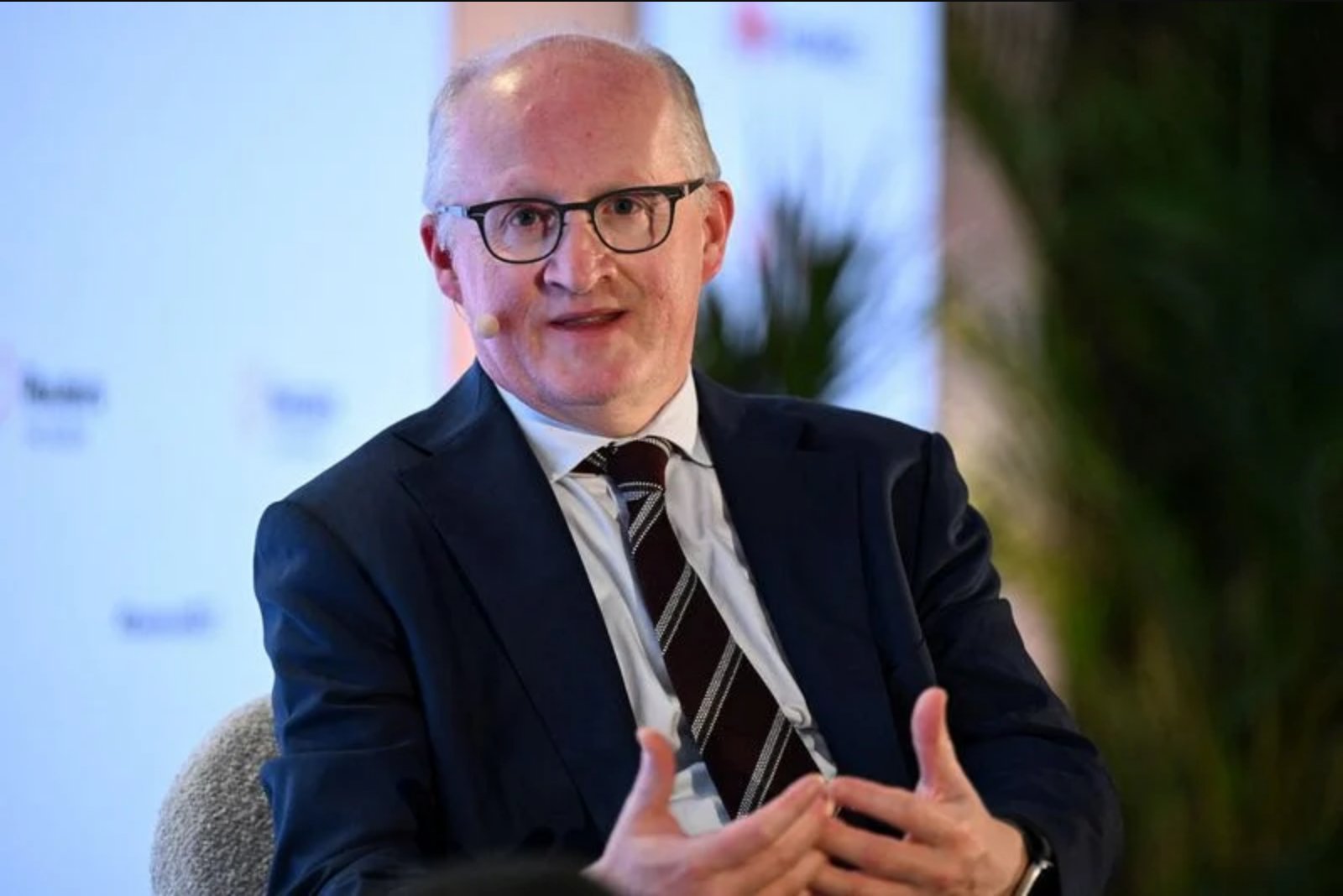
FRANKFURT, June 23 - Euro zone inflation may persist above the European Central Bank's 2% target for some time, even in a scenario where peace in the Middle East is achieved, ECB chief economist Philip Lane told members of the European Parliament's ECON committee in Brussels on Tuesday.
Lane noted that the bank raised interest rates this month to prevent a rebound in energy prices from feeding through to longer-term inflation expectations. He added that market participants expect at least one additional policy move later this year, despite energy costs having fallen significantly from their recent peaks.
The ECB economist highlighted that inflation climbed above 3% in the most recent reading and said it could remain "well above target into the first half of 2027." In his remarks to lawmakers he said: "While recent progress towards a resolution of the conflict in the Middle East is welcome, uncertainty remains elevated and there are continued risks for inflation to stay above our 2% medium-term target for quite some time."
Charts released alongside Lane's speech illustrated how the recent drop in oil prices has shifted that market into a range between the ECB's 'baseline' and 'milder' scenarios for energy. The presentation stressed that, although those scenarios are not a direct input to the immediate policy decision, a move towards the milder outcome would reduce the urgency for the ECB to replicate June's rate rise at the next meeting.
Market pricing reflects that assessment: traders assign only about a one-in-five probability to another rate increase in July, and currently have the next policy move fully priced in only for December.
On the broader economic impact, Lane said that ongoing high inflation and elevated energy costs will weigh on activity, but that the effect is likely to be softened by a robust labour market and substantial investment in artificial intelligence. He also pointed to fiscal support, saying: "In addition, higher government spending on defence and infrastructure should continue to support public investment. These factors are expected to provide some cushioning against the fallout from the war."
Key points
- ECB chief economist Philip Lane warned inflation may remain above 2% into the first half of 2027.
- Recent falls in oil prices place the market between the ECB's 'baseline' and 'milder' scenarios, easing immediate policy pressure.
- High inflation and costly energy will damp growth, but a strong labour market, AI investment and higher public spending are expected to cushion the impact.
Sectors likely affected - energy markets, financial markets (monetary policy and bond pricing), labour-sensitive sectors, and public investment-linked industries such as defence and infrastructure.
Risks and uncertainties
- Geopolitical uncertainty - progress toward Middle East peace reduces risk but uncertainty remains elevated, which could keep inflation pressures higher.
- Energy price volatility - although prices have fallen from recent highs, further movements could alter inflation trajectories and policy urgency.
- Policy timing uncertainty - markets see limited chances of a July hike, with the next full pricing of a move not until December, leaving room for changing expectations.