
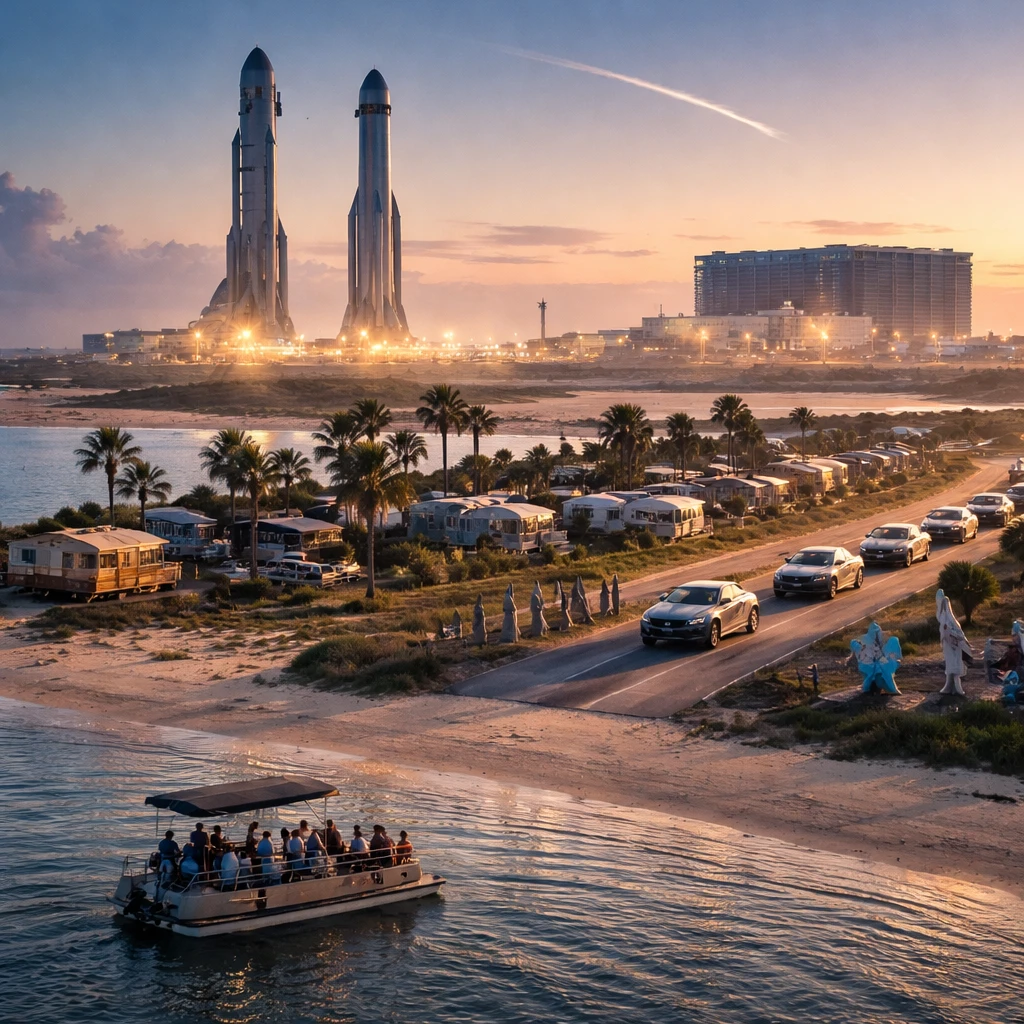
Less than two miles from SpaceX’s launch pad, charter boat captain Eddie Reyes watched a rocket rise into the sky as flames and shockwaves rocked the pontoon where he and paying passengers floated. The spectacle has become a business catalyst for Reyes and others in the area since Elon Musk’s company established Starbase, drawing space enthusiasts eager to watch launches and increasing demand for local services.
At the same time, the very launches that have bolstered family incomes have been blamed for structural harm to homes. Reyes’ mother reports cracks in the ceiling, failing window seals and sinking foundation attributed to blast-related shockwaves. She is one of dozens of residents now pursuing legal action against SpaceX, alleging damage from launches.
Local benefits and growing pains
The Rio Grande Valley region that surrounds Starbase has experienced a visible economic lift tied to SpaceX’s arrival and growth. An impact report from the Greater Brownsville Economic Development Corporation cited 5,000 jobs created by Starbase and $100 million in tourism revenue over the last year. New restaurants and services catering to a more affluent workforce have appeared alongside boarded-up storefronts and older, run-down homes in nearby neighborhoods.
Officials and residents express mixed reactions. Brownsville city commissioner Tino Villarreal described the company’s rapid expansion by saying, “This company is literally shaking the earth,” noting both the scale of workforce growth SpaceX is pursuing and the physical effects he says are manifesting in the soil and surroundings. Villarreal added that SpaceX’s pace had accelerated Brownsville’s own development, comparing the effect to injecting a powerful stimulant into the local economy.
For some, the tradeoff is acceptable. Reyes summed up a common sentiment: “You can’t stop progress.” His nephew works at SpaceX as a welder and drives a Tesla Cybertruck. Reyes’ charter business is busier as visitors come to view launches that have put the once-quiet coastal area on a global stage.
Safety concerns and a fatal incident
Alongside economic gains, safety incidents and worker injuries have heightened local tensions. Contract worker Jose Bautista, 25, died after a fall at a nearby SpaceX facility, an event that was reported in the region and has drawn attention from federal investigators. The Occupational Safety and Health Administration is conducting an investigation; the agency declined to comment. Local reporting and online responses sparked debate among residents and online viewers about responsibility and risk.
The incident produced a strong reaction on social media, where a local policy researcher’s post demanding accountability gathered significant attention. Comments under the post reflected a divide: some demanded answers and accountability from the company, while others defended SpaceX or framed accidents as unfortunate but not necessarily grounds for assigning blame to the enterprise.
SpaceX has not publicly acknowledged the fatality, and the company did not provide comment for reporting on the incident. Local authorities and company representatives did not offer additional comment for the record; requests for comment were directed between agencies and the company without public responses.
Built environment and future aspirations
When Starbase’s construction began in 2014, Boca Chica was described as a small cluster of homes and a popular beach destination for Brownsville residents. The landscape has transformed: two launch sites now rise almost 500 feet above the beach and nearby communities, and the area includes a mix of Airstream trailers, tiny homes and newly constructed mansions.
SpaceX’s local plans are substantial in scale. The company projects manufacturing capacity that one day could support as many as 1,000 Starships in the planned Starfactory, a one million square-foot advanced manufacturing facility. Adjacent ambitions include the Gigabay, a 380-foot-tall structure intended for rocket assembly. Visible symbols of the company’s aspirations — a giant mural evoking a Mars colony and signage referencing a “Mars Embassy. Future Location.” — punctuate the landscape around the facilities.
The town of Starbase has developed its own municipal life. A SpaceX employee, Bobby Peden, was elected mayor after the town incorporated. The municipality is organizing a police force and has discussed opening a municipal court in which Peden would serve as interim judge. Local institutions reflect the company’s presence: Ad Astra, a school in the area, advertises instruction that moves children into advanced numerical concepts early; a neighborhood bar, Astropub, limits access to SpaceX employees.
Former Starbase general manager Kathryn Leuders recalled the early days when infrastructure was limited. “When I showed up, we had one street with houses, we were building rockets in tents, and we didn’t have water or a sewer system,” she said. Today, families are raising children in a community that sits literally next to an active launch facility, an arrangement she called “a really cool thing.”
Community reactions and legal action
Not all longtime residents have embraced the transformation. Maria Pointer, who lived in the region for nearly two decades, sold her home to SpaceX in 2020 after meeting with Elon Musk. Initially optimistic, Pointer said she later found the town less hospitable. During a visit to the Starfactory in April to film an interview, she reported being approached by a security guard and told to leave the premises near a large “X” at the entrance where her former kitchen once stood; she described the interaction as “very military.”
Residents of neighboring towns including Laguna Vista, Port Isabel and South Padre Island have joined a class-action lawsuit filed in April claiming that Starship launches are damaging their properties. In a region where many homes have modest values, plaintiffs report extensive and expensive damage. One Port Isabel homeowner, speaking at her attorney’s request off the record, showed a home with uneven cabinets, doors that no longer close properly and warped chipboard used to cover floor damage she said followed a burst shower pipe after a rocket launch. She estimated foundation repairs at roughly $100,000, which she said is greater than half her home’s value. Her comment reflected a frustration with the mismatch between the company’s interplanetary ambitions and the immediate needs of residents: “They’re wanting to get to Mars. But what about us that are here? I’m here now. And nobody is thinking about us.”
Industry scale-up and regional pressures
SpaceX’s corporate trajectory is set to amplify local pressures. The company’s large public offering, described as a record-setting $1.75 trillion IPO, is expected to raise $75 billion in part to scale Starship operations from sporadic test flights toward a cadence that could become weekly launches. If operations move in that direction, residents and local officials expect impacts to mount, from increased workforce presence to stronger physical effects from repeated launches.
Observers and community leaders highlight two simultaneous realities: the company’s rapid growth brings concrete economic opportunities and visible infrastructure, while it also generates legal claims, environmental worries and a widening split in public sentiment among the Rio Grande Valley’s 1.4 million residents. That split plays out in local conversations, court filings, and daily life where SpaceX’s vehicles and employees have become common sights.
Public debate and the balance of tradeoffs
Public reaction ranges from enthusiastic support to frustrated opposition. Enthusiasts travel from other states to witness launches and to experience proximity to a major aerospace operation. Nicholas Poindexter, a pest control worker and space enthusiast who came from Indiana for a Starship launch, said the accessibility of the site made a strong impression: “Last time I was here I thought, holy cow, you could throw a rock and hit a rocket.”
At the same time, residents who say their homes have suffered damage and families who have lost loved ones or experienced workplace injuries look to accountability and remediation. Local officials, civil litigants and federal agencies are navigating a complex mix of local economic uplift, public safety questions and legal demands. SpaceX declined to comment for coverage of these matters.
Outlook
Starbase’s evolution is reshaping a coastal region where a mix of optimism and grievance now characterizes daily life. The company’s ambitions to scale production and increase launch frequency create potential for expanded employment and continued tourism revenue, while also raising risks of intensified physical and social impacts. How those tradeoffs unfold will be determined in part by corporate decisions, community responses and the outcomes of legal and regulatory processes now underway.