
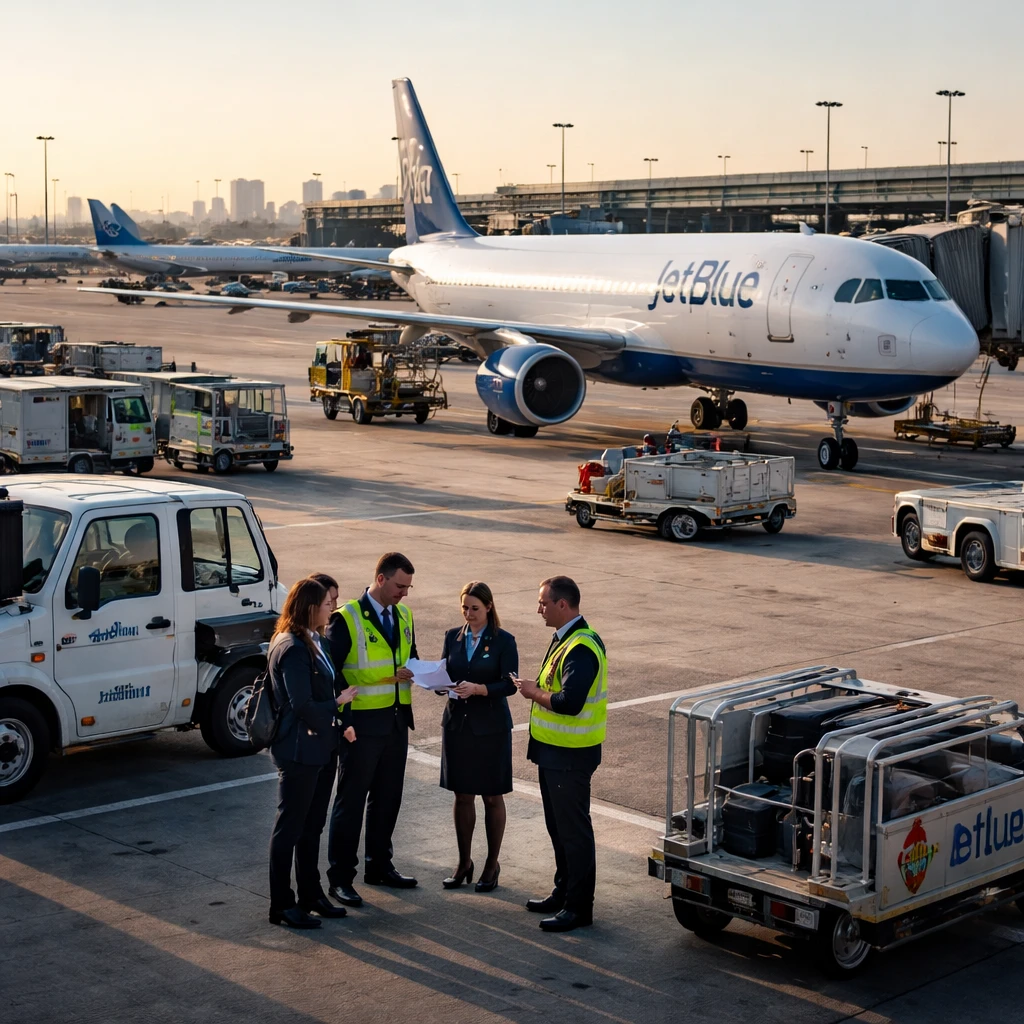
JetBlue Airways will eliminate its flight attendant base at Newark Liberty International Airport in New Jersey and wind down technical operations bases at both Newark and LaGuardia airports in New York this fall, a media report said.
The company framed the adjustments as part of a broader effort to lower costs while bolstering service at Fort Lauderdale-Hollywood International Airport in Florida. JetBlue operates as the top carrier at that South Florida hub and described it as a profitable center it intends to strengthen.
In its annual report, JetBlue noted it held a 13% share of available airline seats across five airports serving the New York metropolitan area - a group that includes Newark, LaGuardia and John F. Kennedy International Airport - at the end of 2025.
Company officials told the media that the operational changes would not result in the immediate loss of jobs. Rather, staff affected by the base closures will have the opportunity to bid on open positions or transfer to other JetBlue bases.
These shifts follow steps the carrier announced earlier in the year to address cost pressures tied to rising jet fuel. At that time the company said it would slow hiring, reduce capacity and raise fares as part of efforts to counteract the impact of higher fuel expenses on its turnaround plan.
JetBlue also indicated it will continue to grow its presence in South Florida, taking advantage of expanded gate availability in the region to support its operational focus there.
Context and operational intent
The decision to consolidate bases appears targeted at concentrating resources in a market where the airline has a leading position and stronger profitability. Company statements emphasize redeployment of personnel rather than layoffs as the principal human-resources outcome tied to the closures.
Near-term implications
In the near term, the carrier is balancing cost containment measures with plans to expand where growth is feasible, namely in South Florida. The move is part of a package of responses the airline has previously outlined to manage higher fuel costs and support its recovery trajectory.