
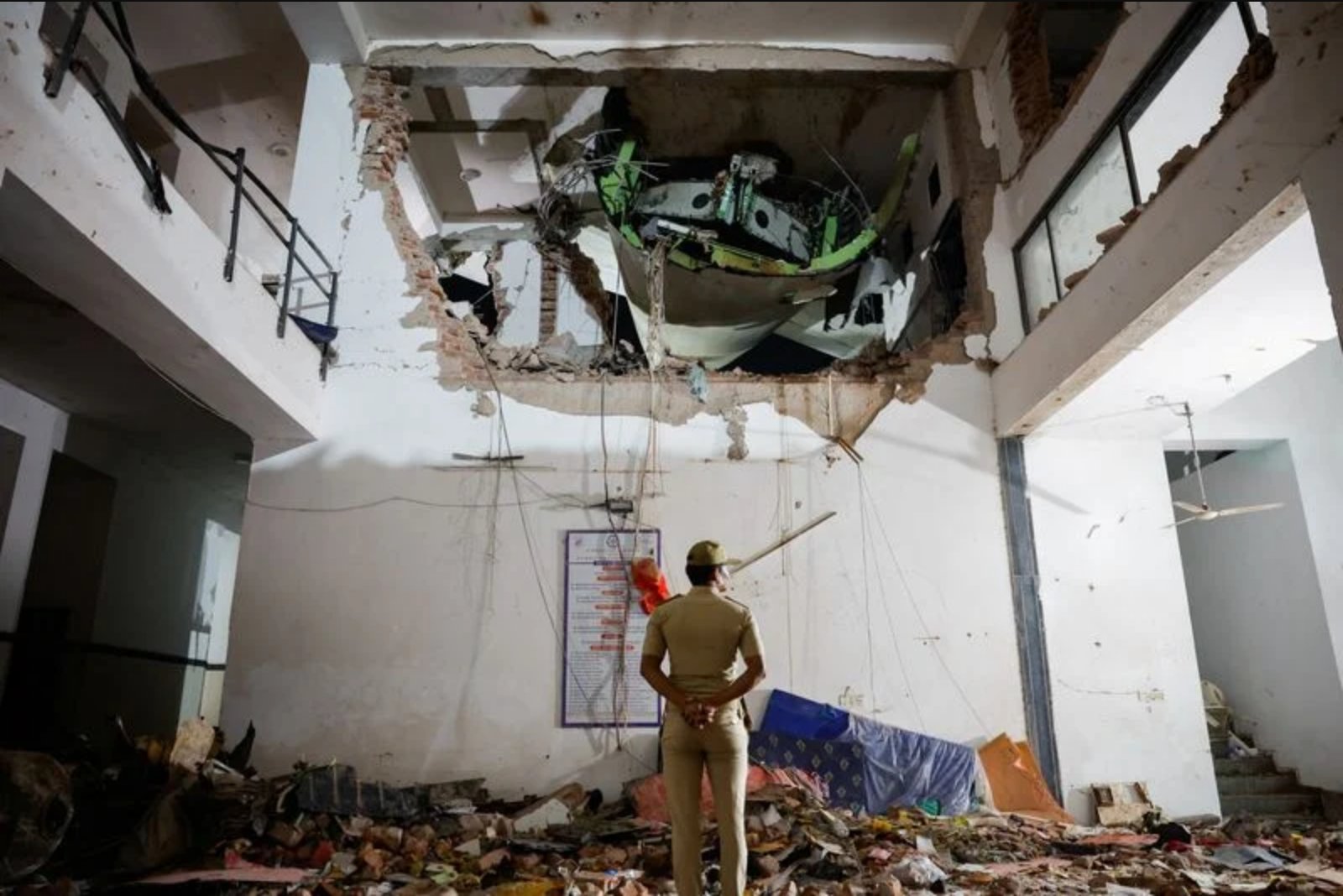
June 11 - Indian investigators have indicated they will postpone issuing a conclusive report on the fatal Air India Boeing 787 accident beyond the one-year anniversary, attributing the delay to the necessity of completing a technical analysis of the aircraft's engines, according to a source with knowledge of the matter.
The investigative authority previously published a second-by-second reconstruction of the flight on July 12 last year. The sequence below reproduces the timeline investigators released for the events on June 12, 2025, beginning with the aircraft's arrival at the airport and continuing through the take-off, the in-flight anomalies and the immediate post-incident actions.
Timeline of events (all times GMT)
- 05:47 GMT (11:17 a.m. IST) - Air India Dreamliner VT-ANB arrived in Ahmedabad from New Delhi operating as flight AI423.
- 07:48:38 GMT - The aircraft was observed departing from Bay 34 at the airport.
- 07:55:15 GMT - The crew requested taxi clearance and received it from air traffic control; one minute later the aircraft taxied from the bay to Runway 23 via Taxiway R4, backtracked and lined up for take-off.
- 08:02:03 GMT - Control of the aircraft was transferred from ground to tower.
- 08:07:33 GMT - Take-off clearance was issued.
- 08:07:37 GMT - The aircraft commenced its take-off roll.
- 08:08:39 GMT - The aircraft lifted off. The report notes that the aircraft air/ground sensors transitioned to air mode, which is consistent with liftoff.
- 08:08:42 GMT - The aircraft reached a maximum airspeed of 180 knots. Immediately thereafter, the Engine 1 and Engine 2 fuel cutoff switches transitioned from RUN to CUTOFF one after another with a time gap of 01 sec. The Engine N1 and N2 began to decrease from their take-off values as the fuel supply to the engines was cut off. In the cockpit voice recording, one of the pilots is heard asking the other why did he cutoff. The other pilot responded that he did not do so. The CCTV footage obtained from the airport showed Ram Air Turbine (RAT) getting deployed during the initial climb immediately after lift-off. The aircraft started to lose altitude before crossing the airport perimeter wall.
- 08:08:47 GMT - Both engines' values passed below minimum idle speed, and the RAT hydraulic pump began supplying hydraulic power.
- 08:08:52 GMT - Engine 1 fuel cutoff switch transitioned from CUTOFF to RUN.
- 08:08:56 GMT - Engine 2 fuel cutoff switch transitioned from CUTOFF to RUN. The report explains that when fuel control switches are moved from CUTOFF to RUN while the aircraft is inflight, each engine's full authority dual engine control (FADEC) automatically manages a relight and thrust recovery sequence of ignition and fuel introduction. Engine 1's core deceleration stopped, reversed and began to progress to recovery. Engine 2 was able to relight but could not arrest core speed deceleration and re-introduced fuel repeatedly to increase core speed acceleration and recovery.
- 08:09:05 GMT - One of the pilots transmitted "MAYDAY MAYDAY MAYDAY".
- 08:09:11 GMT - Data recording stopped.
- 08:14:44 GMT - A crash fire tender left the airport premises for rescue and firefighting.
The published reconstruction emphasizes the sequence of the fuel cutoff switch movements and the engines' subsequent responses. According to the investigators' timeline, Engine 1 showed a cessation of core deceleration and a trend toward recovery after its fuel control was returned to RUN, while Engine 2 experienced recurrent attempts to reintroduce fuel but was unable to arrest core speed deceleration fully.
Investigators also cite cockpit voice recording and closed-circuit television evidence in their account. The cockpit voice recording captured the exchange in which one pilot questions why a cutoff occurred and the other denies initiating such an action. Airport CCTV reportedly captured the Ram Air Turbine deploying during the aircraft's initial climb - a detail the investigators included as part of the sequence leading up to the aircraft's loss of altitude and the subsequent emergency response.
The decision to delay the final report stems from the need to complete the engine analysis, according to the source familiar with the investigation. The timeline released last year remains the investigators' detailed account of the aircraft's behavior in the seconds after liftoff and until the recorded data ceased.
Summary
Investigators will not meet the one-year deadline for their final report as they continue engine analysis. The previously released second-by-second timeline documents the aircraft's departure, liftoff, abrupt fuel cutoff events on both engines, automatic relight attempts managed by FADEC, RAT deployment, a mayday transmission and the cessation of data recording shortly thereafter.