
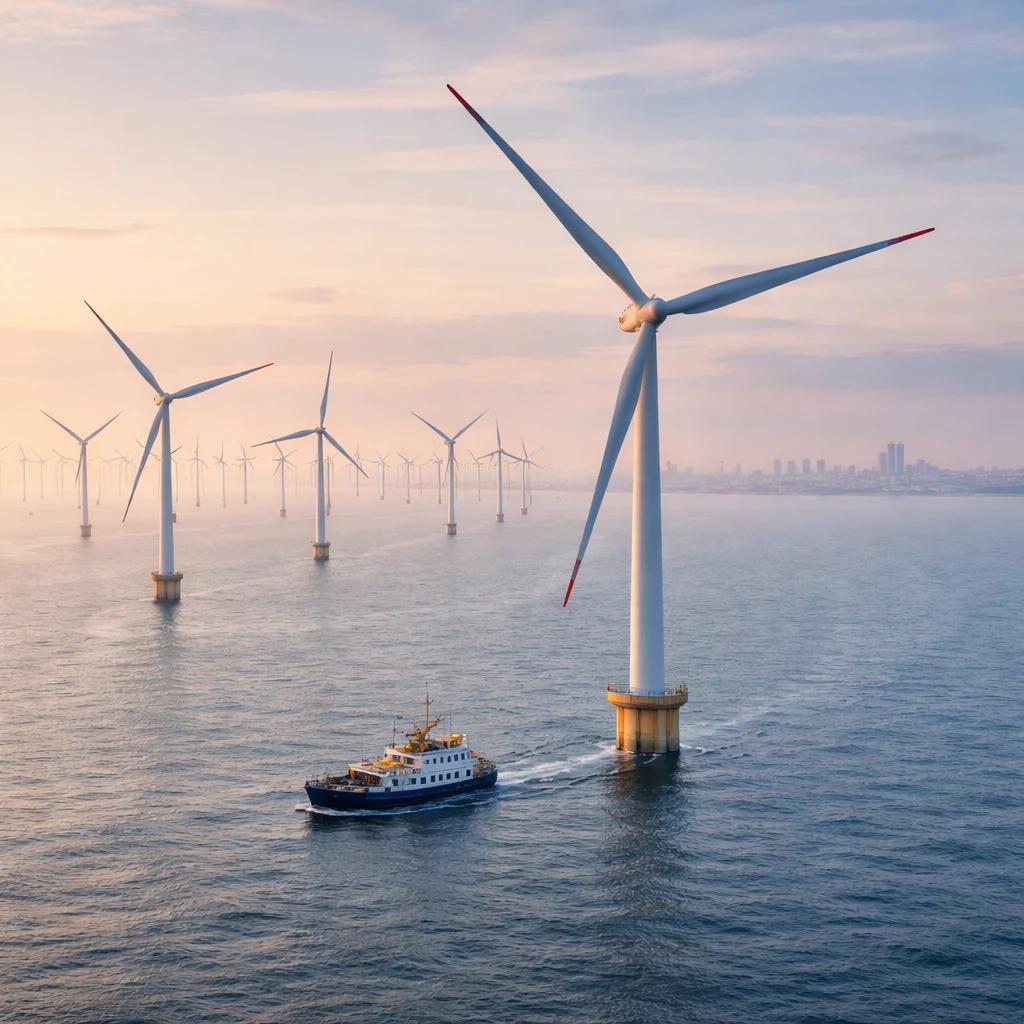
Goldman Sachs moved Orsted to a Buy rating on Monday, attaching a 185 Danish crown price target and identifying several catalysts it says could help the world's largest offshore wind developer reshape its equity narrative.
Orsted's stock climbed more than 3% in Copenhagen trading after the upgrade.
Background and recent performance
The Danish company has endured a difficult stretch, marked by project cost overruns and write-downs. In response to those challenges, Orsted altered its strategy last year, refocusing on European opportunities and scaling back an earlier push into the U.S. market amid what it viewed as a hostile policy environment under the Trump administration.
Shares reached their high in early 2021 but have since trended downward, with a decline exceeding 80% over the past five years.
Reasons behind the upgrade
Analyst Alberto Gandolfi cited three principal factors that supported his move to Buy. First, he pointed to the prospect of a broader European shift toward electrification and renewable energy driven by energy security considerations, which he views as a structural tailwind for offshore wind.
Second, Gandolfi noted tentative signs that Washington's previously hostile posture toward offshore wind may be easing. He referenced the U.S. administration's decision not to appeal a recent injunction related to the Sunrise Wind project and its purchase of offshore leases from Total as evidence of a softer stance.
The third factor rests on Orsted's project pipeline. Gandolfi wrote that if Orsted completes its U.S. projects currently under construction, the company's balance sheet should be "very strong" by 2028, positioning it to resume growth.
He also disclosed that his forecasts place him substantially ahead of the market consensus on Orsted's 2033 EBITDA estimates.
Promotional note referenced in the source material
The original material included an investor-oriented prompt asking whether one should invest $2,000 in ORSTED and described an AI-driven ProPicks product that evaluates stocks using numerous financial metrics. That section positioned the AI as a tool to identify stocks with attractive risk-reward profiles but did not alter the facts about the upgrade or Orsted's outlook.
Conclusion
Goldman Sachs' upgrade rests on a combination of market and policy signals in Europe and the U.S., together with the expectation that completing current projects will materially improve Orsted's balance sheet by 2028. The market reacted positively to the call, lifting shares in Copenhagen by more than 3%.