
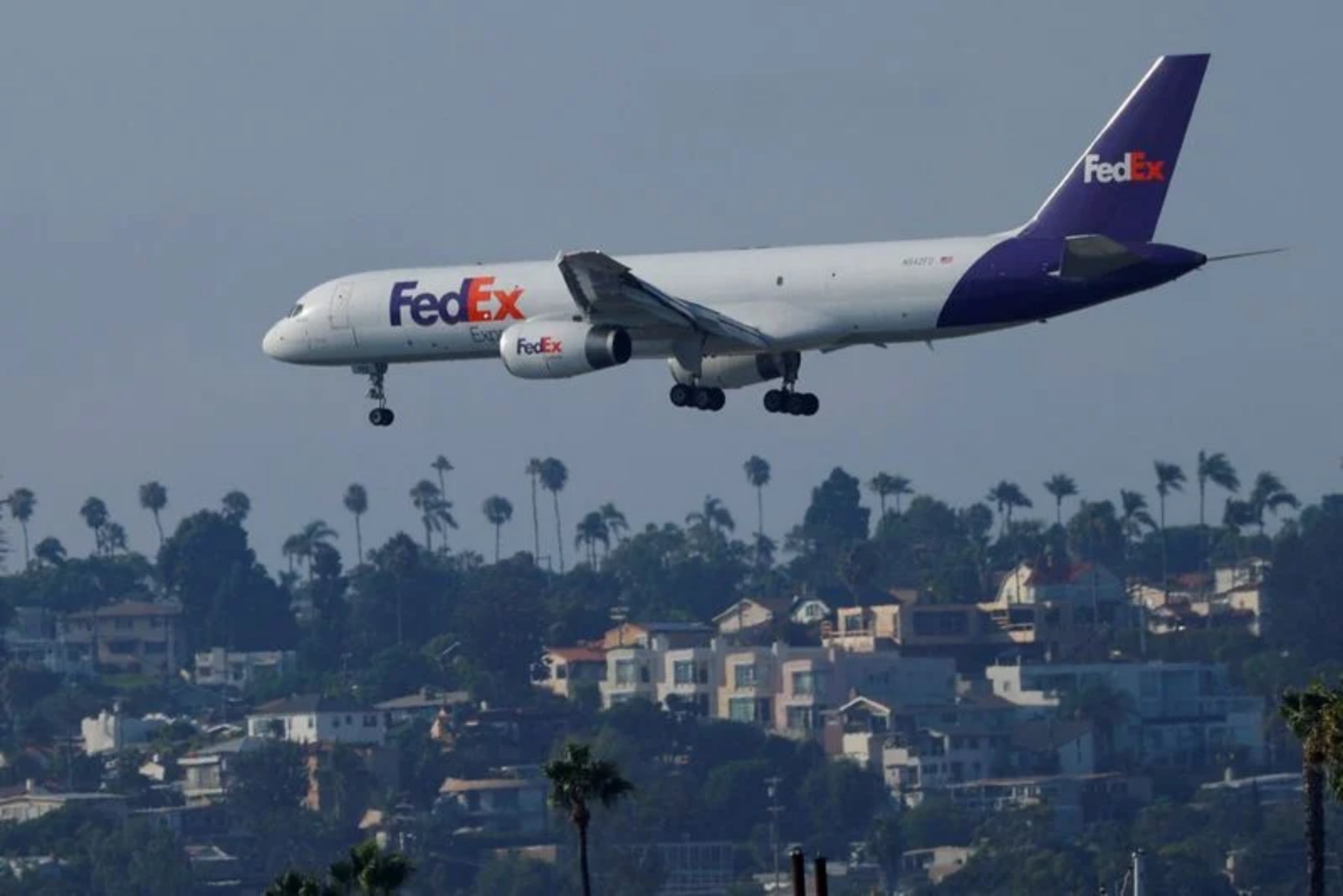
FedEx shares fell about 7% before the opening bell on Wednesday as investors reacted to margin pressure in the company's core delivery business and the implications of a recent corporate reorganization. Earlier this month the company separated its trucking operation, FedEx Freight, to concentrate on delivery services, a move that has put renewed emphasis on profitability and cost control at the slimmed-down firm.
The operating margin in FedEx's Federal Express segment declined to 7.7% from 8.4% a year earlier. Management cited higher costs for employee salaries and benefits along with increases in outsourced transportation and fuel as drivers of the margin compression. Those cost pressures came as parcel volumes for U.S. logistics companies have been under strain.
Market participants pointed to several demand-side and cost-side factors weighing on volumes and margins. Changes in U.S. trade policy have contributed to a drop in volumes at major logistics providers. The conflict in Iran has also been associated with upward pressure on fuel prices. In addition, the loss of duty-free de minimis treatment for low-value e-commerce shipments linked to China-oriented discount sellers such as Shein and Temu has been flagged as another element weighing on parcel flows.
Analysts noted that the recent Freight spin-off and FedEx's move to align its fiscal year with the calendar year will complicate near-term analysis of results. J.P. Morgan analysts said they recognize that market participants may face an overhang while the various moving pieces of the spinoff are digested and the company shifts reporting to a calendar basis. Morgan Stanley analysts added that it will be difficult to judge numbers for several quarters given the resulting noise, and that attention will concentrate on underlying fundamentals.
As part of the shift in reporting cadence, FedEx issued annual earnings guidance of $16.90 to $18.10 per share that reflects only its delivery operations under the new calendar-year alignment - the company is moving from a prior May fiscal year-end. Analysts have not yet updated models to permit apples-to-apples comparisons with the new guidance.
Valuation metrics cited by market-watchers show FedEx trading at 14.68 times projected 12-month forward earnings, modestly above United Parcel Service's multiple of 14.05. The market is parsing how the reconfigured company will restore margins while navigating the cost and volume headwinds that have emerged in recent months.
Separately, some market tools and services referenced in investor discussions evaluate FedEx among other stocks using algorithmic strategies. One such service noted it evaluates companies on a range of financial metrics and that its historical signals have identified prior winners. Those assessments are part of broader investor interest in how the company will perform post spin-off.
Key takeaways
- FedEx shares dropped roughly 7% premarket following a reported decline in operating margin for its Federal Express delivery segment.
- The company recently spun off FedEx Freight to focus on delivery; investors are pressing for cost reduction and margin improvement in the slimmer entity.
- Wider logistics sector headwinds include declining parcel volumes linked to trade-policy shifts, higher fuel costs amid the Iran conflict, and loss of de minimis treatment affecting low-value e-commerce shipments.
Risks and uncertainties
- Near-term earnings comparability is limited as FedEx transitions to calendar-year reporting and separates Freight, creating noise for several quarters - this impacts equity analysts and investors across logistics and transportation sectors.
- Rising input costs for labor, outsourced transportation and fuel could further compress margins at delivery-focused companies, affecting profitability in the broader U.S. logistics sector.
- Volume declines tied to trade-policy changes and the removal of de minimis duty-free treatment for certain cross-border e-commerce shipments could continue to weaken demand for parcel carriers.