
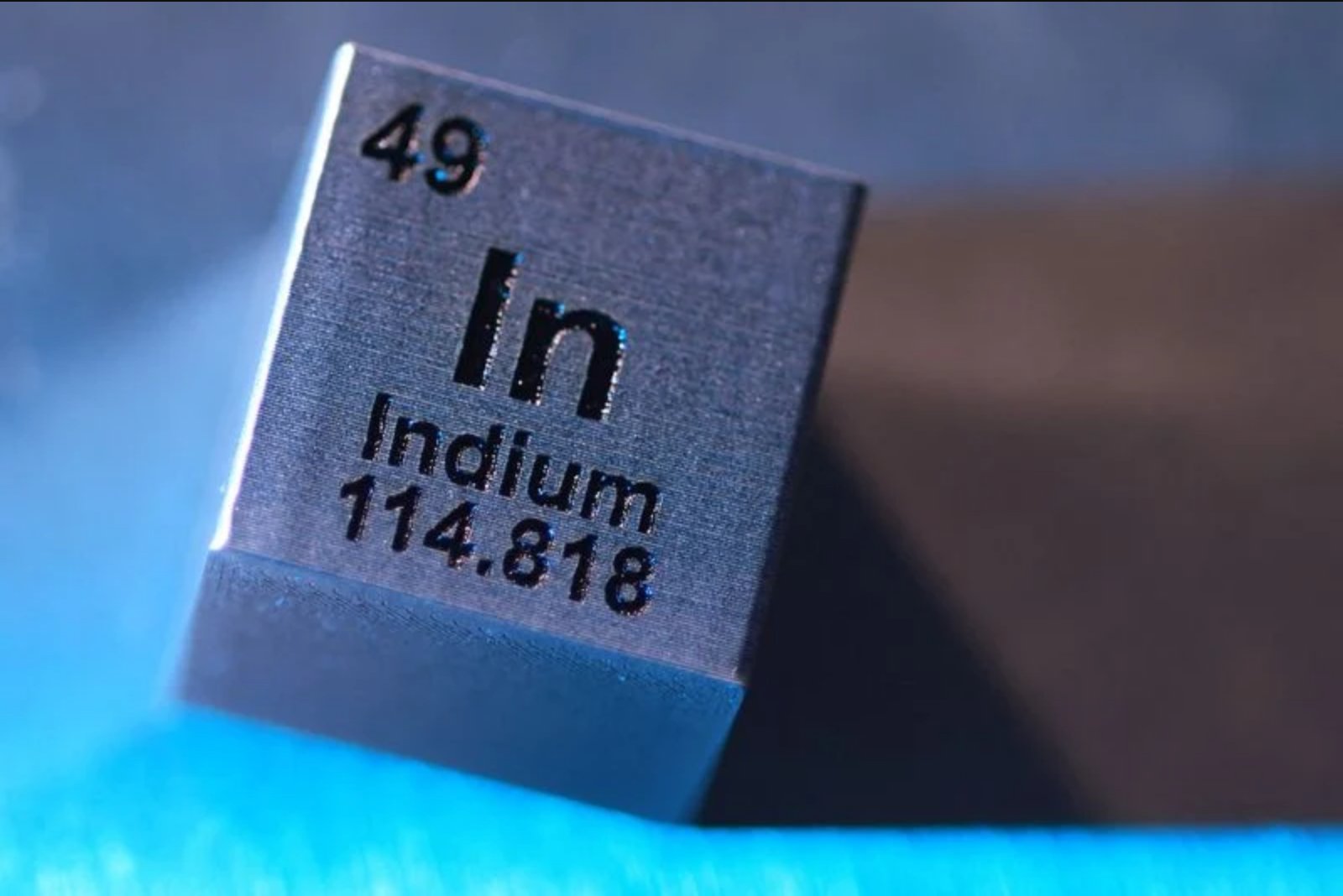
China has stepped up scrutiny of indium exports, stirring unease among buyers who worry the niche metal could be folded into the country’s tightening export control apparatus - a tool Beijing has increasingly used to manage strategic supply flows.
Chinese production accounts for nearly 70% of global indium output. The metal is primarily a byproduct of zinc refining and is widely used in display technologies and soldering. Crucially for next-generation computing, indium is the feedstock for indium phosphide, which is used to make high-speed optical chips deployed in AI data centers.
Beijing added indium phosphide to an export control list in February 2025. Those restrictions have already affected efforts to deploy next-generation data center hardware, according to industry accounts. The issue drew high-level attention when the CEO of Nvidia-backed chipmaker Coherent traveled to Beijing with President Donald Trump in May to press the case.
Although indium metal itself remains off the formal export control list, two buyers told Reuters they had encountered increased scrutiny from Chinese customs when arranging shipments. For the first time this year, a European purchaser was asked to provide information about end users, including their geographic base. A large North American buyer said that approvals that used to occur on the same day now take several days, a slowdown they attributed to closer examination of paperwork. That buyer described the situation as "tense" but said customs had not required extra documentation in their case.
China's Ministry of Commerce did not immediately respond to a request for comment because of a public holiday. All buyers interviewed declined to be named because of the sensitivity of the subject.
The additional due diligence does not appear uniformly applied. Two other buyers told Reuters they had heard about extra checks but had not themselves experienced new requirements. Reuters has not identified any shipments that have been refused or physically blocked to date.
Still, within the small but strategically important indium industry there is concern that the current measures could be a prelude to tighter controls or to wider use of end-user disclosure rules. Such disclosures are a tool used by China and other countries that maintain export control regimes to map global supply chains and identify chokepoints.
The metal has also been highlighted as a potential vulnerability by U.S. authorities. The U.S. Defense Logistics Agency earlier this year published a request for proposals to stockpile up to 403 tons of indium over three years. One North American buyer told Reuters they suspected the new reporting measures were "a precursor to restrictions or outright bans on exports."
Context and implications
At present there is no public policy announcement adding indium metal to export controls, and industry reports indicate the treatment of shipments varies by buyer and by shipment. The combination of prior controls on indium phosphide, emerging customs scrutiny of indium metal shipments and defense stockpiling activity has elevated attention to the metal among semiconductor, data center and defense procurement stakeholders.