
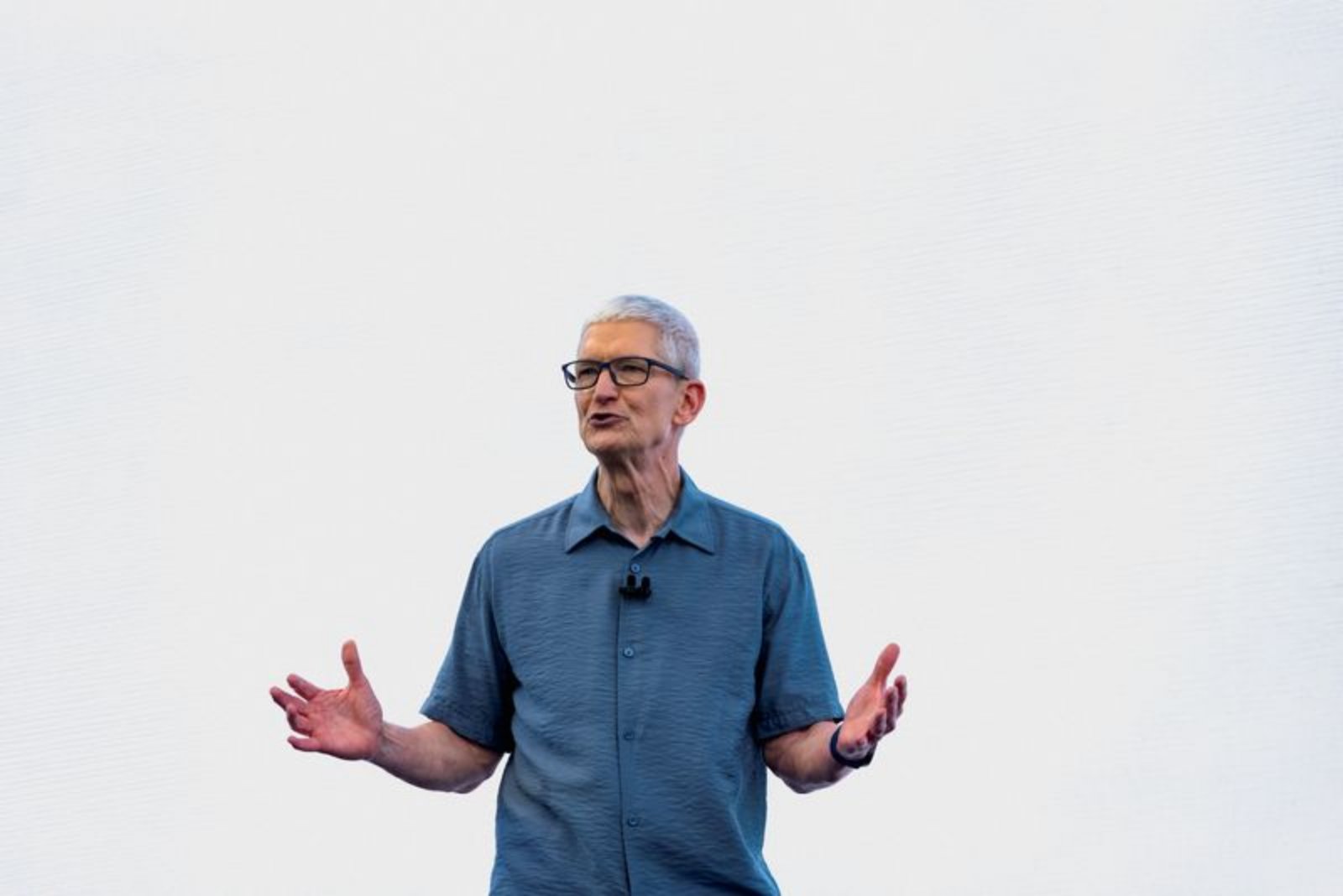
Apple said late Monday that Tim Cook, 65, will relinquish his role as chief executive after almost 15 years in charge and assume the position of executive chairman on September 1. The company named longtime hardware head John Ternus as Cook's successor.
The news prompted a modest market reaction: Apple shares fell about 1% in after-hours trading following the announcement. Investors and strategists noted the timing of the change given a quarterly report scheduled for release on April 30, saying the earnings print will attract increased scrutiny.
In a statement detailing Cook's tenure, Apple highlighted the company's expansion under his leadership. Market capitalization rose from roughly $350 billion to $4 trillion, an increase the company described as more than 1,000%. Annual revenue climbed from $108 billion in fiscal 2011 to in excess of $416 billion in fiscal 2025. The company also emphasized its broader global reach, noting operations in more than 200 countries and territories.
Apple added that its retail footprint now exceeds 500 stores and that the number of countries where customers can visit an Apple Store has more than doubled. The company also cited workforce and device metrics: during Cook's tenure, Apple added more than 100,000 team members and expanded its active installed base to exceed 2.5 billion devices.
Market observers weighed in on the leadership change and its potential near-term effects. Rick Meckler, a partner at Cherry Lane Investments in New Vernon, New Jersey, praised Cook's performance and expressed little surprise at the market's initial dip. Meckler said he expects Cook to remain engaged in shaping the company's broader strategy in his new role and described Cook's run as an "incredibly successful" stint as CEO.
Art Hogan, chief market strategist at B. Riley Wealth Management in Boston, characterized Cook as a transformational leader who maintained stability. Hogan suggested that Cook would be unlikely to step down if the company faced weak prospects and added that the upcoming results and accompanying guidance should be positive. He also noted that investors will be listening for how Apple plans to incorporate artificial intelligence into products.
Tim Ghriskey, senior portfolio strategist at Ingalls & Snyder in New York, commented that the company has performed very well during Cook's time in charge. Ghriskey attributed part of the company's success to timely positioning and the right strategic moves, and he said making the leadership change ahead of the earnings release may have been intended to prevent the topic from becoming a distraction during the report.
John Ternus, who takes over as CEO, is described within Apple as a longstanding hardware executive with a focus on design and product. The company did not provide further detail within the announcement on any immediate strategic shifts under Ternus, or on the specifics of Cook's responsibilities as executive chairman after September 1. The announcement did note that Cook succeeded Apple founder Steve Jobs when he became CEO and that under Cook the company grew into a global brand that ships hundreds of millions of units annually.
Analysts and investors are expected to examine both the April 30 quarterly report and statements around future product road maps closely, particularly as the company positions itself for industry changes tied to artificial intelligence. The combination of leadership transition and an imminent earnings release has increased attention on how Apple will present its near-term outlook and strategic priorities.
For now, the formal succession plan is set: Cook will become executive chairman on September 1, and Ternus will step into the CEO role. The market's modest after-hours reaction reflects some investor caution, while public comments from market participants largely acknowledged Cook's contributions and the strength of the company's performance metrics cited by Apple.