
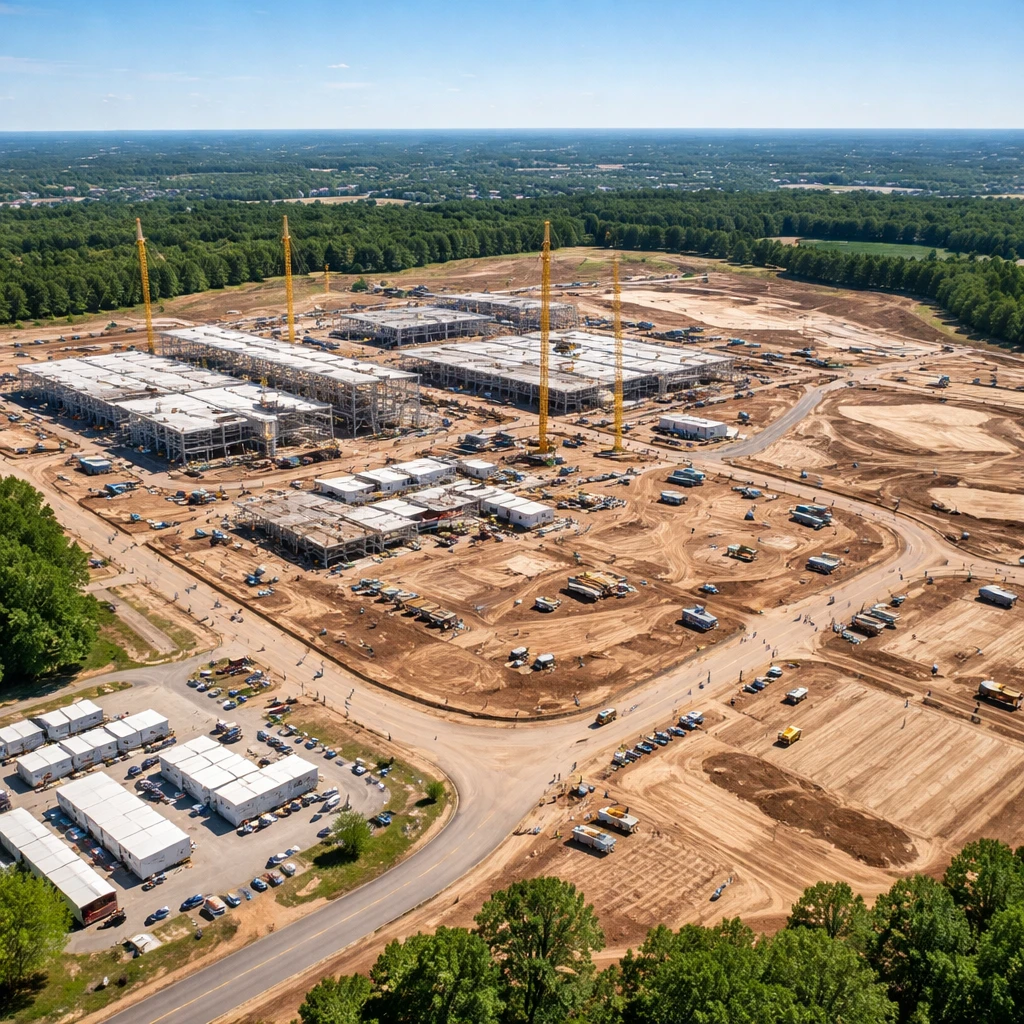
AbbVie announced a $1.4 billion plan to establish a 185-acre pharmaceutical manufacturing campus in Durham, North Carolina. The site is slated to manufacture the company’s immunology, neuroscience and oncology medicines, expanding AbbVie’s domestic production capacity.
Construction is planned to commence in 2026, with completion expected by the end of 2028. Company officials described the project as AbbVie’s largest capital investment in a single campus since the company’s founding.
The Durham campus is expected to create 734 permanent positions over a four-year period. The roles will include engineers, scientists, manufacturing operators and laboratory technicians. During the construction phase, the development is projected to support more than 2,000 construction jobs.
"Our investment in North Carolina represents a significant milestone for AbbVie as our largest capital investment to date and an important expansion of our manufacturing footprint into a new region of the United States," said Robert A. Michael, chairman and chief executive officer.
According to AbbVie, the new campus will combine advanced manufacturing and laboratory technologies with artificial intelligence to support production. The company framed the investment as part of a larger U.S. commitment: $100 billion earmarked for research and development and capital investments across the country over the next decade.
AbbVie further reported that it has invested more than $2.2 billion in U.S. manufacturing over the past 12 months, with projects spanning North Carolina, Illinois, Arizona and Massachusetts. The Durham campus thus represents a continuation and expansion of the company’s recent domestic manufacturing activity.
Summary and context
The $1.4 billion Durham campus will produce immunology, neuroscience and oncology products, begin construction in 2026, and aim for completion by the end of 2028. The project is AbbVie’s largest single-campus capital spend and is linked to the company’s broader $100 billion U.S. investment commitment.
Key sectors impacted: pharmaceutical manufacturing, construction, and regional labor markets.