
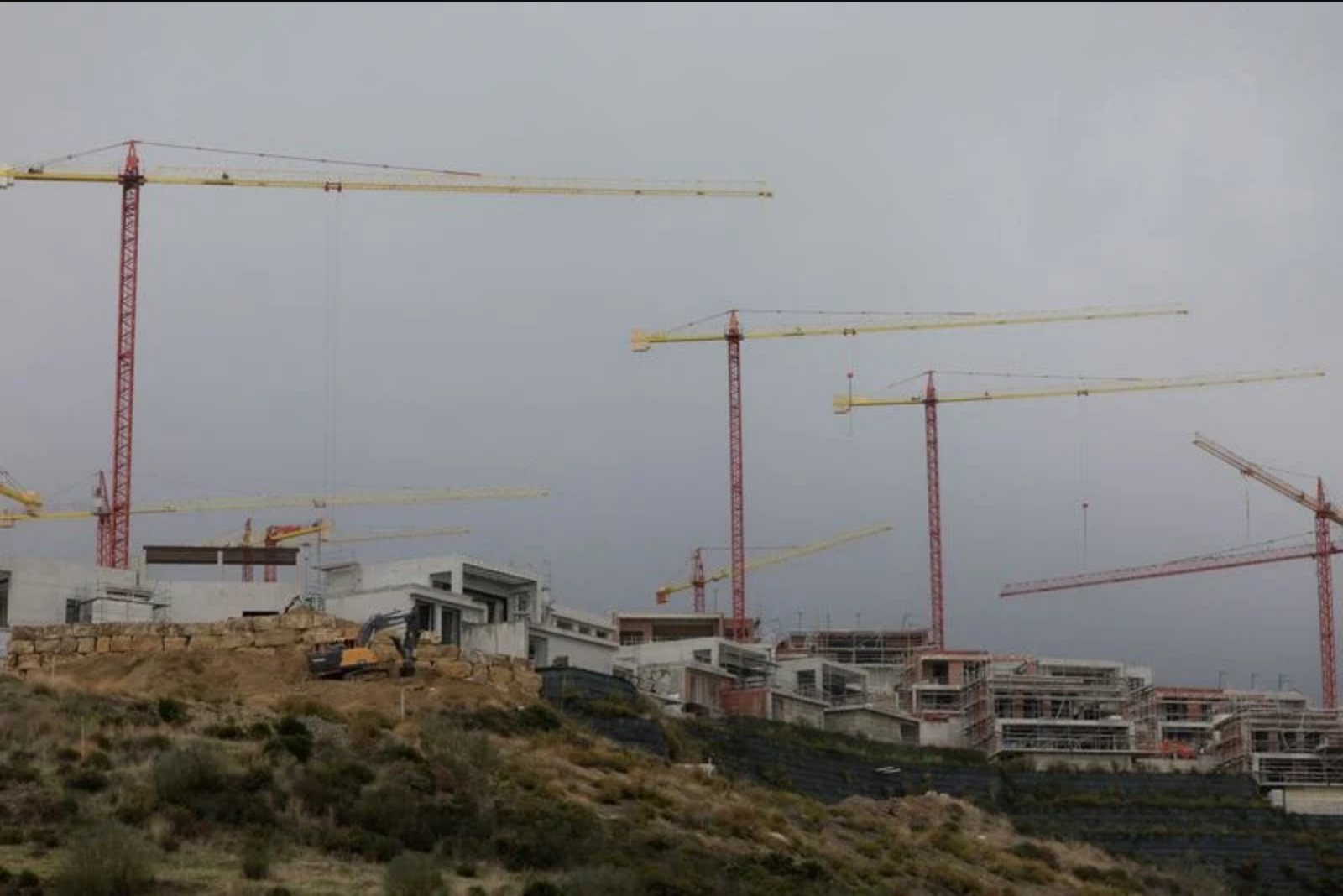
Wealthy purchasers from Poland, the United States and Gulf states are significantly increasing their acquisitions of luxury properties in Spain’s capital and on the Mediterranean shoreline, according to interviews with multiple real estate agents, housing market analysts and a property lawyer. They say the inflow is motivated largely by recent geopolitical crises - including wars in Ukraine and the Middle East - and by political tensions in the United States. Spain’s Mediterranean coast has long attracted British and German holiday home buyers, but the profile of foreign purchasers has broadened in recent years.
Government property registration figures back up agents’ accounts. Last year, more than 39% of home sales in major tourist provinces - including Malaga on the Costa del Sol, Alicante on the Costa Blanca and the Balearic Islands - involved foreign buyers. That heightened foreign participation has coincided with a sharp uptick in prices in a market where housing remains a central political concern. Spain’s central bank has urged coordinated policy measures to expand housing supply, while estimations suggest a shortfall of some 750,000 homes.
“Whether it’s Ukrainians or Poles settling on the Costa del Sol, or Americans coming to Spain, the common factor is the geopolitical situation,” said Rebeca Caballero, head of the international department at realtor Gilmar.
Polish demand - already growing since 2020 - has accelerated after the onset of the war in Ukraine. Agents report that purchases by Polish buyers have tripled since the COVID-19 pandemic. Polish buyers accounted for 4% of foreign purchases last year, up from 1.6% in 2019, reflecting a marked increase in interest from one of Europe’s faster-growing economies.
Agnieszka Marciniak-Kostrzewa, who runs a Marbella-based agency, said the most intense wave of buying occurred after the Ukraine war began and included a flurry of transactions concluded remotely. One example of the shift is the experience of Marlena Bartkowiak, a 46-year-old transport company owner from Poland, who acquired an apartment in Benalmadena on the Costa del Sol as a contingency when the conflict erupted. “Spain came to mind as it was somehow the least involved in all sorts of political manoeuvring on the European stage,” she said, though she continues to live mainly in Poland.
Developers report a pronounced Polish presence in recent projects. Neinor, a major Spanish property developer, sold 70% of the premium 102-home Santa Clara complex in Marbella last year to Polish buyers. Polish purchasers also predominate in a 64-floor skyscraper currently under construction in Benidorm, underscoring their growing influence in high-profile coastal developments.
Real estate executives say Spain is increasingly viewed as an alternative to traditional safe havens such as Dubai. “Spain right now is a diversification play on security grounds,” said Paloma Perez Bravo, CEO of Dils-Lucas Fox. In the wake of the outbreak of the Iran war, agents report a stream of enquiries from wealthy Gulf-based investors seeking alternatives to the emirate, which some perceive as having its image dented by the conflict. Three real estate firms told market contacts they are negotiating luxury property deals on the Costa del Sol with buyers from Dubai, and at least two deals have already been completed.
Marciniak-Kostrzewa recounted a sale to a Polish client who lives in Dubai and sought a safer family base. Beyond the appeal of Spain’s climate and economy, fiscal considerations also matter. Realty lawyer Maria Ruiz Lopez noted that regional wealth tax exemptions or allowances in parts of Spain, including Madrid and the Costa del Sol, enhance the areas’ attractiveness to affluent buyers compared with other Spanish regions.
Mario Lapiedra Vivanco, deputy CEO at Neinor, said the company has already closed a deal with a buyer from Dubai and expects Spain to draw those seeking alternatives to Dubai, partly because conflicts make Spain appear a calmer option.
Political and social pressures are also influencing buyer behavior. Gilmar’s Caballero pointed to a rise in American investors - many of Hispanic origin - since the return of Donald Trump to the U.S. presidency. Some American purchasers view Spanish property as an investment; others treat it as a contingency plan amid uncertainty about U.S. politics. Gilmar reported that U.S. investments in its transactions rose from 0.5% to 6.2% from 2024 to 2025, and Americans edged past Britons to become the top foreign buyers on the Costa del Sol.
National-level data mirror the trend. Across Spain, Americans made up 2% of foreign property acquisitions and paid the third-highest average purchase price after Swedes and Germans, according to figures compiled by the General Council of Notaries.
The widening base of foreign buyers has contributed to rising property values, particularly at the high end. Realtors handling properties priced between c1 million and c20 million report increased valuations that reinforce the appeal of such purchases as investments and perpetuate demand. The desirable climate and a perception of economic stability further support Spain’s attractiveness.
International property consultants point to strong price performance in the luxury segment. Jack Harris, a London-based partner in Knight Frank’s international residential team, said luxury home prices in Spain have climbed by as much as 9.5% year-on-year, a pace that outstrips some other European markets such as France and Italy. “Spain has been something of an outlier in terms of performance across Europe over the last 12 months,” he said.
Currency reference: $1 = 0.8817 euros.
Summary and outlook - while official statistics and agents report a clear increase in foreign demand for high-end Spanish properties, the market dynamics reflect a mix of security-seeking, investment motives and fiscal considerations. Rising prices, a constrained housing supply and evolving buyer nationalities are reshaping the luxury segment along the Mediterranean and in the capital.