
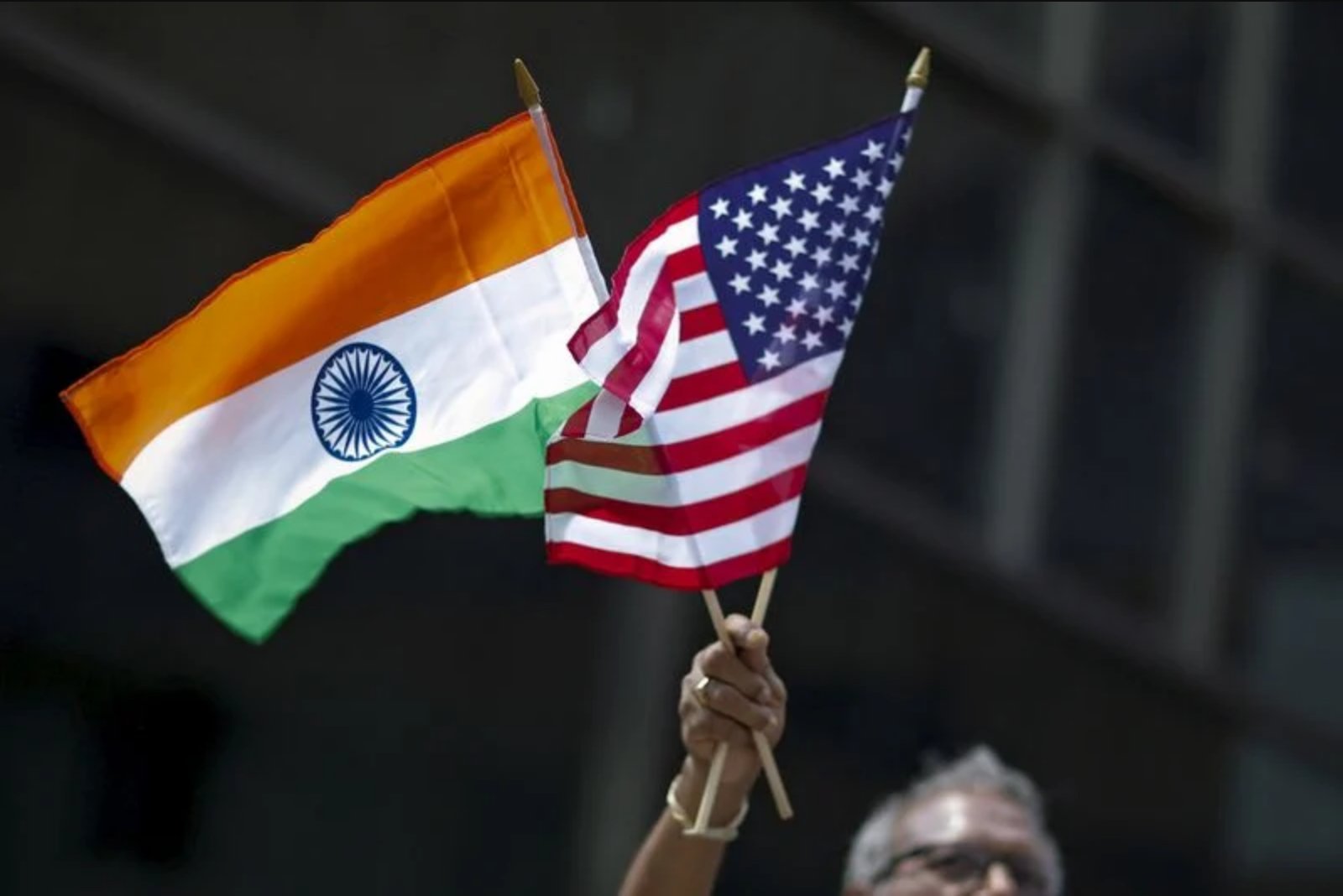
Indian and U.S. trade officials held talks in New Delhi this week focused on ways to conclude an interim trade agreement, the Indian government said in a statement after discussions between India's trade minister, Piyush Goyal, and U.S. Trade Representative Jamieson Greer.
Greer, the United States' top trade diplomat, was in India for two days of talks seen by both sides as central to repairing strained bilateral ties. His visit followed the first meeting in more than a year between Prime Minister Narendra Modi and U.S. President Donald Trump on June 17 on the sidelines of the G7 summit.
The Indian government said the two sides have made substantial progress in their negotiations in recent months and reiterated their commitment to securing an agreement that they characterize as "balanced and commercially meaningful." There was no immediate comment from the U.S. trade representative following the meetings.
Economic data cited during the broader discussion showed Indian exports to the United States rose marginally to $17.29 billion in April-May from $17.21 billion in the same period a year earlier, a performance achieved despite ongoing uncertainty about potential future U.S. tariffs.
New Delhi and Washington reached an initial understanding on trade in February, but several outstanding issues remain unresolved. One key complication is a U.S. Section 301 investigation into alleged excess industrial capacity and forced-labour concerns that encompasses roughly 60 economies, including India. That probe continues to cast uncertainty over the path to a final deal.
As part of the framework discussed in February, the two sides had agreed to 18% tariffs on Indian goods in return for New Delhi lowering certain trade barriers and increasing purchases of American products. However, a subsequent U.S. Supreme Court ruling invalidated sweeping global tariffs that had been central to part of the U.S. offer.
Ajay Srivastava, founder of the Delhi-based Global Trade Research Initiative (GTRI), said in a report released ahead of Greer's visit that the U.S. element of the original bargain no longer exists in practical terms because of that ruling. The report also argued Washington is now leaning on Section 301 investigations to preserve negotiation leverage.
Earlier this month, U.S. trade officials proposed additional tariffs of 12.5% on imports from India and 53 other economies as part of a forced-labour probe, though no final decision on those duties has been announced.
Under the proposed interim deal, New Delhi is seeking a competitive tariff advantage relative to other regional exporters to the U.S. market. But with the U.S. offer to reduce tariffs from 25% to 18% effectively removed by the court ruling, India faces continued pressure to make longer-term market-access commitments while the reciprocal U.S. concessions remain unclear.
Following his meetings in India, Greer is scheduled to travel to Uzbekistan, where he will meet President Shavkat Mirziyoyev and other senior officials to discuss trade ties between that country and the United States.
Clear summary: Indian and U.S. trade negotiators met in New Delhi to discuss potential paths to an interim trade agreement. While both sides say progress has been made and they aim for a balanced, commercially meaningful pact, unresolved issues remain, including the fallout from a U.S. Supreme Court ruling that undercut a tariff-cut element of the U.S. offer and an active Section 301 investigation that could lead to additional tariffs.