
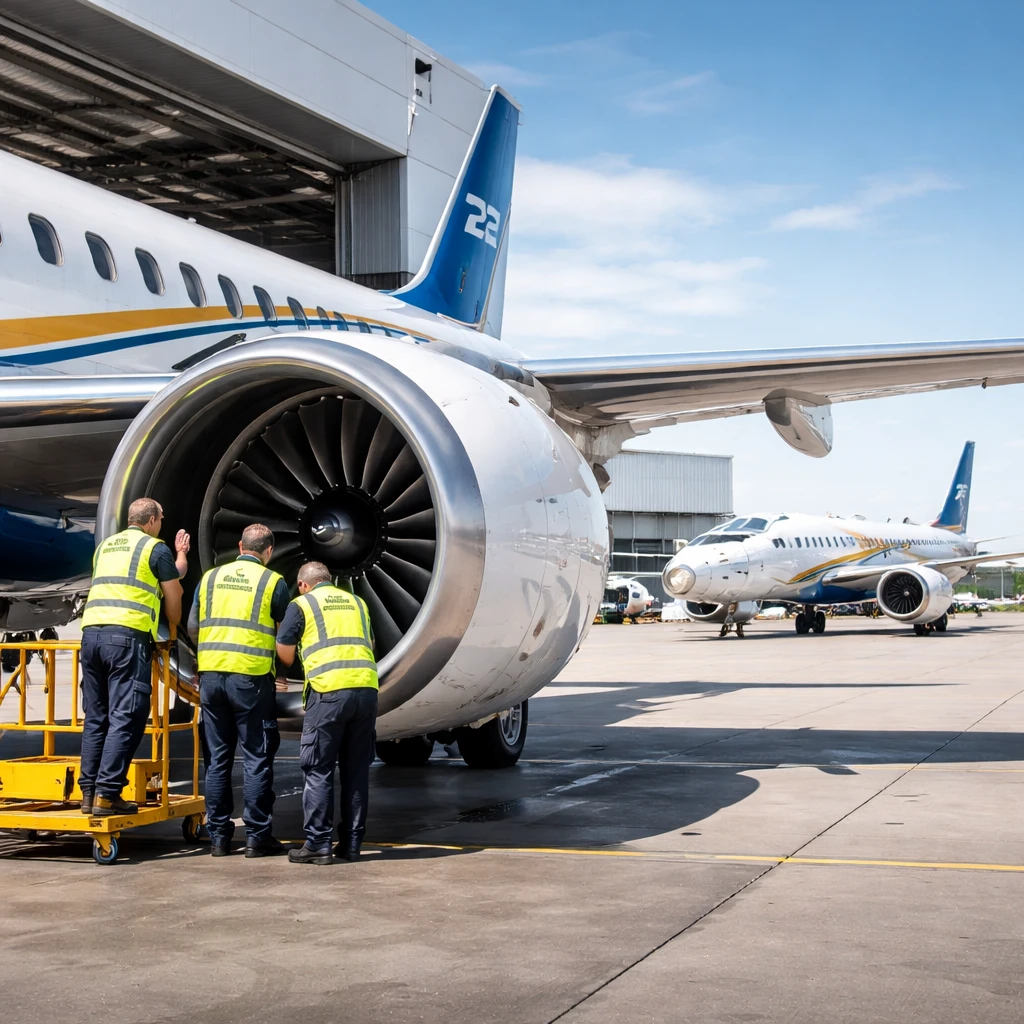
Embraer said Thursday that its commercial aviation order book stands at more than $15 billion at the end of the first quarter, representing roughly a 50% increase from the same period a year earlier. The Brazilian planemaker also reported that it has addressed major engine issues that had affected its next-generation E2 series.
Among recent contract developments, Embraer disclosed last week a firm order from lessor Azorra for 15 E195-E2 aircraft. Management said the company still expects to meet its 2026 production guidance of delivering between 80 and 85 commercial jets, a target reiterated by Rodrigo Silva e Souza, marketing vice president for the commercial unit.
On the operational front, Embraer told reporters that it anticipates no E2 aircraft will remain grounded due to engine-related problems by the end of 2026. The manufacturer reported a meaningful decline in the E2 fleet's aircraft-on-ground rate, which now sits at 1%, down from 22% in March 2025.
The E2 family uses turbofan engines produced by the Pratt & Whitney division of RTX. Embraer said those engines are undergoing improvements aimed at bolstering performance in hot and harsh operating conditions. The company noted broader industry pressure on engine makers stemming from airlines' concerns over grounded aircraft and rising repair costs.
Embraer also highlighted available production capacity, saying there are production slots open before 2030. The company positions that capacity as an advantage relative to larger competitors such as Boeing and Airbus. Embraer concentrates on jets with seating capacities up to approximately 150 passengers, a segment below that served by the Airbus A320 and Boeing 737 families.
Context and implications
- Backlog growth provides revenue visibility for Embraer's commercial unit, supported in part by recent firm orders such as the Azorra deal for 15 E195-E2 jets.
- Capacity to meet guidance for 2026 deliveries remains a key operational milestone for the company and its customers.
- Engine improvements on E2 aircraft and a sharply reduced aircraft-on-ground rate aim to restore operator confidence and limit disruption to airline schedules.
Note: This article reports only the company statements and figures provided by Embraer and does not add additional information beyond those disclosures.