
Economy November 28, 2026 01:52 AM

Strait of Hormuz Tensions Escalate as OPEC+ Prepares for Supply Talks

Iran reports tanker incidents, U.S. reinforces blockade, and OPEC+ expected to maintain production targets amid growing uncertainty.

By Nina Shah
Share
Twitter Reddit Facebook LinkedIn

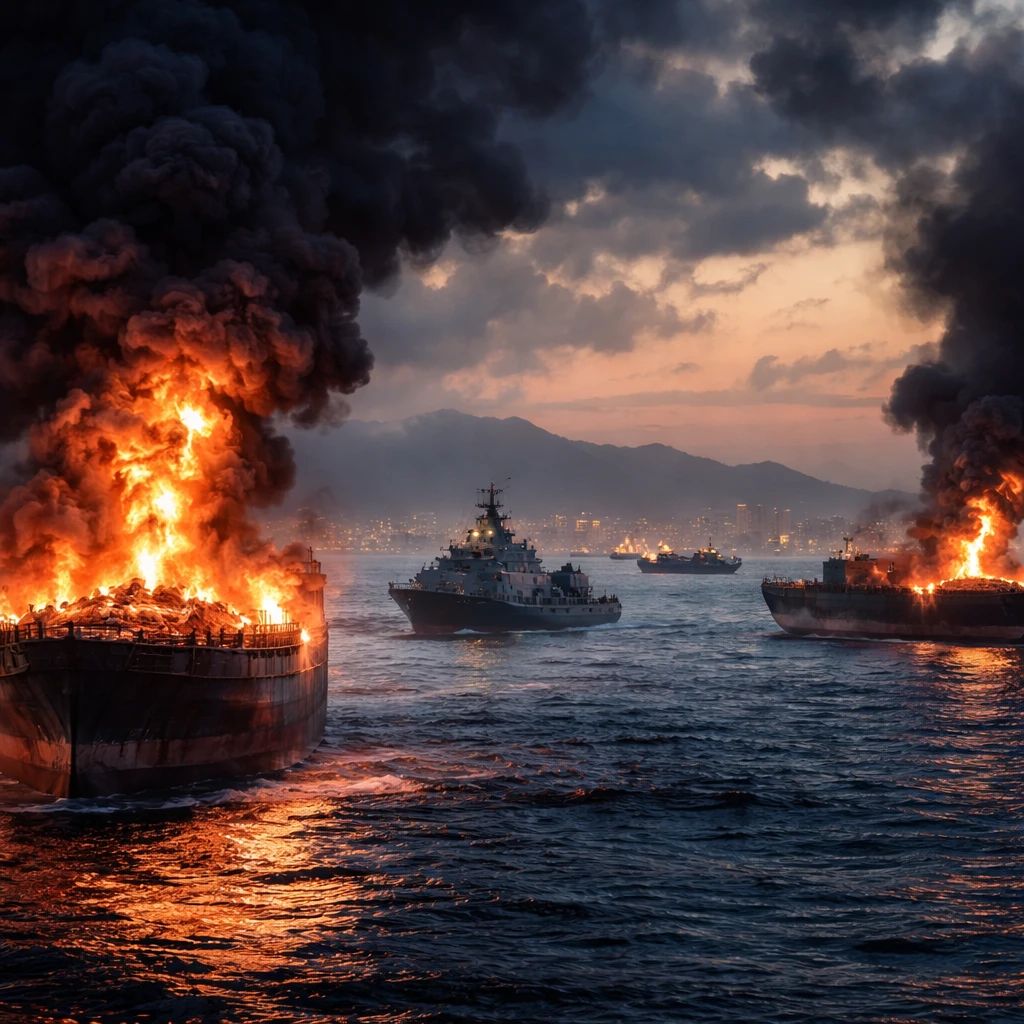
Tensions in the Strait of Hormuz intensified over the weekend as Iran reported two oil tankers caught fire after encountering naval mines, while the U.S. military said it disabled a commercial vessel attempting to breach its blockade of Iran. The U.S. has redirected 158 commercial vessels and disabled six since the blockade began in April. Iran's military claimed control over waters from the Strait of Hormuz to the northern Indian Ocean, a claim disputed by Washington. The International Maritime Organization said it had no official information on a potential Iran-Oman agreement to regulate shipping through Hormuz. Regional tensions also rose as Saudi Arabia intercepted a missile launched by Yemen's Houthis toward Riyadh, and Houthi media reported renewed Saudi strikes on Yemen. Pakistan, Turkey, and Saudi Arabia reviewed defense commitments under the Mecca alliance. Italian Foreign Minister Antonio Tajani said Kuwaiti investigators found the drone that killed two Italian technicians was manufactured in Iran; Tehran denied responsibility and offered a joint investigation. OPEC+, which accounts for about 35% of global oil production, is expected to meet Sunday and has reportedly reached a preliminary agreement to maintain existing production targets through the first quarter of 2027. The conflict's economic impact spread to aviation as Norse Atlantic announced its Norwegian subsidiary would file for bankruptcy protection, citing soaring fuel costs linked to the Iran war.

Strait of Hormuz Tensions Escalate as OPEC+ Prepares for Supply Talks
Summarize with
ChatGPT Perplexity Claude Grok Gemini

Key Points

  • Iran reported two oil tankers caught fire after encountering naval mines in the Strait of Hormuz, while the U.S. military disabled a commercial vessel attempting to breach its blockade, adding to disruptions in the strategic shipping corridor.
  • OPEC+, which accounts for about 35% of global oil production, is expected to meet Sunday and has reportedly reached a preliminary agreement to maintain existing production targets through the first quarter of 2027.
  • Norse Atlantic announced its Norwegian operating subsidiary would file for bankruptcy protection, citing soaring fuel costs linked to the Iran war, highlighting the conflict's impact on energy-intensive industries.

Tensions surrounding the Strait of Hormuz escalated on Saturday after Iran reported fresh tanker incidents and the U.S. reinforced its naval blockade, raising concerns over global energy supplies ahead of Sunday’s OPEC+ meeting.

Iran’s Islamic Revolutionary Guard Corps (IRGC) said two oil tankers caught fire after encountering naval mines, adding to mounting disruptions across the strategic shipping corridor.

U.S. Central Command (CENTCOM) separately said it had disabled a commercial vessel accused of attempting to breach Washington’s blockade of Iran. The U.S. military said it had redirected 158 commercial vessels and disabled six since the blockade began in April.

Iran’s military claimed its navy maintained control over waters extending from the Strait of Hormuz to the northern Indian Ocean, an assertion Washington disputed.

The International Maritime Organization said Saturday it had received no official information regarding a potential agreement between Iran and Oman to regulate shipping through Hormuz.

Regional tensions also intensified as Saudi Arabia intercepted a missile launched by Yemen’s Houthis towards Riyadh, according to the Saudi-led coalition. Houthi-affiliated media reported renewed Saudi strikes targeting infrastructure across Yemen, following Thursday’s Houthi attack on an oil refinery in Saudi Arabia’s Jazan region.

Pakistan, Turkey and Saudi Arabia reviewed their collective defense commitments under the Mecca alliance, pledging closer security cooperation.

Meanwhile, Italian Foreign Minister Antonio Tajani said Kuwaiti investigators determined that the drone involved in an attack that killed two Italian technicians was manufactured in Iran. Tehran denied responsibility and offered to participate in a joint investigation.

OPEC+ producers are expected to meet Sunday amid growing uncertainty surrounding Gulf energy exports. The alliance, accounting for approximately 35% of global oil production, has reportedly reached a preliminary agreement to maintain existing production targets through the first quarter of 2027.

The conflict’s economic repercussions are also spreading across the aviation industry. Budget airline Norse Atlantic announced that its Norwegian operating subsidiary would file for bankruptcy protection, citing soaring fuel costs linked to the Iran war.

The developments highlight mounting pressure on energy-intensive businesses as prolonged maritime disruptions threaten global fuel supplies and transportation costs.

Risks

  • Prolonged maritime disruptions in the Strait of Hormuz could further threaten global fuel supplies and transportation costs, pressuring energy-intensive sectors such as aviation and shipping.
  • Uncertainty surrounding Gulf energy exports ahead of the OPEC+ meeting could lead to volatility in oil markets if the preliminary agreement to maintain production targets is not finalized.
  • Regional military escalations, including Saudi Arabia's interception of a Houthi missile and reported strikes on Yemen, risk broadening the conflict and further disrupting energy infrastructure.

More from Economy

U.S. Orders RETN to Exit American Networks by 2027 Over Security Risks Nov 27, 2026 ECB's Rate Hikes Fall Short of 2% Inflation Goal, Dolenc Says Nov 27, 2026 Supreme Court to Weigh Excessive Fines in Alaska Seaplane Forfeiture Case Nov 27, 2026 Global Equity Funds See Largest Weekly Outflow in 14 Months as AI Concerns and Fed Hawkishness Weigh Nov 27, 2026 Citi: Turkish Central Bank's Liquidity Moves Rule Out December Rate Cut Nov 27, 2026