
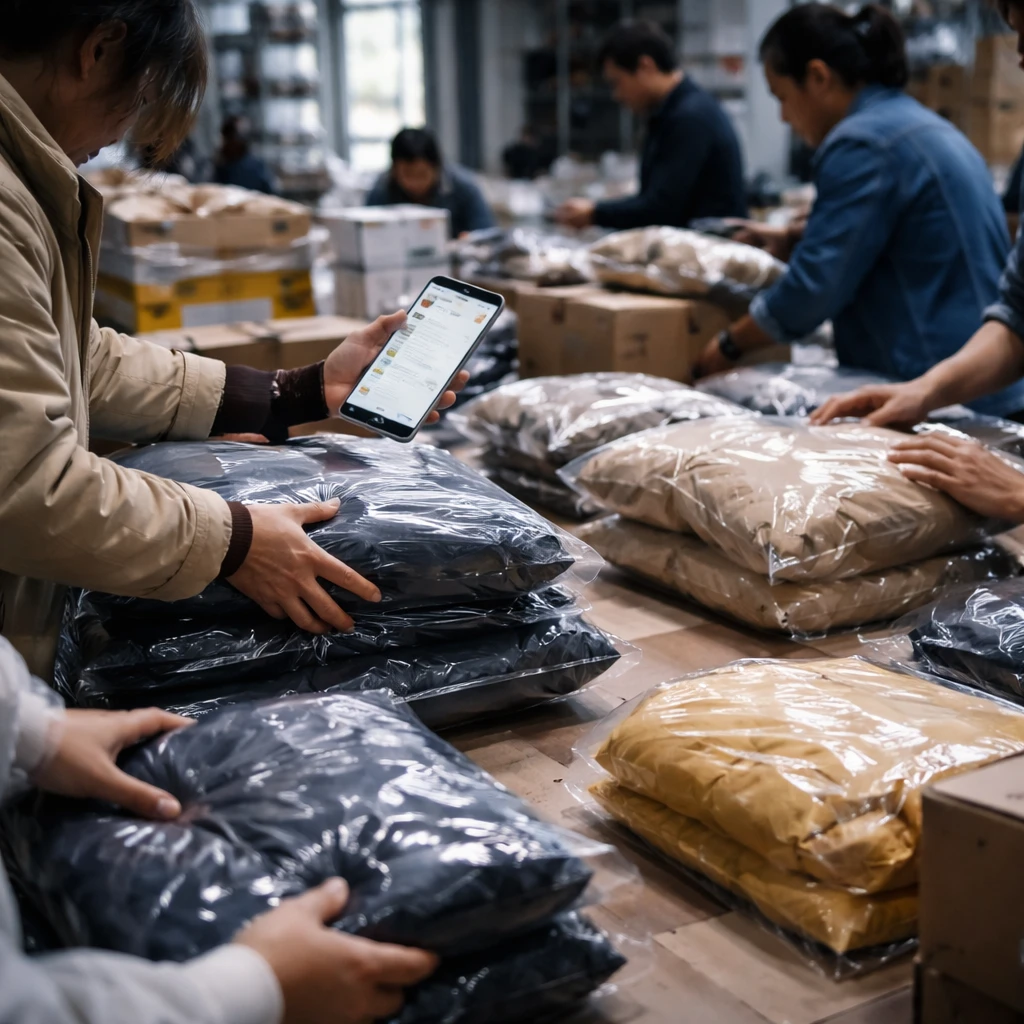
Chinese consumers are showing renewed interest in affordable down jackets this autumn, snapping up styles priced below 500 yuan as shoppers scrutinise whether premium brands are worth the extra cost.
One notable example is a 399-yuan down jacket, filled with 90% goose down and produced for Peking University, which sold out online in mid-November after widespread attention on social media. On Sam's Club - the Walmart-owned retailer - a women's down jacket from the US brand Rokka & Rolla, listed at 499.9 yuan, also displayed as sold out on the retailer's app.
Industry data and consumer surveys point to a broader shift. Research firm iiMedia has said the average price of a down jacket in China more than doubled over the past decade and is forecast to top 1,000 yuan in 2025. Despite that trend, a survey released this month found jackets priced between 401 yuan and 600 yuan were the most popular among buyers.
At the same time, some domestic producers have moved their average price points higher. Bosideng, which leads China's down-jacket market, has said the average price of its core products now sits around 1,500-2,500 yuan.
Economic pressures - including a prolonged property slump, weak wage growth and concerns over job security - have made middle-class households more cautious about discretionary purchases. That caution is prompting many shoppers to reassess how much extra they will pay for premium outerwear.
"I think Sam's has nailed that with its down jackets," said Mark Tanner, founder and managing director of Shanghai-based consultancy China Skinny. He added that many buyers are not simply chasing the cheapest option, but are seeking garments that deliver comparable design, function or enjoyment without the steep prestige premium.
Premium push faces consumer testing
Brands attempting to move upmarket are encountering clear challenges. Bosideng recently released its third collection in collaboration with British designer Kim Jones, but some higher-priced items recorded limited sales on the company's flagship Tmall store, an upmarket online platform.
One blue jacket, featured in advertisements with singer, actor and brand ambassador Wang Leehom and priced at roughly 2,278 yuan, sold just 16 units in the 30 days to November 13, according to figures shown on the Tmall store. Bosideng did not respond to a request for comment.
The trend suggests that consumers are becoming more selective rather than simply trading down across the board. Value is increasingly decisive even as top-tier labels retain appeal among wealthier shoppers.
Strong volumes at mid-price points, resilient luxury demand
Sales volumes during this year’s Singles' Day shopping festival underline the divergent picture. Alibaba reported that more than 30 million down jackets were sold during the event, with Uniqlo and Bosideng ranking first and second by sales and maintaining their positions atop China’s down-jacket market.
Uniqlo reached 100 million yuan in Tmall sales within 24 minutes of its Singles' Day promotions starting on October 20, according to Tmall, and the platform named the brand’s lightweight down jacket - typically retailing around 500 yuan in China - among its top-selling items.
Meanwhile demand at the premium end remains intact for some brands. Canada Goose reported that Greater China revenue rose 32.5% in the quarter ended September. Luciano Santel, Chief Corporate and Supply Officer at Moncler, said last month that "China is a very healthy region for Moncler," as the brand continued to outperform a broader luxury slowdown in the market.
Tanner noted that luxury labels will face increasing pressure to justify elevated price points to consumers who are scrutinising value more closely than before.
Implications for the market
The split in consumer behaviour points to a larger divergence in Chinese consumption patterns. Economic uncertainty is encouraging many middle-income households to either trade down or demand better value for money from purchases that were previously considered discretionary. At the same time, wealthier shoppers continue to spend on products they perceive as offering quality, performance or status.
On the ground, the stance among some consumers is unequivocal. "I definitely won’t buy another down jacket that costs more than 1,000 yuan," said Lv Jiaming, a 27-year-old factory worker in Shanghai. "To me, there isn’t much difference between a jacket priced at 500 or 600 yuan and one that costs more than 1,000 yuan. You can’t really feel the difference, unless it’s exceptionally good."
( $1 = 6.6709 Chinese yuan renminbi )