
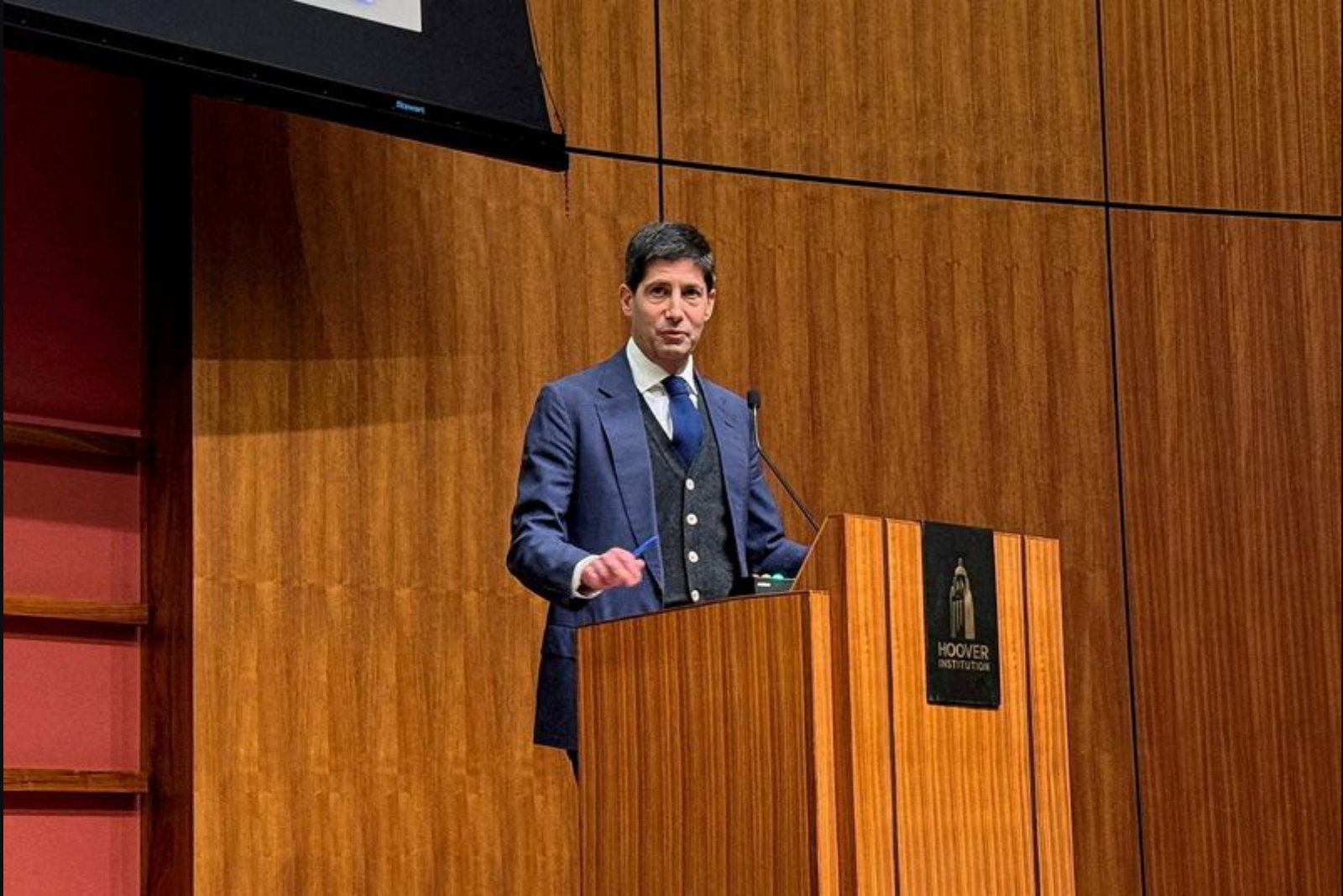
Democratic members of the Senate Banking, Housing, and Urban Affairs Committee say they remain unconvinced that Federal Reserve chair nominee Kevin Warsh has provided an adequate, transparent plan for selling assets he says he will divest if confirmed.
In a report issued Monday ahead of Warsh's confirmation hearing, minority senators highlighted his announcement that he would unload millions of dollars in investments not permitted by current central bank ethics rules. The report asked who would be purchasing such a large volume of securities, noting that some of the holdings could be difficult to place on the market.
"Warsh has not provided key details regarding his plans to divest his assets," the Democrats wrote, adding that the absence of specifics leaves Congress and the public uncertain about who or what would be buying those assets. The report warned that without greater transparency, there is no way for the public to have confidence that Warsh will prioritize the economy over personal financial interests or the interests of his Wall Street billionaire associates.
The Democratic report singled out Warsh's close financial relationship with investor Stanley Druckenmiller, saying the bulk of Warsh's assets are tied to Druckenmiller and raising the prospect that Druckenmiller could be one of those who buys Warsh's holdings. "The vast majority of Mr. Warsh’s assets are tied to Mr. Druckenmiller, raising concerns that if Mr. Warsh divests his assets as he has committed to, Mr. Druckenmiller could be one of the people cutting a check to Mr. Warsh," the report said. "It is not unreasonable for the public to question an arrangement in which a billionaire investor cashes out the future Fed Chair to the tune of millions, as he takes office," the lawmakers added.
Warsh did not immediately respond to a request for comment about his plans for divestiture. The day before his scheduled hearing, he revised his proposed approach after interactions with the Fed's ethics office, according to the reporting.
Last week, Warsh made public financial disclosure forms that show personal wealth in excess of $100 million. The disclosures list a broad array of investments; for a number of those positions Warsh did not supply detailed descriptions. He has pledged to divest holdings that would be inconsistent with the central bank's ethics rules.
Rules adopted by the Federal Reserve in 2022 place strict limits on the types of investments top Fed officials and their family members may retain. For assets that cannot be held, those rules provide a window during which the manager must sell and set out procedures for how those sales should be conducted.
If confirmed, Warsh - who was selected for the role by President Donald Trump after recently advocating for interest-rate cuts following a lengthy period of hawkish commentary - would be the wealthiest person to hold the job in the Fed's history.
Recent years have presented a range of difficulties for Fed officials in managing personal investments, and some have been formally criticized for creating conflicts between their private investing and public responsibilities, the report notes.
Warsh's path to confirmation faces obstacles. A key Republican lawmaker has said he will oppose any confirmation vote until legal inquiries by the Trump administration into the central bank are concluded. Current Fed chair Jerome Powell's leadership term ends next month, and most observers put low odds on Warsh being confirmed in time to succeed Powell. Given the outstanding issues, it could be some time before the former Fed governor receives a Senate vote.
Key points
- Senate Democratic members criticized Kevin Warsh for not providing detailed plans for divesting millions in assets, creating concerns about who will purchase those holdings.
- The report raised potential conflict questions stemming from Warsh's close financial ties to Stanley Druckenmiller and noted Warsh's wealth exceeds $100 million, making him the wealthiest potential Fed chair.
- Warsh revised his divestiture plan after consultations with the Fed's ethics office; Fed rules adopted in 2022 strictly limit permitted investments for top officials.
Risks and uncertainties
- Unclear divestiture mechanics could undermine public trust in Fed decision-making - this has implications for financial markets sensitive to perceived conflicts of interest.
- Potential involvement of a close associate as a purchaser could create or appear to create conflicts that would be scrutinized by lawmakers and the public, affecting confidence in the central bank's independence.
- Political obstacles, including a Republican's pledge to block a confirmation vote until legal probes conclude, mean Warsh may not be confirmed before the current chair's term expires, prolonging uncertainty over Fed leadership.