
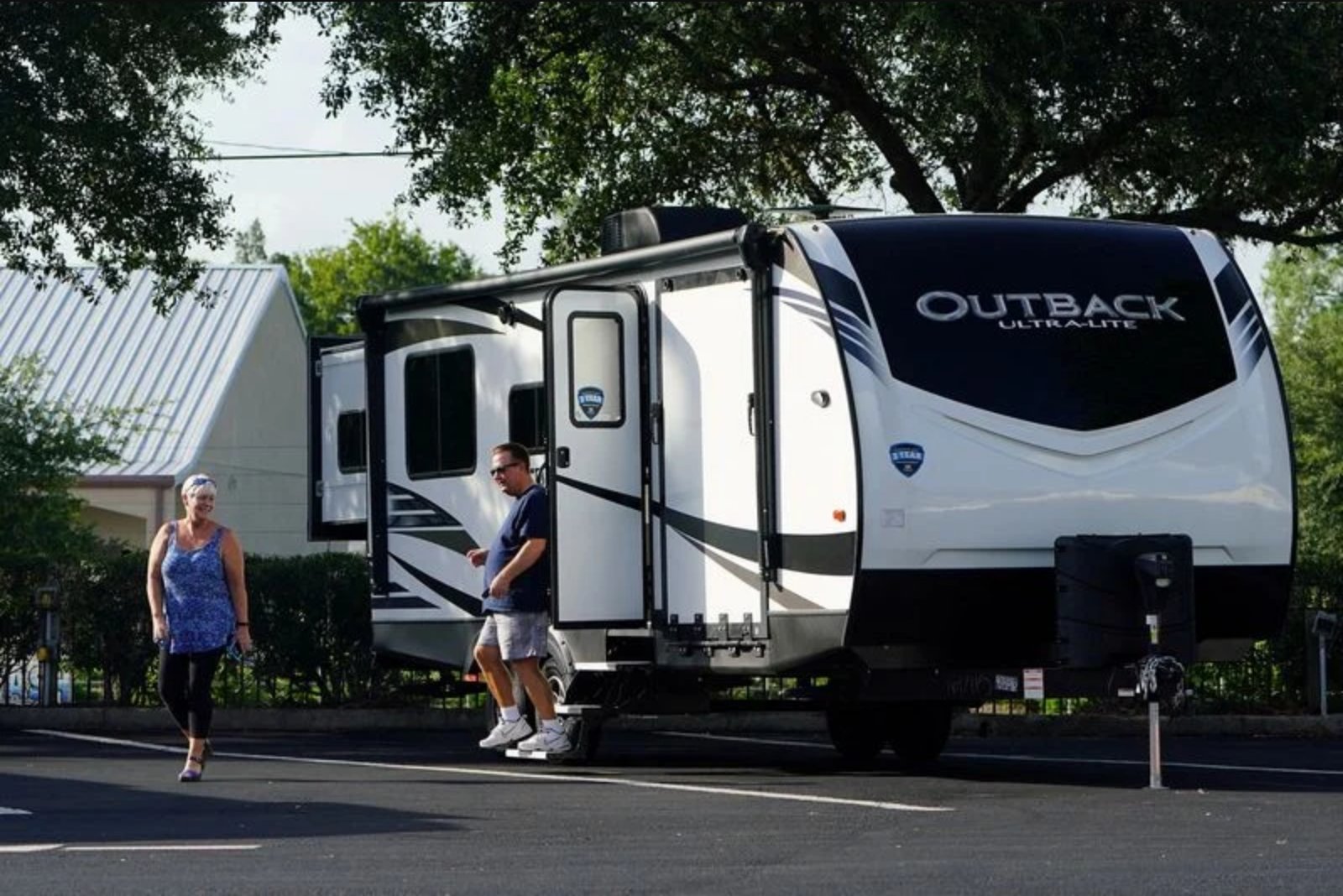
In late March, Coley Brady reduced output at his Elkhart, Indiana complex of five recreational vehicle factories from five production days to four on most assembly lines after spring sales failed to materialize. Brady, co-founder of Alliance RV, pointed to the conflict between the U.S. and Iran and the resulting pressure on global energy markets as an evident factor in the slowdown - developments that had already pushed American gasoline and diesel prices up by 33% and 43%, respectively.
The RV sector - with more than 80% of the rigs sold in the United States produced in northern Indiana - frequently serves as a bellwether for discretionary spending in the broader economy. Recent government and industry data sketch a cooling picture: inflation-adjusted consumer spending on recreational goods and vehicles fell in April for a fifth consecutive month, according to Commerce Department figures, marking the longest run of declines in real outlays for the category since the height of the 2008 Great Recession.
RVs are typically high-ticket discretionary purchases that householders can postpone when economic uncertainty rises. Consumer sentiment slid to a record low in May before edging up in early June, based on the University of Michigan’s Surveys of Consumers, while inflation, at its hottest pace in three years, continues to erode household purchasing power. Interest rates remain elevated and are an additional headwind, as most buyers finance RV purchases; the average rate on such loans is 7.53%, according to LendingTree.
Jeff Hirsch, chief executive of Campers Inn, which operates a network of 50 RV dealerships across 22 states, described a bifurcated market. More-affluent baby boomers are still in the market for rigs, he said, but "many other more cost-conscious consumers just don’t feel this is the right time to make an investment." That caution is visible in registration trends: Statistical Surveys Inc. reports that registrations by consumers have trended downward since last summer, including a nearly 22% plunge in March and a nearly 17% drop in April compared with year-earlier levels.
Shipments from manufacturers to dealers have similarly cooled. The RV Industry Association reports that manufacturers shipped 13.5% fewer units to dealers in the first four months of this year compared with the same period last year. Reflecting that softer demand, the RVIA on June 1 cut its full-year projection for shipments to a range of 300,000 to 328,100 units, well below last year’s tally of 342,200 units. "Economic headwinds and tightening household budgets are weighing on consumer demand and contributing to a more cautious outlook for RV shipments in 2026," said Craig Kirby, president of the RVIA, in a statement accompanying the lowered forecast.
Industry context and recent trajectory
The industry has faced volatile swings in recent years. Early in the COVID-19 pandemic, demand surged as consumers sought ways to travel without flying or staying in hotels, sending shipments to a record of just over 600,000 units in 2021. The post-pandemic correction proved sharp: sales collapsed afterward and manufacturers were left with a sizable inventory overhang that has taken years to reduce.
Gregg Fore, an industry consultant and former RV components manufacturer, described the spring slowdown bluntly: the war in Iran and the spike in fuel costs "killed whatever speed there was" in the market heading into the season. As a result, many manufacturers have trimmed production schedules and some have consolidated plants.
For his part, Brady remains cautiously optimistic that activity could recover later in the year if geopolitical tensions ease. He acknowledged, however, that some analysts expect gasoline prices to remain elevated for an extended period even if immediate hostilities subside. Brady pointed to broader travel dynamics that could support RV use - rising airfares have made road trips comparatively attractive, while concerns about safety and health have dented the appeal of some other travel alternatives. "Mexico has had issues with cartels and violence," he said, and cruise lines have been affected by reports of illnesses. "You’d think all of that would guide back to RV use," he added.
Alliance produced 8,200 RVs last year and expects to top that figure this year, though Brady emphasized results will depend on the market. He estimated that reducing shifts since March has cut his output by about 10%. "We’re scheduled through July, but if the summer goes well, we have the ability to go higher (with production) in August," he said.
Michael Hicks, an economist at Ball State University who follows the RV business, identified demographic and financial factors that still favor the industry. He noted that many current buyers are in their 50s and 60s and often hold secure retirement assets. "They’ve lived through high gas prices before, they’ve bought homes at higher interest rates," Hicks said, implying that this cohort may be less deterred by current fuel and financing costs than younger or more cash-constrained buyers.
Consumer behavior: an example
Some longtime RV owners exemplify that resilience. Michael Provost, a 69-year-old retiree from Rhode Island, has owned three RVs over the last two decades and plans customary seasonal travel to Cape Cod in summer and Florida in winter with his wife, Cheryl. He downplayed the recent jump in pump prices: "This year, we went to Florida and when we came back, it was a dollar more (a gallon)," he said. "You kind of take it in stride." His purchasing pattern underscores the segment of the market that remains active despite higher fuel bills and broader economic headwinds.
Outlook
For now, the RV industry is navigating a mix of structural and cyclical pressures: a still-elevated cost environment that erodes discretionary budgets, higher financing rates for large consumer purchases, softer consumer sentiment, and acute sensitivity to spikes in fuel prices tied to geopolitical instability. At the same time, demographic demand among older buyers and shifting travel economics - including high airfares and concerns about other travel options - could moderate downside risk and support a partial recovery if market conditions improve in coming months.