
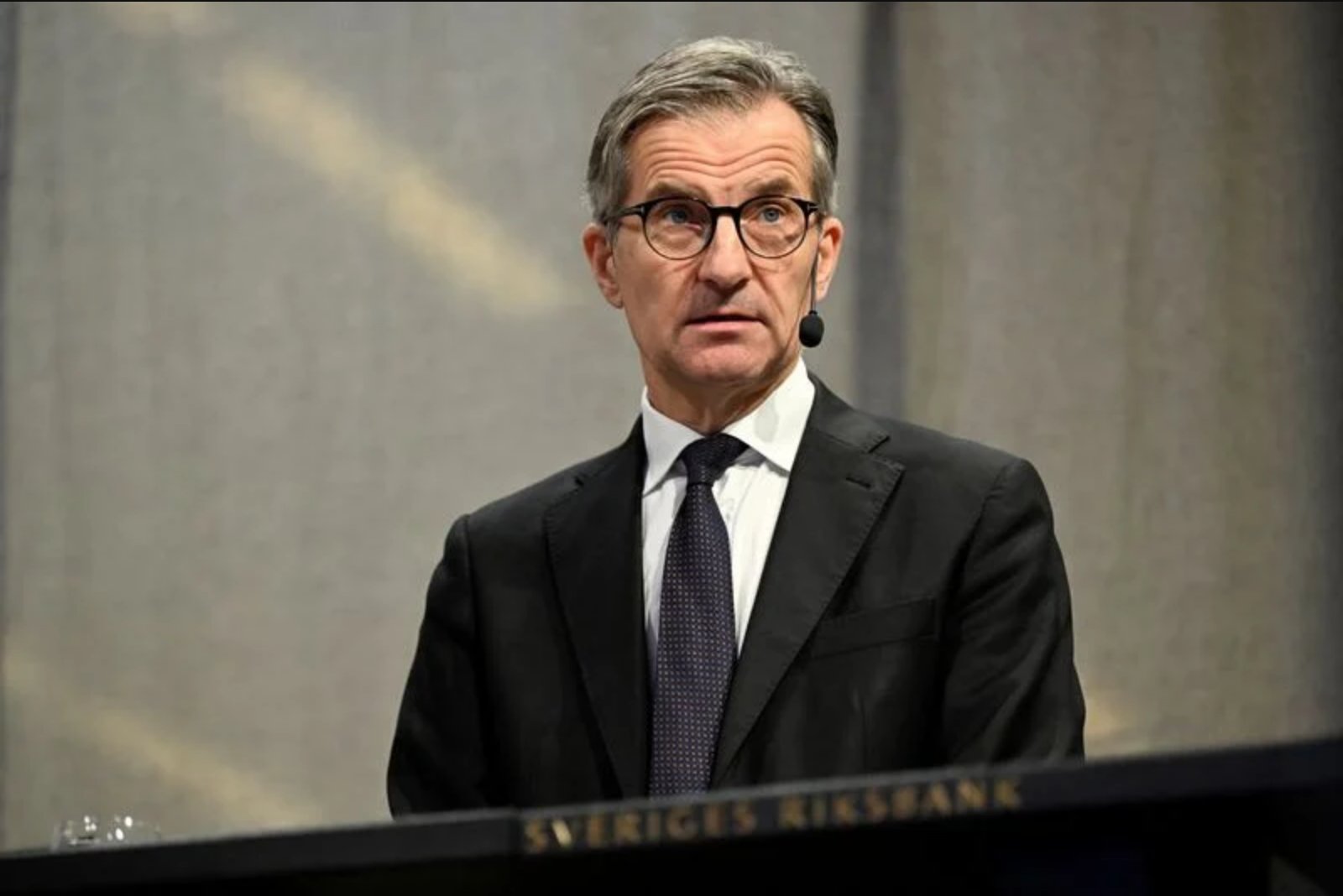
STOCKHOLM, June 15 - Sweden's central bank is widely expected to maintain its policy rate at its upcoming meeting later this week, according to a Reuters poll of economists conducted on Monday. The survey found near unanimity among economists, with only one of 19 banks forecasting a quarter-point increase when the Riksbank issues its policy decision on Wednesday.
Despite the consensus for a pause, market participants and analysts expect the bank to signal an increased likelihood of future tightening to address possible upward pressure on prices stemming from the war in Iran. In a note included in the poll results, J.P. Morgan said: "We expect the Riksbank to shift to a gentle explicit tightening bias," adding, "We continue to look for a September hike, but with risks of later move."
Policy makers globally are assessing how a conflict in the Middle East may affect inflation over the longer term, and the European Central Bank was the first major central bank to act when it tightened policy last week. The Riksbank, however, appears to be in less of a hurry to raise rates.
Sweden has recently experienced relatively muted cost pressures. Underlying inflation was reported at zero in April, the lowest level recorded in three decades. Observers point to Sweden's largely fossil-free energy mix as a factor that has limited the pass-through from higher oil prices. Temporary tax reductions and a stronger Swedish krona have also helped to dampen import price increases.
There are, nonetheless, emerging signs that inflationary pressure may be rebuilding. Producer prices climbed in April at the fastest pace since early 2023, and input price inflation in both manufacturing and service sectors reached multi-year highs. How much of these cost increases will be passed through to consumer prices is uncertain. The Riksbank's own survey of businesses indicated only modest price rises are expected.
Survey respondents were not uniform on the timing of future rate moves. All but four banks in the poll anticipated a rate hike at some point, but analysts differed on when that would occur, with eight respondents predicting a hike within this year.
Implications
- Monetary policy - The Riksbank is likely to signal a tilt toward tighter policy while holding rates at the coming decision.
- Inflation monitoring - Producer and input price trends will be closely watched for evidence of pass-through to consumer inflation.
- Markets and sectors - Banks, exporters/importers, and sectors sensitive to input costs such as manufacturing and services could be affected by any shift in the Riksbank's stance and by currency movements.