
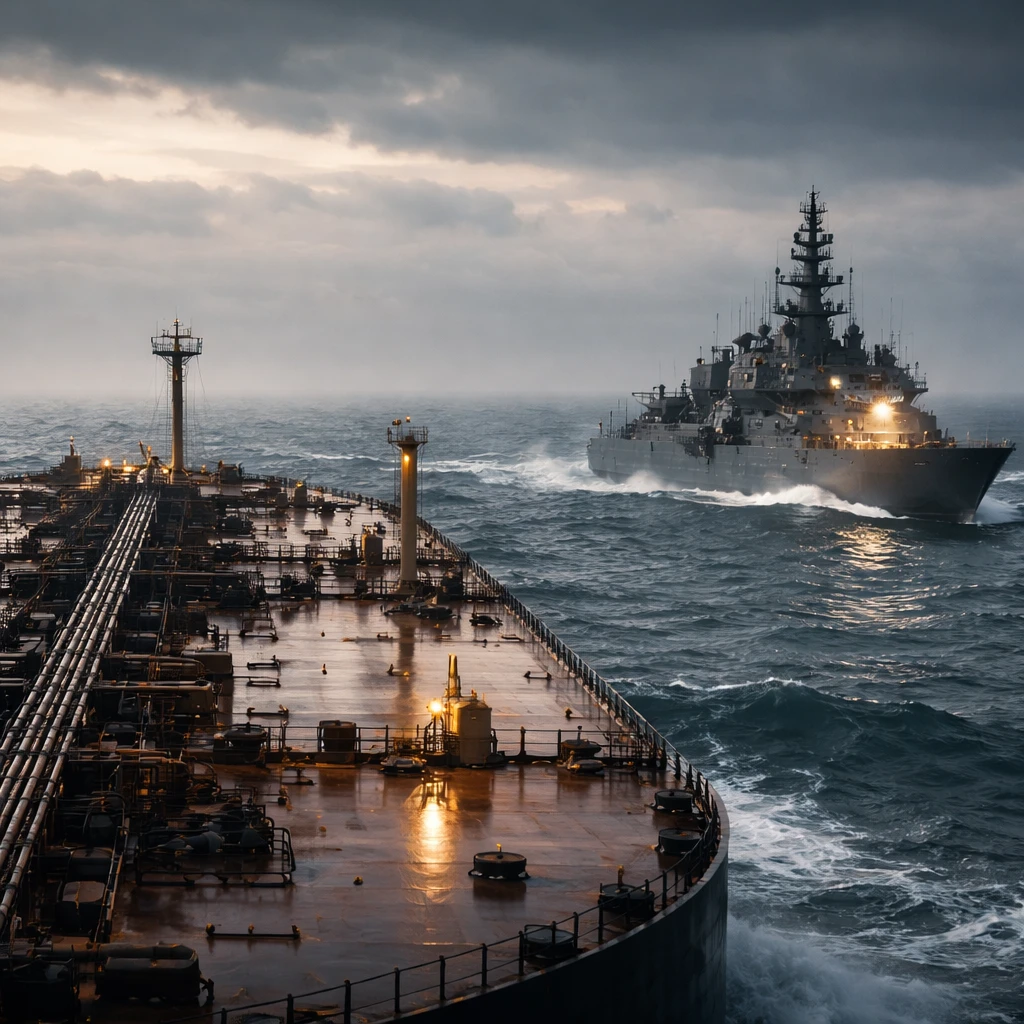
Global markets opened the week under renewed strain after a fresh escalation between the United States and Iran. Reports that U.S. forces seized an Iranian-flagged cargo vessel and Iranian statements that the Strait of Hormuz had been shut again in response to what Tehran described as a U.S. blockade pushed risk assets lower and lifted energy prices.
Futures tied to the main U.S. equity benchmarks moved lower early Monday as investors digested the latest developments. By 03:29 ET (07:29 GMT), the Dow futures contract had fallen 313 points, or 0.6%, S&P 500 futures were down 37 points, or 0.5%, and Nasdaq 100 futures had slipped 141 points, or 0.5%. Those moves came after the major U.S. averages had risen by more than 1% to close the prior week and had reached all-time highs.
Markets had recently been encouraged by statements from both U.S. and Iranian officials saying the Strait of Hormuz - a chokepoint through which roughly a fifth of the world’s oil passes - was again open to commercial shipping after weeks of closure. Sentiment had also been lifted by talk of a potential extension to a ceasefire between the two countries, an arrangement scheduled to expire later this week. Optimism that the conflict might be approaching a lasting resolution helped pull oil prices down sharply late last week and eased some inflation concerns around the prospect of further central bank rate action. Even after that retreat, crude prices remained above levels seen before the outbreak of the war.
That fragile equilibrium began to shift with the new reports. President Donald Trump said an Iranian-flagged cargo ship had been seized by American forces, alleging the vessel was attempting to run a U.S. blockade of Iran’s ports and coast. Tehran responded by threatening retaliation and indicating it would not participate in prospective negotiations with the United States this week. Mr. Trump added a further warning that the U.S. could "blow up all power plants and bridges" in Iran should Tehran refuse to accept a peace settlement.
Complicating the picture are conflicting statements from Iranian officials about whether the Strait of Hormuz had actually been reopened. Data from Kpler showed more than 20 ships transited the strait on Saturday, the highest number since March 1. Iran, however, has stated that the chokepoint is once again closed owing to the U.S. blockade. The mixed signals prompted analysts to note the temporary nature of the prior de-escalation. "[D]evelopments over the weekend suggest the thaw has been short-lived," analysts at ING said in a client note.
Energy markets reacted quickly. By 03:59 ET, Brent crude futures, the international benchmark, had risen 5.9% to $95.67 a barrel, while U.S. West Texas Intermediate futures were up 6.2% at $87.73 a barrel. Analysts at ING characterized the moves as a renewed whipsawing in oil markets, saying prices were being pulled back into volatility by the swing from apparent de-escalation to renewed tensions.
Movements in crude have been central to market dynamics since the war began in late February, with oil price swings prompting warnings about possible spikes in inflation and a consequent drag on global growth. Those concerns feed into monetary policy considerations, and abrupt movements in energy costs have had ripple effects across other asset classes. For example, gold, which recovered some ground last week, has partially reversed that gain as market participants weigh the risk that energy-driven inflation might push interest rates higher for longer - an outcome that can limit demand for non-yielding assets such as bullion.
Against this geopolitical backdrop, corporate news provided additional touchpoints for investors trying to assess the broader business outlook. Steelmaker Cleveland-Cliffs is set to report earnings on Monday, headlining an otherwise light schedule before the opening bell. The release comes shortly after the World Steel Association revised down its forecast for global crude steel demand this year, explicitly citing a war-linked decline in Middle East consumption as a contributing factor.
Later in the week, markets will also focus on quarterly results from a range of heavyweights that could shed light on how the conflict and its economic side effects are filtering through companies' operations and demand trends. Firms due to report include American Express, Intel, UnitedHealth, RTX Corporation, and Tesla.
In the technology supply chain, memory chipmaker SK Hynix announced it has started mass production of a new 192GB SOCAMM2 memory module designed for Nvidia’s Vera Rubin artificial intelligence chip. The South Korean company said the SOCAMM2 is a next-generation module intended to deliver AI server capability with lower power consumption. SK Hynix said the new products are designed for the Vera Rubin chip and will "fundamentally resolve the memory bottlenecks encountered during the training and inference of large language model(s)." As one of the world’s largest memory producers and a key supplier to Nvidia, SK Hynix’s update was associated with a rise in its shares and supported a 0.4% gain in Korea’s KOSPI index; Samsung Electronics, by contrast, edged down.
The confluence of geopolitical risk, volatile energy prices, and corporate results creates a complex environment for investors. Short-term trading has been sensitive to headlines about military moves and shipping lane access, while corporate earnings and technological supply-chain developments have supplied counterpoints that may alter sector-specific narratives.
Market snapshot and immediate drivers
- U.S. futures slipped early Monday as a fresh U.S.-Iran confrontation weighed on risk appetite.
- Claims that U.S. forces seized an Iranian-flagged vessel and Iranian announcements about re-closing the Strait of Hormuz contributed to renewed uncertainty.
- Oil rallied sharply on the news, with Brent and WTI up roughly 5.9% and 6.2% respectively by 03:59 ET.
Corporate and sector developments to watch
- Cleveland-Cliffs reports earnings Monday, following a downgrade to global steel demand by the World Steel Association that cited war-related weakness in the Middle East.
- SK Hynix has begun mass production of a 192GB SOCAMM2 memory module for Nvidia’s Vera Rubin AI chip, an advance intended to address memory bottlenecks in large language model training and inference.
- Later-week results from credit, semiconductor, healthcare, defense, and EV companies will provide additional data points on economic resilience and demand.
This story will continue to evolve as further confirmations of the shipping seizure, additional Iranian statements, and ensuing market reactions emerge. For now, investors are balancing headline-driven volatility in energy and safe-haven assets with company-specific results and technology supply-chain developments.