
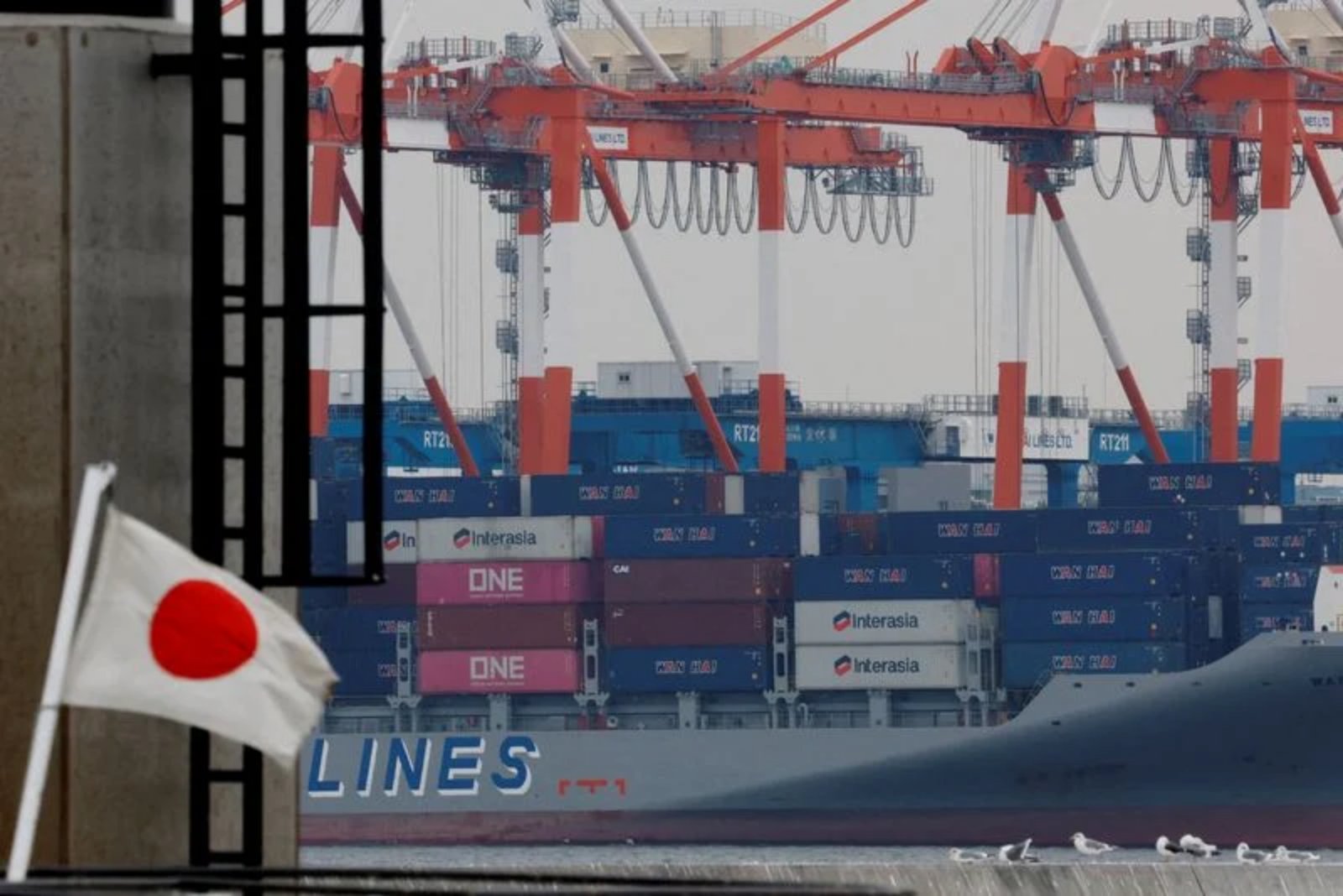
Tokyo, June 17 - Japan's external trade performance demonstrated notable resilience in May, with exports recording a ninth consecutive monthly increase. Government data released Wednesday revealed that total export values surged by 17% year-on-year, exceeding the median market forecast of a 16.2% rise. This growth follows a 14.8% expansion observed in April, indicating a sustained upward trajectory in overseas sales.
The expansion was primarily fueled by robust demand for semiconductor-related goods. Exports of chip-making equipment and electronic components remained firm, reflecting continued global investment in advanced technologies, including artificial intelligence infrastructure and data centers. This sectoral strength has provided a critical buffer against broader macroeconomic pressures.
Regional trade flows also showed solid gains. Exports to the United States increased by 12.5% compared to the same period last year, while shipments to China rose by 17.9%. These figures underscore the persistent global appetite for Japanese manufacturing outputs, particularly in the electronics and industrial machinery sectors.
On the import side, total values grew by 12.5% year-on-year, slightly below the anticipated 12.8% increase. This moderation in import growth was largely attributable to a significant contraction in energy procurement. Crude oil import values plummeted by 28.5%, driven by a sharp decline in physical volumes. This reduction occurred despite a severe escalation in prices following the closure of the Strait of Hormuz, a critical chokepoint for global energy supplies triggered by the ongoing conflict involving the United States, Israel, and Iran.
The divergence between strong export revenue and compressed import volumes resulted in a narrower trade deficit. Japan recorded a deficit of 378.7 billion yen, equivalent to approximately $2.36 billion. This figure was substantially lower than the forecasted deficit of 564.6 billion yen, highlighting the offsetting effect of export strength against the backdrop of elevated energy costs.
Japan's heavy reliance on imported energy has exposed the economy to volatility in the Middle East. While the government has initiated efforts to diversify crude procurement by securing alternative supplies from regions outside the Middle East, including from the United States, these measures have not yet fully neutralized the financial impact of the disrupted supply routes.
Geopolitical developments continue to loom over the economic outlook. Officials from the United States and Iran announced a framework agreement aimed at ending hostilities, lifting the naval blockade on Iran, and facilitating the reopening of the Strait of Hormuz. Such a resolution could significantly stabilize global energy markets and reduce the premium currently attached to Middle Eastern crude flows.
At the current exchange rate of 160.4100 yen per dollar, the trade data presents a complex picture of an economy navigating between structural demand strengths in high-tech manufacturing and acute vulnerabilities in energy security. The persistence of export growth suggests that Japanese firms are maintaining their competitive position in global supply chains, even as they manage the operational and financial challenges associated with geopolitical instability and input cost fluctuations.