
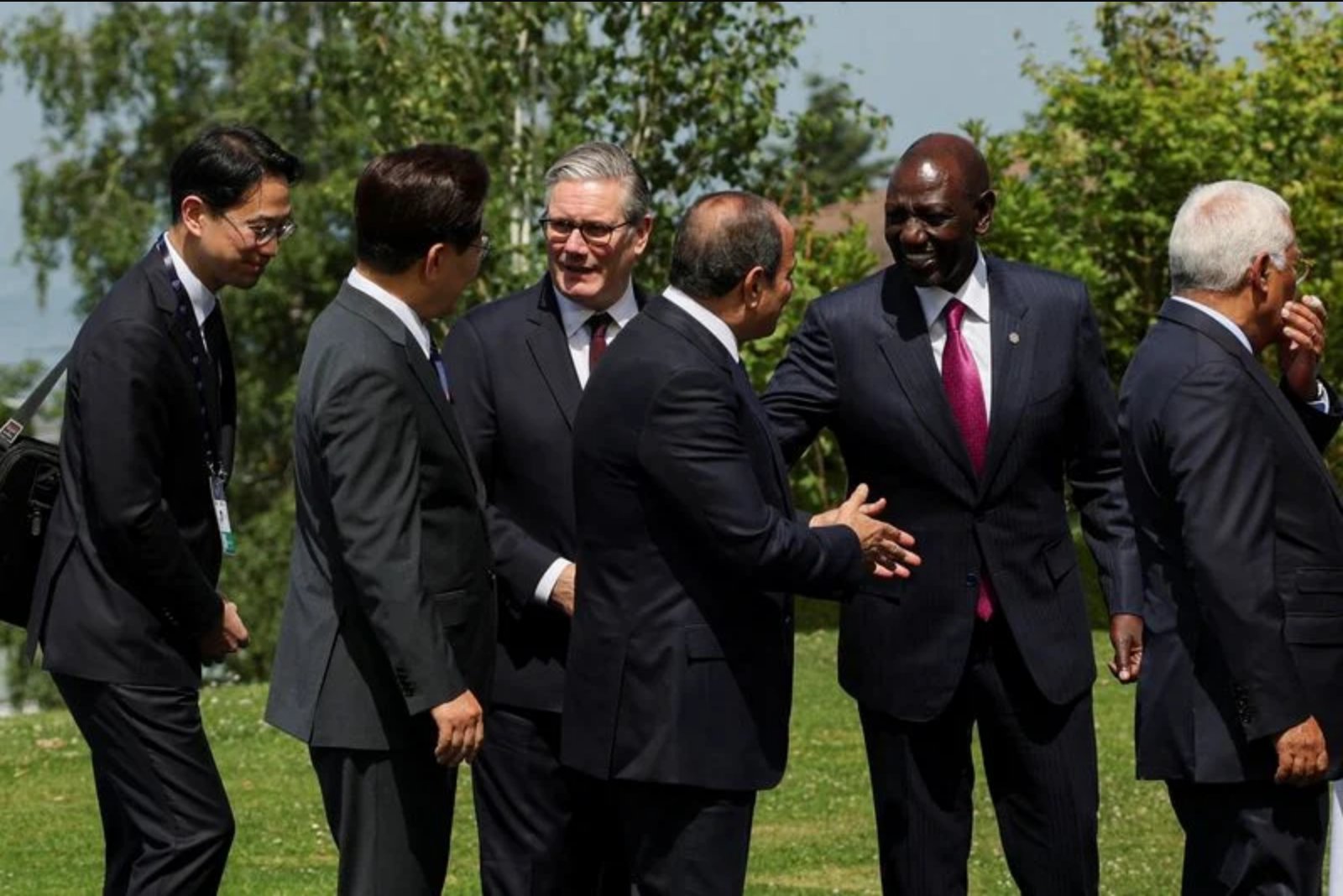
Leaders of the Group of 7 gathered in the French lakeside resort of Evian-les-Bains on Tuesday, concluding a session that included representatives from Kenya, Egypt, India, Brazil, and South Korea. The resulting joint declaration outlines a renewed commitment to international cooperation on development, addressing the pressing financial constraints that threaten global economic stability. While acknowledging that traditional development policies have yielded results, the leaders explicitly stated these measures have only achieved a "limited impact in reducing financial dependency on external assistance."
The declaration underscores a shifting landscape in global financing. Public resources, which have been curtailed sharply by the United States and other advanced economies in recent years, are recognized as playing a key role but are deemed insufficient to meet the scale of global development needs. In response, the leaders are urging greater emphasis on private investment and calling for structural reforms to navigate these financial pressures.
A central focus of the statement is the escalating debt crisis affecting developing nations. The leaders pledged to enhance efforts to address debt vulnerabilities that constrain fiscal space for essential public service interventions. This includes a specific acknowledgment of middle-income countries that do not qualify for debt relief initiatives launched by the broader Group of 20 during the pandemic. The declaration calls for progress toward a common approach to debt restructurings for these vulnerable nations that fall outside the G20 Common Framework.
Eric LeCompte, executive director of the development group Jubilee USA Network, welcomed the leaders' statement. He characterized the core objective as calling for "pre-emptive debt restructuring," which involves addressing debt burdens before they escalate into full-blown crises. LeCompte noted the strategic importance of focusing on private sector investment, citing the decline in public development funding as a driving factor for this shift.
The urgency of this shift is reflected in recent data from the Organisation for Economic Co-operation and Development. Official development assistance dropped by 23.1% in real terms in 2025, falling to $174.3 billion. The United States led this contraction with a nearly 57% decrease in aid. Smaller declines were recorded by Germany, France, Britain, and Japan.
This reduction in public funding has drawn sharp criticism from development organizations. Oxfam International condemned the G7 statement, urging leaders to restore aid to the 0.7% of gross national income previously pledged. Joern Kalinski, a senior adviser on G7 matters for Oxfam, stated that the group has made the "biggest collective cut in life-saving aid in its history," a move he claimed is already causing millions of deaths. Kalinski argued that repurposing life-saving aid to provide financial incentives for private investors, rather than funding public infrastructure like schools and hospitals, is the wrong approach and will exacerbate existing problems.