
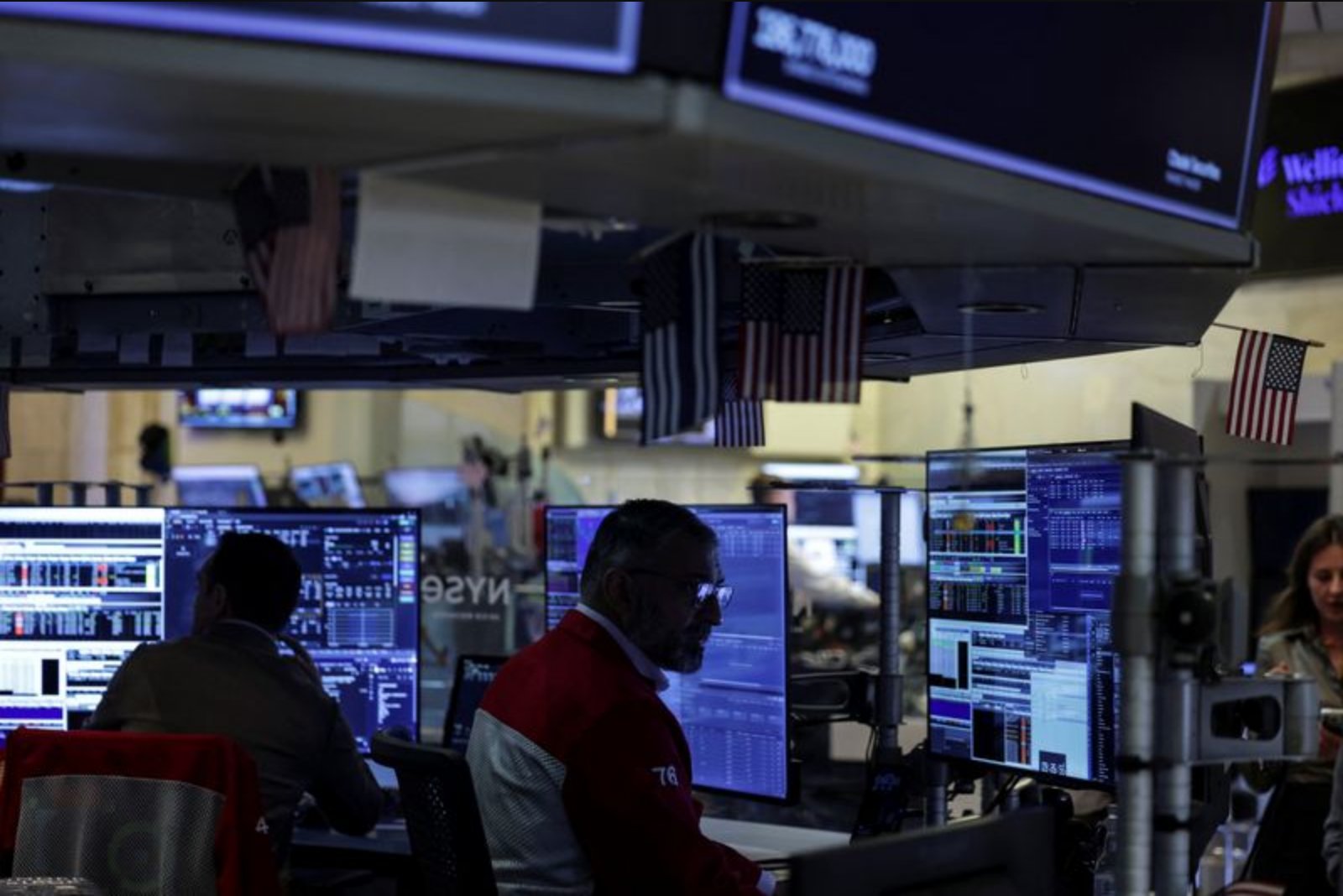
Markets moved sharply on Thursday as a renewed geopolitical chill and private-market developments altered investor sentiment. Oil prices rose about 4% - marking a fourth straight gain - while U.S. stock indices fell, with the Nasdaq suffering its largest one-day drop in a month at -0.9%. The shifts reflected cooling hopes for a U.S.-Iran peace deal and pushed technology names lower even as other parts of the market produced gains.
Today's market snapshot
- Stocks: Asian markets were generally lower with South Korea's KOSPI an exception, where it hit a new high. European bourses delivered mixed results. Wall Street closed in the red, led by a near 1% slide in the Nasdaq.
- Sectors and shares: Six of the 11 S&P 500 sectors fell and five rose. The tech sector dropped 1.5% while utilities climbed 2.8%. Notable individual moves included Texas Instruments up 19%, ServiceNow down 18%, IBM down 8% and Tesla off 3.6%. After-hours trading showed Intel rising 16% and AMD up 5%.
- FX: The U.S. dollar strengthened for a third consecutive day. The Indian rupee was headed for its worst week since 2022. Peru's sol slid again. Brazil's real fell 1% - its biggest single-day drop in a month - returning to levels below 5.00 per dollar.
- Bonds: U.S. Treasuries declined, sending yields up about 4 basis points at the short end and flattening the curve for a fourth straight session. A 5-year TIPS auction proceeded without incident.
- Commodities and metals: Oil gained roughly 4% and extended a four-day winning streak. Gold edged down to a one-week low.
Private market strains re-emerge
The private markets came back into focus following a Reuters exclusive revealing that private equity firm Thoma Bravo is close to transferring software company Medallia to its lenders. Under the reported outcome, Thoma Bravo and its co-investors would record a $5.1 billion equity writedown. Medallia's principal lenders include private credit managers Blackstone, KKR and Apollo. Shares of those firms underperformed on Thursday.
Blackstone's chief executive, Stephen Schwarzman, publicly defended private credit amid the fallout, yet Blackstone's shares tumbled 5.7% on the day - their worst performance in two months.
Historic IPO pipeline despite losses
Investor attention is also fixed on an unprecedented wave of initial public offerings expected in the months ahead. SpaceX's market listing is anticipated in June, with OpenAI and Anthropic reportedly to follow shortly thereafter. Together, these listings are expected to contribute to the largest IPO wave in history. According to LPL Financial estimates cited in market coverage, the combined value of these offerings could approach $3 trillion. All three companies are reported to be loss-making, meaning investors will be purchasing future earnings potential rather than current profits.
Where are traditional safe havens?
Despite the prospect of prolonged conflict in the Middle East - the Iran war is approaching its third month - and ongoing disruptions in global energy markets, many equity markets, including U.S. indexes, have shown a notable degree of resilience. Yet demand for classic safety assets appears muted. Since the outbreak of the war, Treasuries, gold and the Japanese yen have all declined, and the dollar has shown only modest gains. Bitcoin has risen 18% since the conflict, but that follows a 50% decline in the five months before the war.
The displacement of demand away from conventional safe havens raises questions about whether large-cap technology stocks are attracting capital as a form of risk mitigation, though that dynamic is not established as a fact here - it is an observation of how flows have behaved amid this uncertainty.
What could move markets next
Several near-term events and data releases could shape market direction:
- Further developments in the Middle East
- Energy market activity and price moves
- Japan earnings, including results from Nomura
- Japan inflation data for March
- U.K. retail sales for March
- Germany's Ifo business sentiment index for April
- Canada retail sales for March
- U.S. University of Michigan consumer sentiment and inflation expectations (April, final)
- U.S. corporate earnings, including Procter & Gamble
Concluding observations
The combination of a deteriorating diplomatic outlook between the U.S. and Iran, persistent energy market pressure, strains in private credit arrangements and a heavy IPO pipeline has produced a complex market backdrop. Equities have shown durability, yet the recent moves underline how quickly sentiment can shift when geopolitical risks and private-market writedowns re-enter the spotlight. Investors face a mix of sectoral impacts - from energy and commodities to technology and financials - as they reassess risk and opportunity.