
Economy June 16, 2026 01:35 PM

ECB's Makhlouf Says Iran-US Interim Deal May Not Bring Immediate Relief to Eurozone Inflation

Irish central bank chief cautions that supply-chain normalization, infrastructure damage and shipping uncertainty could delay any drop in price pressures

By Ajmal Hussain
Share
Twitter Reddit Facebook LinkedIn

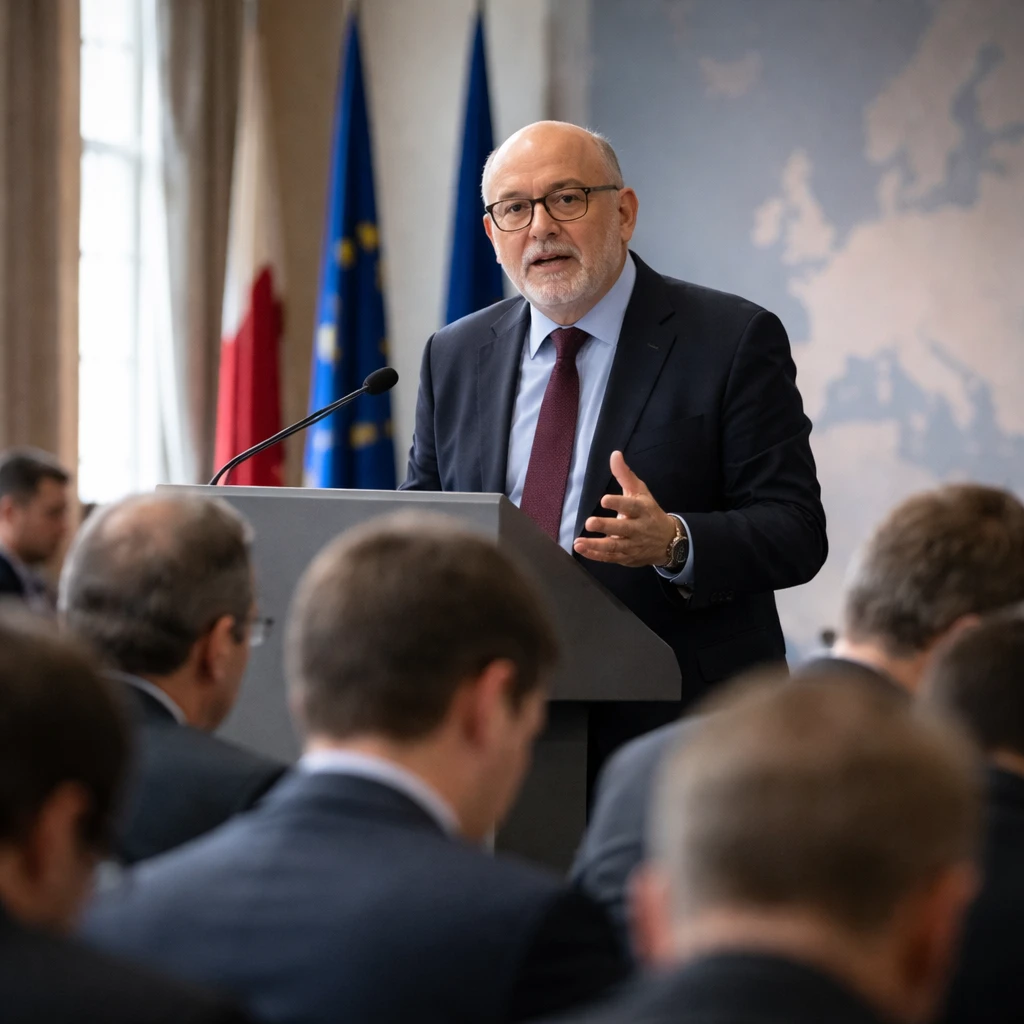
European Central Bank Governing Council member Gabriel Makhlouf warned that an interim agreement between the US and Iran to reopen the Strait of Hormuz may not quickly translate into lower inflation in the euro area. He said lingering disruptions to supply chains, potential production lags from infrastructure damage and remaining uncertainty over shipping could sustain price pressures despite recent falls in energy costs.

ECB's Makhlouf Says Iran-US Interim Deal May Not Bring Immediate Relief to Eurozone Inflation
Summarize with
ChatGPT Perplexity Claude Grok Gemini

Key Points

  • A US-Iran interim agreement to reopen the Strait of Hormuz has coincided with a sharp fall in energy prices.
  • Gabriel Makhlouf said an end to conflict does not automatically end the economic shock and urged caution on expecting rapid inflation relief.
  • ECB policymakers who supported last week’s rate increase remain concerned that price pressures could persist until supply and production normalize.

European Central Bank Governing Council member Gabriel Makhlouf said Tuesday that a tentative deal between the US and Iran to reopen the Strait of Hormuz does not guarantee a fast improvement in inflation dynamics across the euro area.

Speaking in Dublin, the Irish central bank chief stressed that stopping hostilities does not immediately erase the economic shock they produced. He emphasized the uncertainty around how swiftly global supply chains will return to normal and how quickly energy prices will settle.

"An end to the conflict does not necessarily mean an immediate end to the shock,"
"It remains to be seen how quickly supply chains normalize and energy prices adjust."

Makhlouf’s comments echoed messages from other ECB policymakers who backed last week’s interest rate increase and warned that price pressures remain a concern. Those officials have highlighted the risk that inflation could remain elevated until underlying supply and production issues resolve.

The interim agreement between the US and Iran to reopen the Strait of Hormuz has coincided with a sharp decline in energy prices. However, Makhlouf cautioned that direct reductions in price pressures may not materialize immediately if the conflict has caused damage to infrastructure that delays production recovery.

"The direct price pressures might not fade so quickly if the infrastructure damage from the war means production only recovers with a lag,"
"Then there is the question of shipping through the Strait of Hormuz, on which there remains little clarity."

His remarks underline the ECB’s continued focus on inflation risks even amid developments that have eased commodity markets. They also reinforce why governing council members have supported a tighter monetary stance until there is clearer evidence that price pressures are abating for sustained reasons.


Context and implications

  • Makhlouf highlighted that a diplomatic or military de-escalation is only the first step in restoring normal economic functioning.
  • Energy markets reacted quickly to the news about the Strait of Hormuz, but the transmission to consumer prices depends on supply-chain and production recoveries.
  • The ECB’s recent rate hike reflects concern that headline reductions in energy costs may not be sufficient to bring core inflation down without broader normalization.

Risks

  • Supply chains may take time to normalize, delaying downward pressure on prices - impacts manufacturing, retail and logistics sectors.
  • Infrastructure damage could mean production recovers only with a lag, sustaining cost pressures - impacts industrial production and commodities-related sectors.
  • Uncertainty over shipping through the Strait of Hormuz leaves a key energy and trade pathway unclear, keeping volatility in energy markets and shipping-dependent industries.

More from Economy

Inspector General Finds Gaps in Fed’s Protections for International Travel Jun 16, 2026 Bank of France Lowers Growth Forecast, Citing Energy Price Shock and Early-Year Weakness Jun 16, 2026 Bank of France Lowers 2026 Growth Outlook to 0.5% Citing Q1 Contraction and Energy Price Shock Jun 16, 2026 Europe Must Mobilize Trillions in Private Savings to Compete with U.S. and China, Investors Say Jun 16, 2026 BHV Marais to End Partnership with Shein as Owner Sells to Management, French Media Say Jun 16, 2026