
Economy May 26, 2026 06:31 AM

ECB Poised to Lift Inflation Forecast in June as Energy Costs Stay High, Lane Says

Chief economist cautions a prolonged Iran conflict could spread inflation beyond energy; markets price a June rate rise

By Avery Klein
Share
Twitter Reddit Facebook LinkedIn

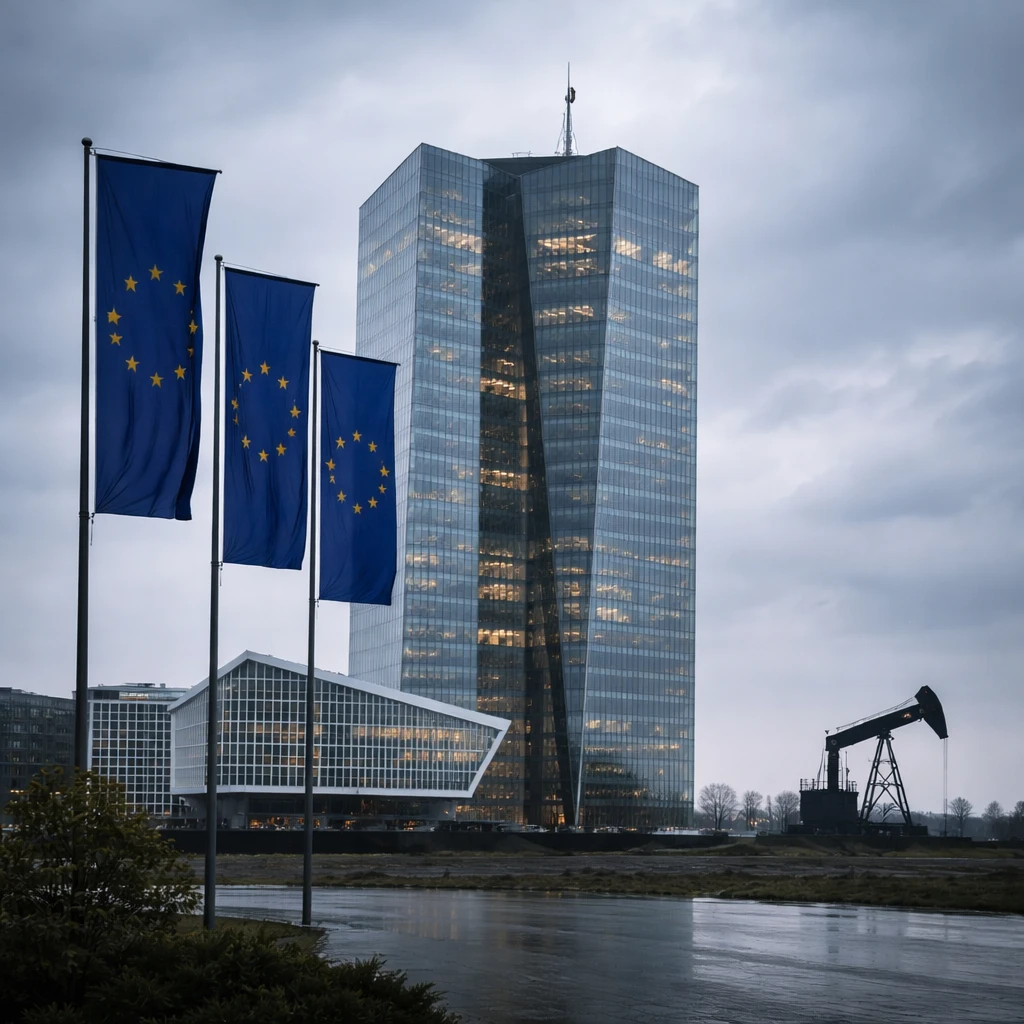
European Central Bank Chief Economist Philip Lane indicated the bank will likely raise its quarterly inflation projection in June, citing elevated oil prices driven by the Iran conflict. Lane warned that the shock could create indirect inflationary effects outside the energy sector and said policymakers are assessing the shock's magnitude amid uncertainty. Markets are pricing a 25 basis-point increase in the deposit rate at the ECB's June meeting.

ECB Poised to Lift Inflation Forecast in June as Energy Costs Stay High, Lane Says
Summarize with
ChatGPT Perplexity Claude Grok Gemini

Key Points

  • ECB likely to raise its quarterly inflation forecast in June due to elevated oil prices tied to the Iran conflict.
  • Markets expect a 25 basis-point increase in the deposit rate to 2.25% at the June 11 meeting; Executive Board member Isabel Schnabel has expressed support.
  • Policymakers are concerned about indirect inflationary effects beyond energy prices, which could broaden inflationary pressures across the economy - notably affecting energy, consumer spending, and financial markets.

European Central Bank Chief Economist Philip Lane said the bank is likely to revise its quarterly inflation projection upward at its June meeting, attributing the change to elevated energy prices resulting from the conflict in Iran. Lane's comments, given in an interview conducted on May 19 and published Monday, signal a reassessment of the bank's outlook as oil prices remain higher than previously assumed.

"We are likely to make a further upward adjustment to the inflation forecast in June," Lane said in the interview. He added: "It is also true that oil prices are likely to remain elevated for longer compared with our March assumptions."

The ECB currently projects inflation for 2026 at 2.6%. By contrast, Bloomberg's most recent monthly survey of economists expects consumer prices to rise by 2.9% this year. Those figures frame the backdrop against which the bank is re-evaluating near-term inflation expectations.

Lane warned that the bank and its staff are attentive not only to direct energy-price effects but also to possible indirect impacts. He said that an energy shock that migrates into a broader inflation problem would be a significant concern for policymakers.

Markets are anticipating a quarter-point increase in the ECB's deposit rate to 2.25% at the June 11 policy meeting. In a separate interview published Monday, Executive Board member Isabel Schnabel said she supports such a move.

When asked to preview the meeting's outcome, Lane declined to pre-commit. "In a world of uncertainty, we do not pre-commit," he said. "We are currently assessing the magnitude of the shock. The longer the conflict continues, the less likely the most benign scenario." His remarks underscore the bank's caution as it weighs the persistence and transmission of higher energy costs into the wider economy.


Context

  • The ECB is preparing to update its quarterly inflation forecast in June following higher-than-expected oil prices linked to the Iran conflict.
  • Market participants currently expect a 25 basis-point hike to the deposit rate at the June 11 meeting, a move publicly supported by Executive Board member Isabel Schnabel.
  • Policymakers are monitoring both direct energy effects and potential indirect inflationary transmission into other sectors.

Risks

  • Prolonged higher oil prices linked to the Iran conflict could keep inflation above prior assumptions, impacting energy-intensive sectors.
  • An energy shock that spreads into broader inflation would present a major challenge for policy, creating uncertainty for markets and consumers.
  • The longer the conflict continues, the less likely the most benign inflation scenario becomes, increasing uncertainty over the magnitude of the shock and policy response.

More from Economy

UBS: Concentration in Korea’s market behind record 2026 foreign equity outflows Jun 7, 2026 BCA Research Disputes Kevin Warsh: AI May Be Inflationary, Not Disinflationary Jun 7, 2026 Deutsche Bank Identifies Sectors and Stocks Poised to Gain from 2026 World Cup Jun 7, 2026 SpaceX IPO Poised to Pressure a Tech-Led U.S. Rally as Inflation Data and Earnings Loom Jun 7, 2026 Deutsche Bank Sees Euro Area Growth Slowing Sharply in 2026 After Energy Shock Jun 7, 2026