
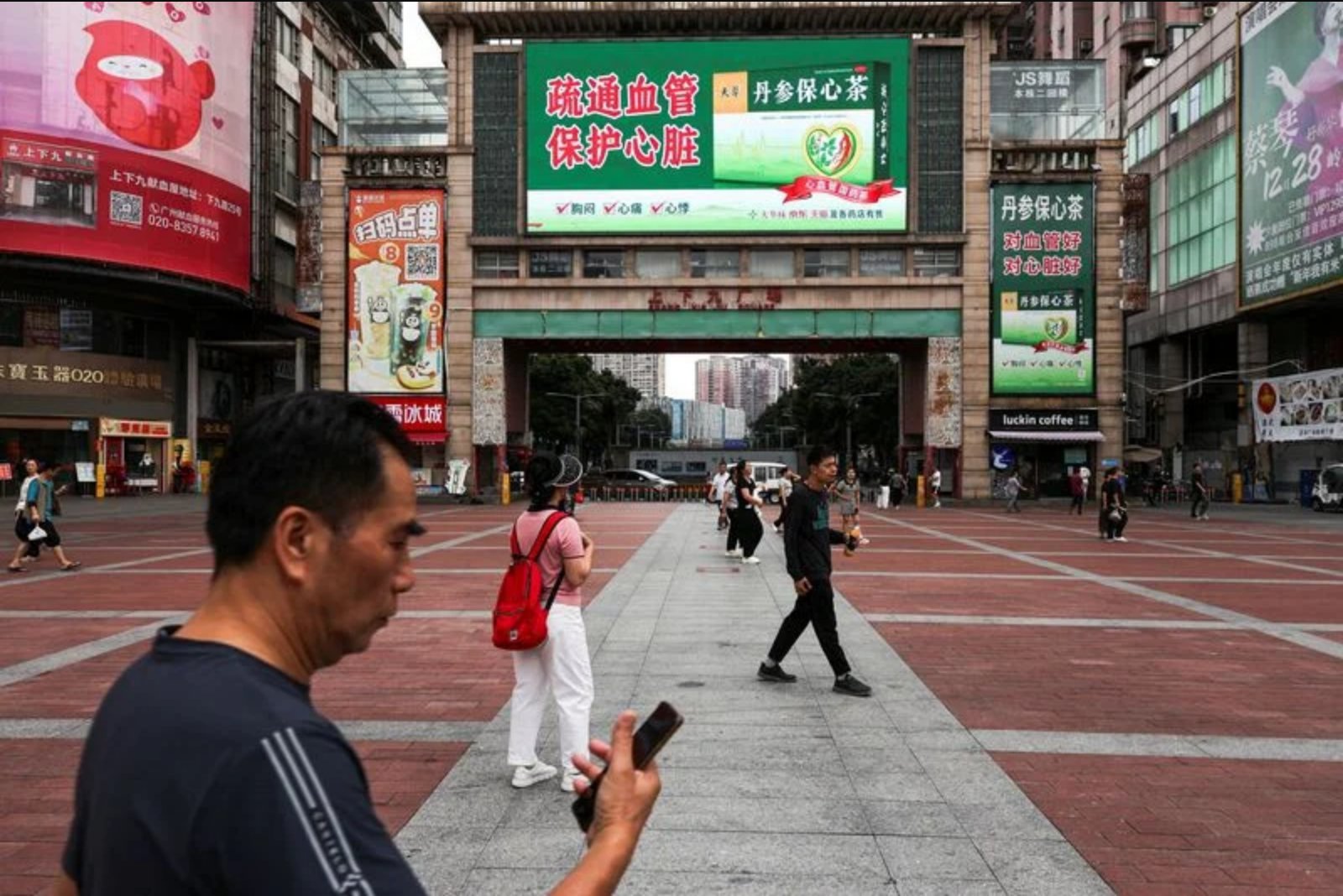
BEIJING, June 16 - China's macroeconomic indicators for May underscore a pronounced bifurcation in economic activity, characterized by accelerating industrial performance juxtaposed against a notable contraction in consumer spending. Data released by the National Bureau of Statistics (NBS) on Tuesday reveal that retail sales, a critical barometer of domestic demand, slid by 0.6% compared to the previous year. This decline marks the first monthly drop in retail sales since December 2022, reversing a modest 0.2% increase recorded in April and falling short of market expectations for flat growth.
In contrast to the consumer sector's weakness, industrial output demonstrated resilience, expanding by 4.5% year-on-year. This represents an acceleration from the 4.1% growth observed in April and surpassed the 4.3% increase anticipated in a Reuters poll. The industrial sector's robustness appears to be partially insulated by a surge in global artificial intelligence investment, which has enabled the world's largest manufacturing economy to mitigate potential export headwinds stemming from geopolitical tensions in the Middle East. However, despite a significant 19.4% surge in export volumes, this momentum has not yet translated into stronger domestic consumption.
The fragility of the domestic market was particularly evident in the automotive sector. Sales of cars within the domestic market experienced their eighth consecutive monthly decline in May, highlighting softening demand in the world's largest automobile market. Industry observers anticipate that these downward pressures are likely to persist throughout the remainder of the year. Furthermore, key economic catalysts failed to provide sustained relief; the five-day Labour Day holiday did not generate a meaningful lift in consumer activities, and the initial stimulus from the government's consumer-goods trade-in scheme appears to be gradually dissipating.
Investment metrics further illustrated the economy's imbalances. Fixed-asset investment contracted by 4.1% during the first five months of 2025, following a 1.6% decline in the January-April period. This performance underperformed economist expectations of a 2% decrease. The property sector continued to weigh heavily on investment figures, with property investment dropping 16.2% year-on-year in the first five months, an acceleration from the 13.7% decline seen in January-to-April. On a monthly basis, new home prices fell at a slightly accelerated pace in May.
Underlying these investment trends, household behavior remains cautious. Weak data on household loans released last week indicates persistent reluctance among consumers to borrow for real estate purchases, driven by sluggish income growth and ongoing employment insecurity. While the nationwide survey-based unemployment rate improved marginally to 5.1% from April's 5.2%, labor market sentiment remains subdued. Fears regarding potential displacement by artificial intelligence technology have contributed to worker anxiety, adding a layer of uncertainty to the employment landscape.
Price data further accentuate the structural imbalances within the growth model. The gap between factory-gate inflation, which has risen to its highest level since July 2022, and stagnant consumer inflation suggests that demand is failing to keep pace with supply-side expansion. This divergence points to ongoing challenges in balancing production capabilities with domestic consumption levels, reinforcing the view of a two-speed economy where external trade and manufacturing strength currently outpace internal demand recovery.