
Economy August 24, 2026 06:25 AM

China Urges Immediate Talks as Middle East Tensions Reach 'Critical Point'

Beijing calls for de-escalation after talks with Kuwait's foreign minister amid U.S.-Iran economic confrontation and threats to Gulf oil flows

By Derek Hwang
Share
Twitter Reddit Facebook LinkedIn

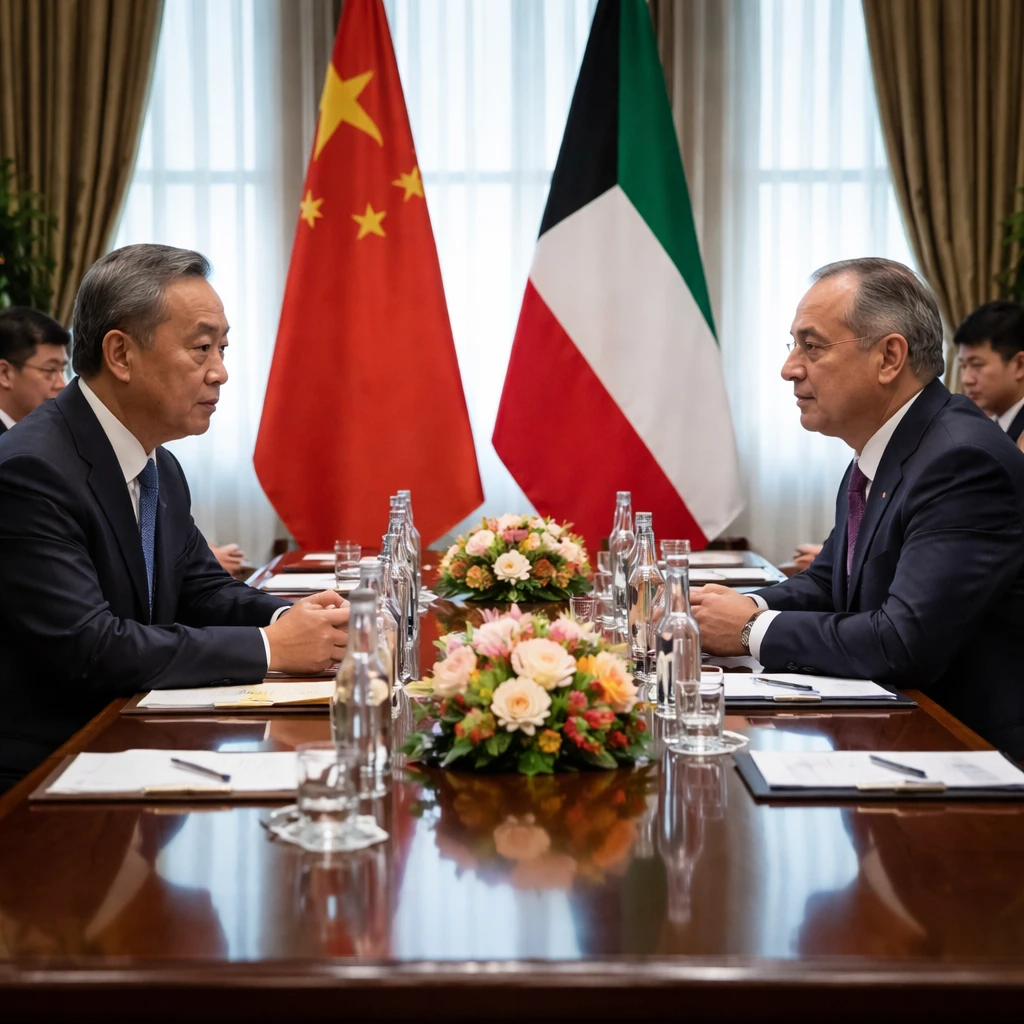
China's foreign minister called on Monday for immediate dialogue to prevent further escalation in the Middle East and Gulf region, saying de-escalation must be the priority. Speaking in Beijing during a meeting with Kuwait's foreign minister, the Chinese official said recurring cycles of conflict should be avoided and offered closer coordination with Kuwait to restore regional peace. The meeting coincided with U.S. announcements of new economic measures targeting Iran's trading partners and Tehran's retaliatory threats to halt Gulf oil exports and restrict passage through the Strait of Hormuz.

China Urges Immediate Talks as Middle East Tensions Reach 'Critical Point'
Summarize with
ChatGPT Perplexity Claude Grok Gemini

Key Points

  • China’s foreign minister urged immediate dialogue and prioritized de-escalation during talks with Kuwait’s foreign minister in Beijing.
  • The meeting occurred as the U.S. prepared new economic measures targeting countries trading with Iran, described as "the greatest financial offensive ever."
  • Iran warned it would stop all Gulf oil exports "if the economic war continues" and told ships not to pass through the Strait of Hormuz without its permission; roughly one-fifth of global oil transits that strait.

China's top diplomat urged immediate talks on Monday as tensions across the Middle East and the Gulf reached what he called a critical point. The appeal came during a meeting in Beijing with Kuwait's foreign minister, Sheikh Jarrah Jaber Al-Ahmad Al-Sabah, according to a statement from China's foreign ministry.

In remarks reported by the ministry, the Chinese foreign minister said, "the old script of recurring conflict should not be repeated," and identified de-escalation as the top priority. He said China was prepared to step up coordination with Kuwait to help restore peace and stability in the troubled region.

The meeting unfolded as the United States prepared new economic measures directed at countries that trade with Iran. U.S. officials warned Tehran the measures would amount to "the greatest financial offensive ever" aimed at those conducting trade with Iran.

Iran rejected the U.S. threat and issued its own warnings. Tehran said it would shut down all oil exports from the Gulf "if the economic war continues." In addition, Iran told shipping vessels not to pass through the Strait of Hormuz without its permission, a move that would affect a major artery of global energy flows.

Roughly one-fifth of the world’s oil passes through the Strait of Hormuz, a fact cited in reporting of the dispute. The combination of heightened economic pressure and reciprocal threats framed the diplomatic engagements taking place in Beijing.


Context and implications

China's public call for immediate dialogue and its offer to coordinate with Kuwait emphasized de-escalation as Beijing's central goal in this episode. The timing of the meeting - coinciding with announced U.S. economic steps and Iran's subsequent warnings - highlighted the intersecting diplomatic and economic pressures shaping the situation.

The Chinese statement left clear that it sees a role for bilateral coordination with regional partners to pursue peace and stability, while the contemporaneous U.S. and Iranian statements underscored the economic and security tensions now affecting Gulf maritime and energy routes.

Risks

  • Escalation of political and economic confrontation between Iran and external actors could threaten stability in the Gulf - impacting energy markets and shipping.
  • Disruption to oil exports or restricted passage through the Strait of Hormuz could affect global oil supply, given that roughly one-fifth of the world’s oil passes through the strait.
  • Expansion of financial measures targeting Iran’s trade partners could strain international trade and financial flows for countries engaged with Tehran.

More from Economy

Dollar Strengthens as Middle East Escalation Fuels Inflation Fears and Rate Hike Pricing Sep 1, 2026 Brazil’s Legislature Clears Fiscal Incentives for Data Center Hardware Sep 1, 2026 OpenAI Flags New Model 'Astra' as Requiring Extra Safety Measures After Internal Testing Sep 1, 2026 Carney: U.S. Needs to Drop the Posturing for Trade Talks to Resume Sep 1, 2026 Bank of Israel Signals Potential for More Rate Cuts if Inflation Holds Steady Sep 1, 2026