
Overview
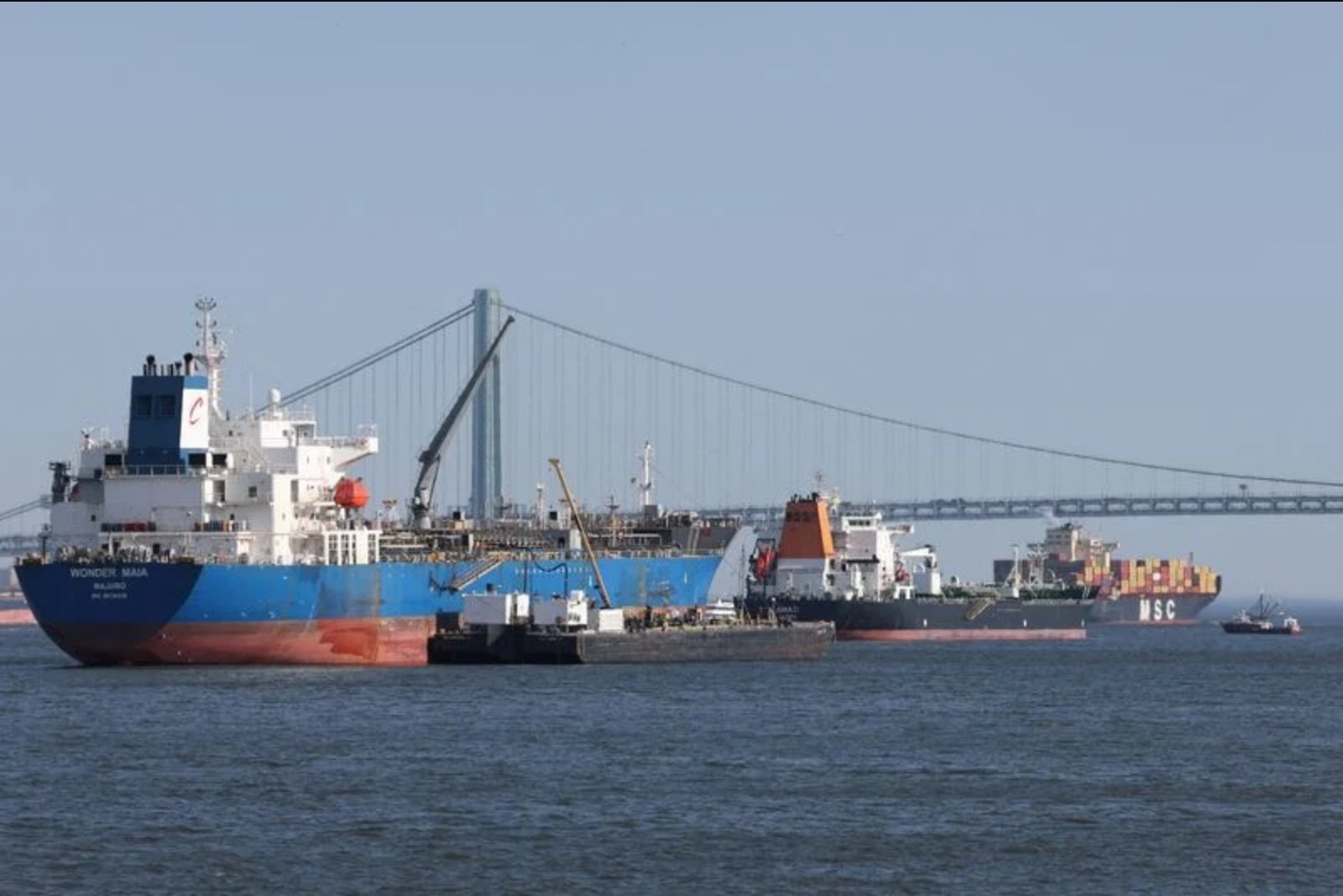
The United States has displaced long-standing leaders to become the world’s number one oil exporter, marking a clear shift in the global energy landscape. U.S. shipments of crude and refined fuel products climbed to about 10.5 million barrels per day (bpd) in May, according to ship-tracking service Vortexa, placing the United States ahead of traditional heavyweight exporters.
This top-exporter position is not an isolated monthly spike: it is the third straight month that U.S. exports have led the world. Analysts attribute the rise to robust domestic output, the release of strategic petroleum reserves, and disruptions that have curtailed Saudi and Russian exports.
Drivers behind the shift
Several forces combined to lift the United States to the top of the export rankings. Increased production from U.S. shale formations since 2010 has transformed the country from a major importer to a leading producer and now the leading exporter. The U.S.-Iran war has disrupted Saudi oil exports since February 2026, and Russian shipments have been affected by Ukrainian drone attacks and U.S. sanctions tied to the invasion of Ukraine. These geopolitical factors tightened supplies from other major exporters even as U.S. output and strategic reserve releases bolstered American export volumes.
Michelle Brouhard, head of policy at ship-tracking firm Kpler, framed this development as a new strategic tool for Washington, noting that energy exports now provide leverage the U.S. did not possess before the Iran war. Brouhard also highlighted the potential for U.S. market power to weaken the historical pricing influence of the Organization of Petroleum Exporting Countries and its allies.
May export figures and comparisons
Vortexa data show U.S. combined crude and fuel exports at about 10.5 million bpd in May. By comparison, Reuters calculations put Russian exports at roughly 7 million bpd in May, while Saudi exports were about 5.9 million bpd, according to Vortexa.
Those May figures represent a notable change from 2025 levels: last year Saudi Arabia exported about 8.1 million bpd, the United States exported 6.6 million bpd, and Russian exports stood at roughly 5.8 million bpd, based on Vortexa data. That comparative snapshot underscores how quickly trade flows have shifted over a relatively short period.
Production trajectories and global demand
U.S. crude and liquids output has expanded substantially since 2000, nearly tripling to about 22 million bpd. By contrast, Saudi crude and liquids output has generally moved within a 10 million to 12 million bpd range between 2000 and 2026, influenced by OPEC quotas. Russian output climbed from about 6 million bpd to 10 million bpd between 2000 and 2010 and added another 2 million bpd in the 2010s, but has largely stagnated and fallen to below 10 million bpd since 2020.
Global oil demand has also risen during this period, from 87 million bpd in 2010 to 104 million bpd last year. Much of the worldwide demand growth over the past 15 years has been met by U.S. production gains, reflecting the central role of the American oil boom in satisfying incremental global consumption.
Policy changes, market structure and producer behavior
Policy shifts have been part of the United States’ transformation into an exporting power. In 2015, the United States repealed a 40-year export ban that had been enacted after the Arab oil embargo of the 1970s, enabling the domestic production surge to reach global markets.
Unlike the state-directed production strategies seen in some major exporting countries, U.S. output decisions are made by private companies and are profit-driven. Economists and analysts note that this market-driven behavior responds dynamically to price signals: when prices increase, U.S. firms tend to raise production, and when prices fall, they cut output. Kenneth Medlock III, a fellow in Energy and Resource Economics at the Baker Institute for Public Policy, compared this market response to the role OPEC or Saudi Arabia has played with spare capacity, while emphasizing that the U.S. mechanism is market-based rather than strategic.
Shifting trade patterns - Europe and Asia
Changes in supply sources are visible in destination patterns for U.S. exports. European countries have taken a growing share of American oil since the Ukraine war began in 2022: so far this year Europe has accounted for about 47% of U.S. oil exports, up from 37% in 2021. Asian markets, historically reliant on Middle Eastern crude, are also importing more American oil. Asia took roughly 46% of U.S. exports in May, compared with around 37% last year.
Those shifts reflect a reconfiguration of global trade links: countries that once depended on Middle Eastern and Russian supplies are increasingly incorporating U.S. barrels into their portfolios. At the same time, some European officials, while initially welcoming U.S. supplies as an alternative to Russian and Middle Eastern crude, have expressed concerns about overreliance on American companies and highlighted risks tied to growing dependence.
Geopolitical and market implications
The United States’ emergence as the top exporter gives Washington a new economic lever in international engagements, complementing its military capabilities and the dollar’s role as the global reserve currency. That geopolitical weight is now reinforced by energy flows: Brouhard pointed to the leverage the United States holds over countries that rely on U.S. oil or gas supplies, noting the country’s prominent role as the largest provider of crude to Europe and the second-largest provider of distillates.
Not all reactions have been positive. Igor Sechin, chief executive of Russian oil major Rosneft and an ally of President Vladimir Putin, said this month that U.S. energy companies were the main beneficiaries of the closure of the Strait of Hormuz. The United Arab Emirates’ decision to exit OPEC in May after nearly six decades also shook the group, contributing to broader questions about OPEC’s cohesion and influence.
Concluding observations
The United States’ rise to the top of the oil export rankings reflects a combination of long-term production gains, recent policy actions, and disruptions to other major exporters. That position has altered trade flows to Europe and Asia and created a new strategic dimension to U.S. energy policy. How trading partners, markets and producers respond to this reordering will be shaped by the same mix of market incentives and geopolitical developments that produced it, according to the data and commentary available.