
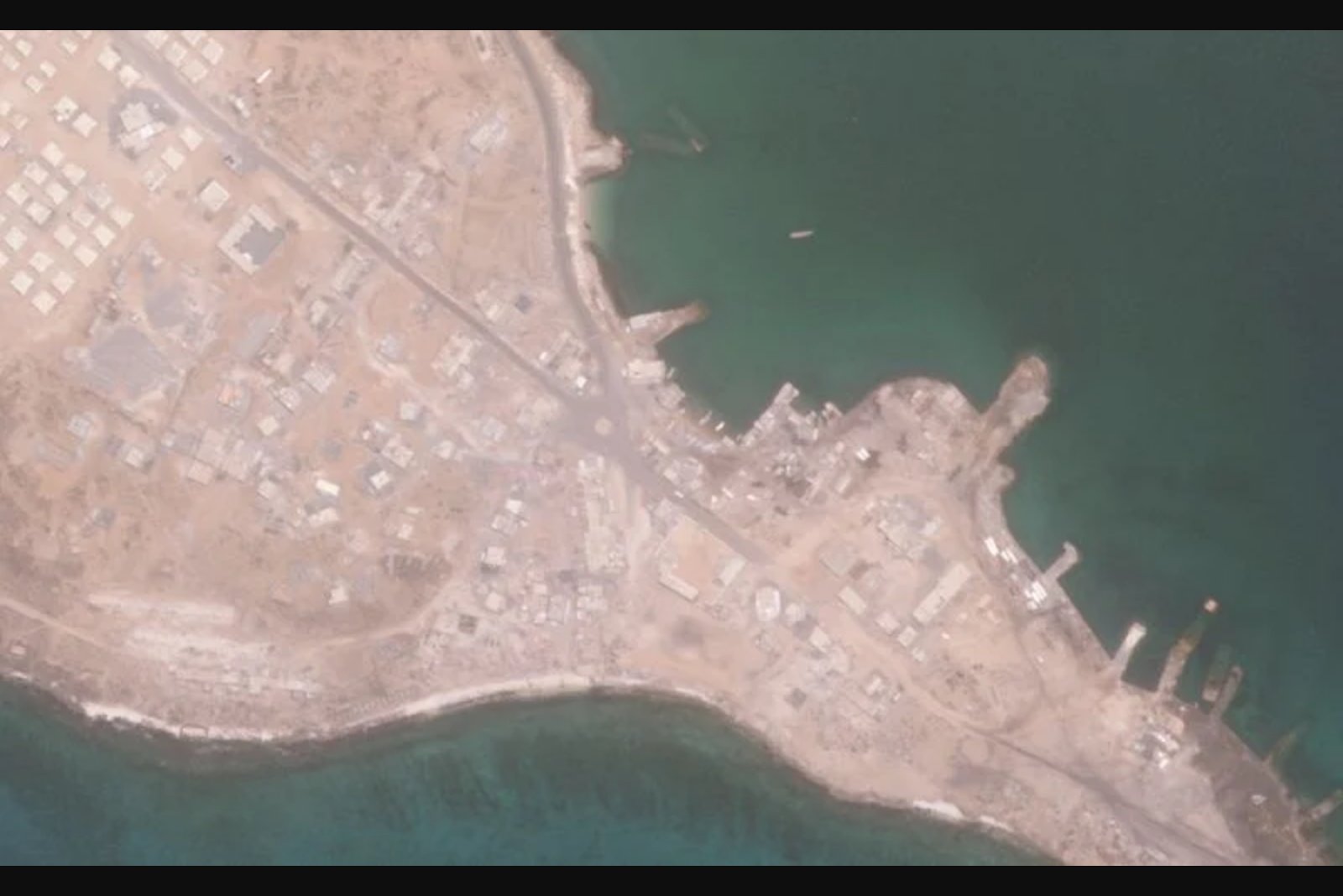
Houthi forces this week secured positions overlooking the Bab el-Mandeb Strait and captured islands at the strait’s mouth, marking a major reversal for Saudi-backed efforts in Yemen and widening Iran-aligned influence across strategic maritime routes. The development, confirmed by regional and Western officials, has exposed what sources described as intelligence blind spots, the collapse of allied Yemeni forces and the limits of U.S. and European willingness to provide direct military support.
The operation and immediate consequences
Officials and analysts said the offensive, which advanced along Yemen’s Red Sea coast, allowed the Houthis to establish commanding positions that threaten a key artery for global oil and shipping. In addition to territorial gains, Houthi fighters recovered a substantial amount of advanced U.S. and Saudi-supplied weaponry abandoned by retreating forces. Regional sources said the seized materiel is likely to strengthen the group’s operational capabilities, offer intelligence on adversaries’ equipment and deepen perceptions of a humiliating defeat for Saudi-backed elements.
"The Yemeni government forces were like a house of cards. They didn’t resist. Completely. Completely," said Abdulkhaleq Abdallah, a political analyst in the United Arab Emirates.
One diplomat cited by sources said the Houthis had quietly assembled roughly 100,000 fighters, a force size that substantially outnumbered opposing combatants. "Everyone, including the Saudis, missed this build-up and miscalculated the Houthis’ intentions," the diplomat added. Neil Quilliam, a fellow at Chatham House, described the offensive as a glaring intelligence failure: "They just weren’t picking up the signal. They just weren’t seeing the signs." Yemeni political analyst Farea Al-Muslimi similarly observed, "The Saudis were caught off guard in Yemen."
International and regional responses
The sudden collapse of Saudi-backed units has revealed the limits of international readiness to join a counteroffensive. Two Western officials said neither the United States nor European countries were prepared to offer direct military backing and that Washington and its allies had not joined a Saudi-led maritime defence coalition announced in July. Saudi officials did not respond to a request to comment for this article.
With Iran-backed fighters now positioned to threaten Saudi oil exports and Red Sea shipping, Crown Prince Mohammed bin Salman travelled to Cairo to solicit assistance in containing the fallout after Washington declined to intervene. Two regional sources said Riyadh sought Egyptian participation in Red Sea operations, recalling Cairo’s prior role in securing Bab el-Mandeb. There was no immediate indication whether Egypt would agree to become involved. Egypt’s Foreign Ministry did not immediately respond to a request for comment on whether such military support had been requested.
Houthi political aims and potential leverage
Sources and analysts say the Houthis are using their recent gains to press for wider political concessions. Former U.S. negotiator Dennis Ross said the group’s demands include lifting restrictions on Hodeidah port and Sanaa airport, compensation for war-related damages and a reduction of Saudi support for Yemen’s internationally recognised government. Ross commented, "I don’t think the Saudis can easily give in to the kinds of demands that they’re making."
Regional officials warned that allowing the Houthis to consolidate control risks converting tactical victories into lasting strategic leverage, while a larger military response could invite attacks deeper into Saudi territory. As one Gulf official put it, "If you don’t inflict enough pain on the Houthis, you become hostage to them."
Strategic implications for maritime choke points
Control of territory around Bab el-Mandeb - which separates Yemen from Djibouti and Eritrea - could deepen Houthi reach into the Horn of Africa by facilitating access to logistical and smuggling networks. Coupled with Iran’s influence over the Strait of Hormuz, which lies at the other entrance to major Middle Eastern energy routes, the foothold around Bab el-Mandeb provides Tehran and its allies leverage over two critical maritime choke points.
Analysts linked the shift in influence to a broader regional dynamic. The Houthi advance, they said, did not merely represent a tactical setback for Riyadh but also a boost to Iran-aligned momentum across the region, coming after reported reversals for some of Tehran’s partners in Gaza, Syria and Lebanon. In the words of Farea Al-Muslimi, for Iran it is a "win-win-win."
Political and strategic costs for Saudi foreign policy
Observers noted that Crown Prince Mohammed bin Salman’s foreign policy strategy - which sought a form of détente with Iran as part of a wider regional stabilisation effort - has come under strain since the start of the U.S.-Iran war, while economic transformation goals face mounting pressures. The absence of Western military assistance in Yemen and the limited participation of those powers in the newly formed defence coalition highlighted the limits of Riyadh’s ability to marshal international support during a moment of acute vulnerability. Analysts concluded that Saudi Arabia appears increasingly outmaneuvered by adversaries and left wanting by erstwhile partners.
Some political analysts focused on the message sent by Washington’s reluctance to provide direct assistance. They argued that the decision displayed a downgrading of U.S. security commitments in the view of regional partners and emboldened adversaries. Al-Muslimi characterised the U.S. refusal to defend Saudi territory as "the biggest dismissing of the Saudi-American arrangement" in decades, adding, "The Americans are saying No. That kind of understanding in the relationship between Riyadh and Washington has never been tested more than now."
Historical patterns and the difficulty of external intervention
Sources cautioned that Yemen’s long record of defeating foreign interventions - noted in public discourse by analysts who compare the country to past conflicts that humbled external powers - complicates Riyadh’s options in seeking partners to reassert control. Few regional powers appear eager to become entangled in a conflict that has repeatedly frustrated outside military efforts and gained a reputation as a costly arena for intervening states. "Yemen is the Vietnam and Afghanistan of every power dragged into it," said Al-Muslimi. "The Saudis failed in Yemen, the Americans failed in Yemen. The Egyptians failed in Yemen."
Immediate stakes for markets and regional security
The capture of positions that can threaten Red Sea shipping and the Bab el-Mandeb Strait elevates the risk premium for maritime trade routes and energy flows that depend on safe passage through the area. The seizure of sophisticated weaponry by the Houthis also raises concerns among regional military planners about the group’s increased operational capacity and the potential intelligence value of captured systems.
In the near term, Riyadh faces a constrained set of choices: tolerate Houthi consolidation and risk longer-term strategic erosion, or escalate militarily and risk further attacks that reach deeper into the kingdom. Analysts and regional officials emphasised the high political cost of either path and the constrained pool of partners willing to become more involved militarily.
Reporting for this analysis drew on statements and assessments from senior Western, regional and Yemeni officials and analysts who described the Houthi advance, the fallout among anti-Houthi forces, and the international response surrounding the events near Bab el-Mandeb.