
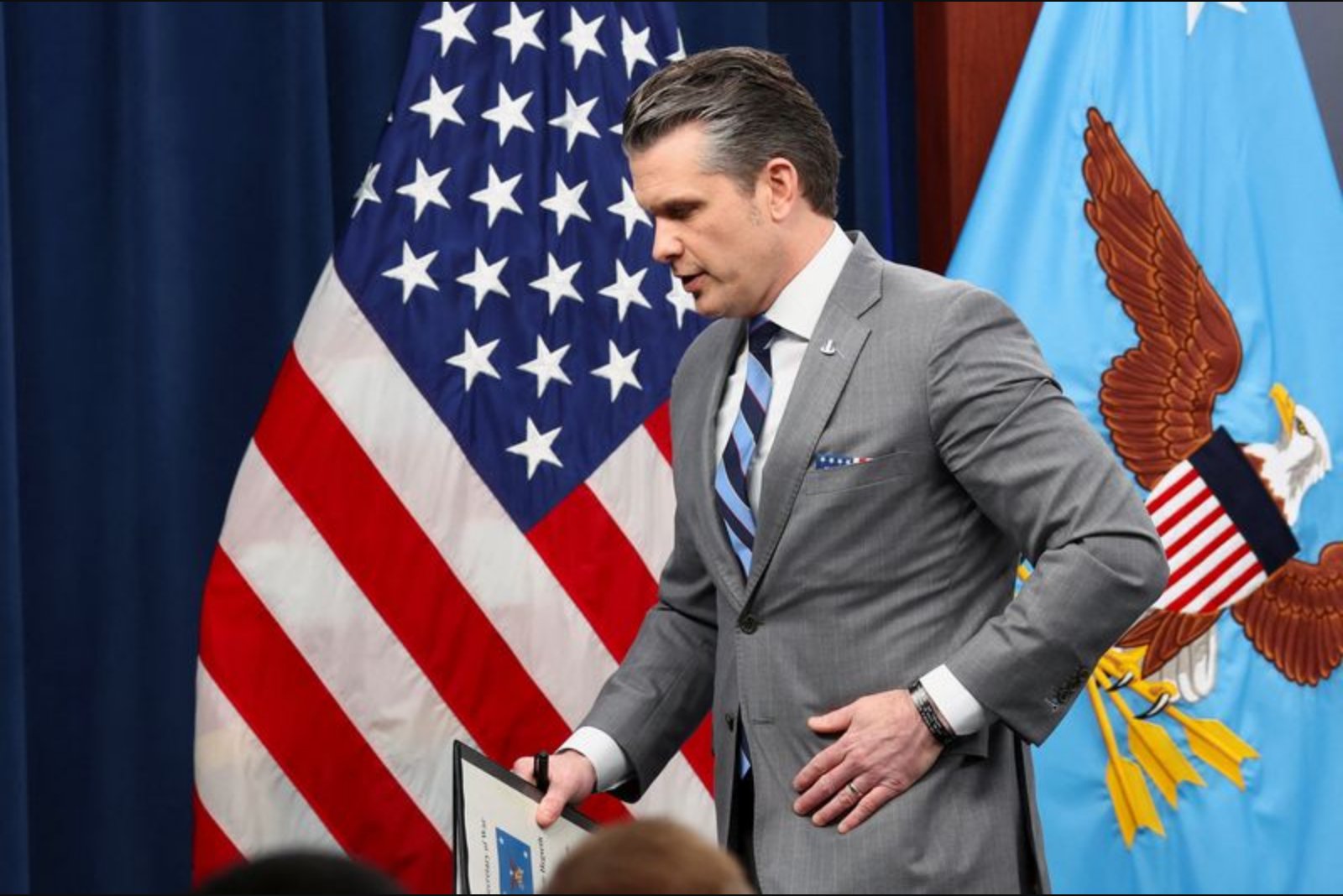
U.S. Defense Secretary Pete Hegseth forcefully defended the United States' military action against Iran during a heated session before Congress on Wednesday, denying that the campaign has become a quagmire and sharply criticizing Democratic members who have labeled the effort open-ended and ill-conceived.
Testifying before lawmakers for the first time since U.S. and Israeli forces commenced operations against Iran on February 28, Hegseth pushed back against Democratic scrutiny even as the offensive has been linked to a jump in gasoline prices and eroding public support for the administration's posture toward Iran.
Recent polling indicates that only 34% of Americans approve of the U.S. conflict with Iran, a decline from 36% in mid-April and 38% in mid-March, according to the Reuters/Ipsos poll cited during the session. That falling approval was part of the backdrop as representatives questioned Hegseth about the aims and duration of the campaign.
Democrats pressed for answers about the open-ended nature of the operation. Representative John Garamendi of California described the situation as a "quagmire" and called it a "political and economic disaster at every level." Garamendi's comments drew a direct and emotional response from the defense secretary.
Hegseth responded angrily to the characterization, saying: "You call it a quagmire, handing propaganda to our enemies? Shame on you for that statement," and went on to chastise Congressional Democrats as "reckless, feckless, and defeatist." He also questioned lawmakers' support for the troops while criticizing the campaign, saying: "Don’t say: ’I support the troops on one hand, and then a two-month mission is a quagmire.’ ... Who are you cheering for here? Who you pulling for?"
The exchange illustrated the partisan tensions surrounding the conflict and highlighted concerns about domestic political fallout as the conflict continues. Lawmakers on both sides sought clarity about objectives and consequences amid public unease over rising fuel costs.
While testimony focused on immediate political and economic effects, lawmakers continued to press for greater specificity on strategy and expected duration. The session underscored how military actions abroad can quickly become central issues for domestic politics and consumer-facing sectors such as energy.
Summary
Pete Hegseth defended the U.S. campaign against Iran during his first Congressional testimony since the February 28 operations began, rejecting the term "quagmire" and criticizing Democratic lawmakers for their remarks. The conflict has been associated with higher gasoline prices and declining public approval for U.S. policy, according to a Reuters/Ipsos poll cited at the hearing.