
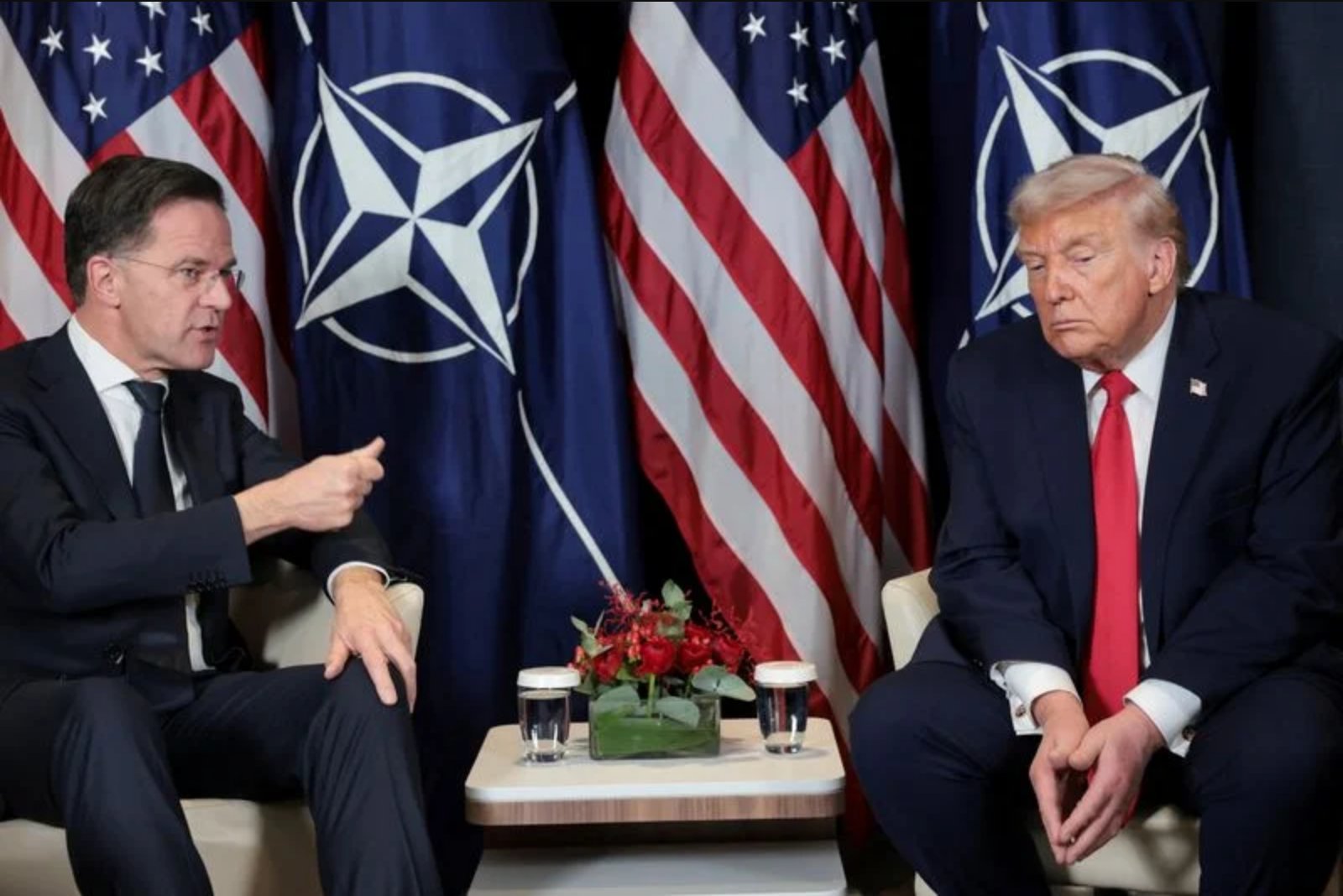
NATO Secretary-General Mark Rutte is scheduled to meet President Donald Trump at the White House on Wednesday in an effort to ease mounting tensions between Washington and its European allies ahead of a crucial NATO leaders summit in Ankara on July 7-8.
The talks aim to address disputes tied to the Iran war and U.S. threats to scale back troop levels in Europe, both of which have injected new strain into the alliance. Trump, a long-standing critic of NATO who has called the coalition a "paper tiger," has expressed anger at what he sees as allied reluctance to back U.S. actions in the Middle East and to assist in reopening the Strait of Hormuz after a U.S.-Israeli strike on Iran on February 28 disrupted a major oil shipping route.
At a recent NATO meeting, U.S. Defense Secretary Pete Hegseth publicly chastised what he called "free-riding" by allies and announced a six-month review of U.S. troop deployments in Europe. That review could lead to reductions in American forces on the continent. The announcement followed a U.S. decision to shrink the pool of U.S. military capabilities available to the alliance in a crisis, a move that has left some members scrambling to determine how to compensate for the resulting capability gaps.
Since President Trump’s election in November 2024, Rutte has frequently played a mediation role, attempting to manage the president’s hostility toward NATO and to prevent episodic disputes - such as Mr. Trump’s earlier campaign to acquire Greenland - from escalating into lasting ruptures. Observers expect Wednesday’s meeting to fit that pattern of damage control and negotiation.
"I expect he is trying to get on the same page with Trump to make sure that the NATO summit is a success or not a wipeout," said Stephen Wertheim, senior fellow at the Carnegie Endowment for International Peace, a Washington-based think tank.
"The NATO summit carries a potential for significant risk because Trump is upset and erratic, and even if Rutte comes and thinks he has an understanding with Trump, who knows what two weeks later will bring," Wertheim said.
Tensions between the United States and its NATO partners have increased in recent months. After several allies declined to back a U.S. Iran campaign that the president launched without prior consultation, Mr. Trump publicly questioned the U.S. commitment to NATO’s mutual defense pact and said he was considering whether the United States should remain in the alliance. Earlier in the year he had laid claim to Greenland, an autonomous territory belonging to NATO member Denmark, which contributed to perceptions of friction.
Rutte has been credited with steering the fraying transatlantic relationship back from the brink at key moments, bolstering his reputation as what some describe as a "Trump whisperer." In an interview on Tuesday with Fox News, Rutte called incidents of some NATO members denying U.S. basing and overflight rights for war-related operations "isolated," and said that hundreds of U.S. planes had taken off from U.S. bases across Europe to support Washington’s war - a point he said he would convey to Mr. Trump during their meeting.
"We will also zoom out from this to this bigger picture of what he is doing for NATO," Rutte said, adding that members were increasing defense spending and that he would be disclosing those "huge" numbers on Wednesday.
Rutte’s visit is being described by NATO officials as part of final preparations for the Ankara summit. NATO spokesperson Allison Hart said the July 7-8 meeting "will focus on how Allies are delivering on the commitments made last year at the NATO Summit in The Hague, including on increasing defense investment, expanding defense industrial production, and continuing support for Ukraine."
The alliance is operating under what officials describe as unprecedented strain. Some European capitals worry Washington could choose to withdraw its security guarantees entirely - an action that would be extraordinary and would raise fundamental questions about NATO’s future - and Mr. Trump has previously threatened such a withdrawal.
Rutte is also expected to hold meetings on Capitol Hill with members of Congress during his trip. U.S. officials have voiced concerns about what they call an "unhealthy co-dependence" by Europe on American forces, arguing that European countries in some instances rely disproportionately on U.S. capabilities.
Despite these strains, Rutte has sustained robust working relationships with Pentagon officials. Defense Secretary Hegseth spoke favorably of Rutte’s leadership at a Brussels event last week. At the NATO summit in The Hague last year, leaders agreed to a substantial increase in defense spending advocated by Mr. Trump, pledging to allocate 5% of GDP to defense and defense-related measures within a decade. Implementation has been uneven: while several European countries have sharply raised their defense budgets, others have not kept pace.
Rutte’s White House visit is therefore positioned at the intersection of defense policy, alliance cohesion and summit diplomacy. With NATO leaders due to meet in Ankara in early July, the outcome of his talks with the U.S. president could affect how allies coordinate on defense investment, industrial production and continued support for Ukraine, and could influence how the alliance manages force posture and capability commitments going forward.
Summary
Mark Rutte will meet President Trump at the White House as part of efforts to smooth over disagreements stemming from the Iran war, U.S. decisions on troop posture and allied support. The visit is a preparatory step ahead of the July NATO summit in Ankara where leaders are expected to assess progress on defense spending, industrial production and support for Ukraine.
Key points
- NATO Secretary-General Mark Rutte meets President Trump to try to align positions before the July 7-8 Ankara summit. (Sectors impacted: defense, government)
- U.S. actions - including a six-month review of troop deployments and a reduction in the pool of capabilities available to NATO - have prompted allied concern and planning for capability shortfalls. (Sectors impacted: defense industry, military logistics)
- The summit will emphasize delivery on commitments from the previous Hague summit, including higher defense investment, greater defense industrial production, and continued support for Ukraine. (Sectors impacted: defense manufacturing, public finance)
Risks and uncertainties
- Potential U.S. troop drawdowns or capability reductions could leave capability gaps for NATO members to address - a direct risk to defense readiness and defense procurement markets.
- Political unpredictability in the U.S. presidency raises the chance that understandings reached in bilateral talks may not hold, creating uncertainty for defense policy and transatlantic cooperation.
- A failure to secure broad allied support for U.S. actions in the Middle East has already strained relations and could complicate collective responses to security crises, affecting energy security given disruptions in shipping routes like the Strait of Hormuz.