
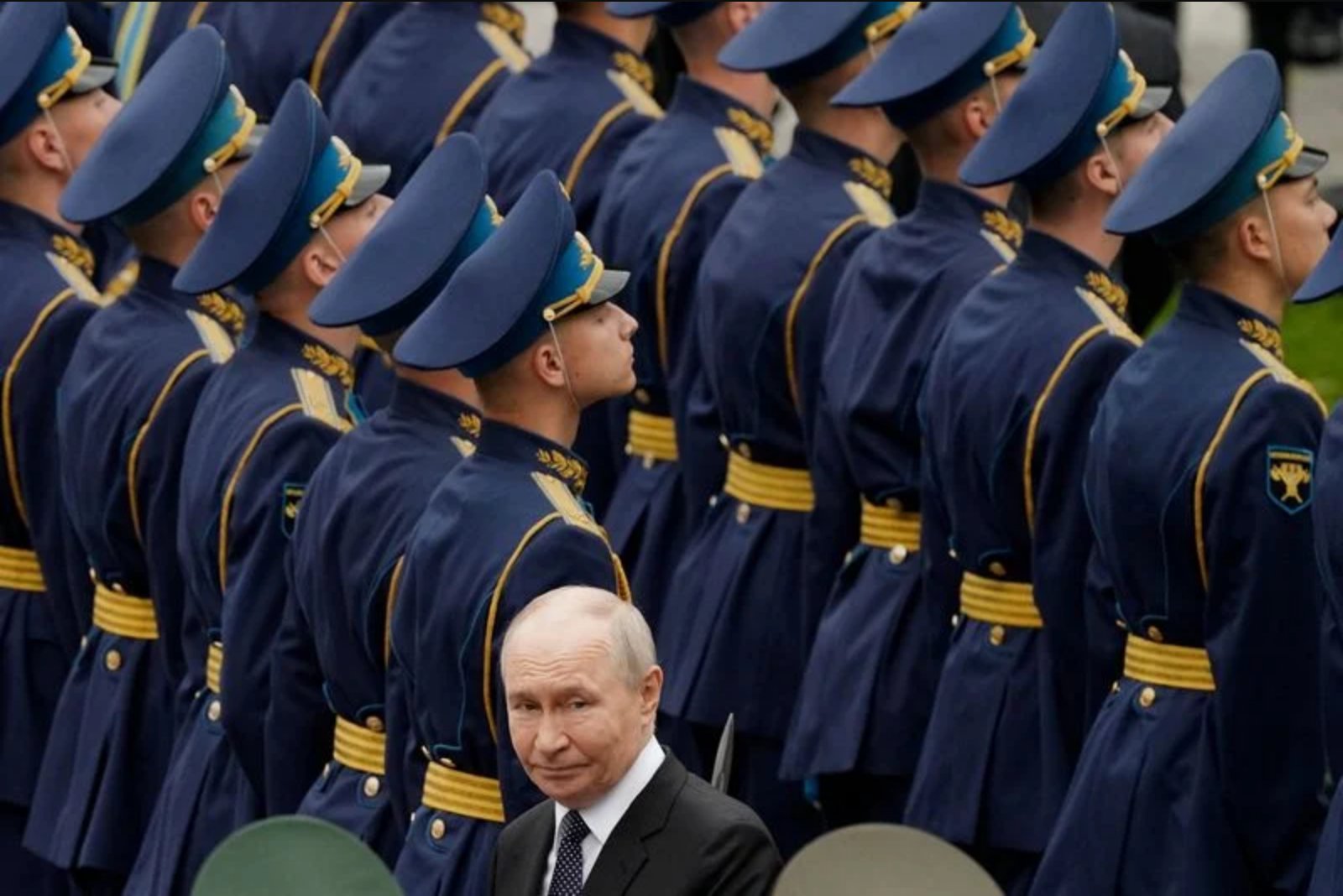
Seething at a series of Ukrainian drone strikes that have reached deep into Russian-held territory, and frustrated by what they describe as a broken U.S. promise to broker an acceptable end to the conflict, Russian hardliners are intensifying pressure on President Vladimir Putin to jettison diplomacy and escalate the military campaign.
Calls for harsher action are not a recent development. Nationalist commentators and influential voices have for some time urged sweeping measures - from full mobilisation and the obliteration of Kyiv’s government quarter to the assassination of President Volodymyr Zelenskiy and strikes on European drone factories. Some extreme elements have even floated the idea of considering tactical nuclear weapons.
What has changed in recent weeks, analysts say, is the sharpened tone and greater urgency of such demands following a series of Ukrainian deep strikes. These attacks, which Russian authorities say targeted Moscow, St Petersburg and Crimea and included two deadly attacks on passenger buses, have increased anxiety about the reach and impact of Ukrainian drone operations and prompted renewed debate inside Russia about how to defend the country while continuing to pursue war aims in the conflict launched in 2022.
Konstantin Malofeyev, a nationalist tycoon, spoke candidly after a Ukrainian strike last week set fire to a Moscow oil refinery. He said: "What else needs to happen before we start fighting for real? War means victory at any cost. The Ukrainians are at war, so they’re fighting with everything they’ve got." He added a provocative question that captures the extremity of some nationalist sentiment: "Why are we not using nuclear weapons, which our forebears developed and stockpiled with the full might of the nation precisely for this purpose?"
Other nationalist commentators have advocated adopting what they describe as the effective blend of military and diplomatic tactics used by Iran against the United States. The Obsessed by War blog, which counts over 650,000 followers, has openly called for rendering major Ukrainian cities unliveable through bombardment. Meanwhile, nationalist blogger Yuri Baranchik, who has nearly 90,000 followers, set out a narrative that links recent Ukrainian strikes to U.S. pressure and policy. On Telegram he argued that systematic air strikes on Moscow by what he called the "junta" in Kyiv must have been enabled by Washington, and he tied U.S. policy to a separate deal he attributes to Iran's influence over former U.S. President Donald Trump. "The start of systematic air strikes on Moscow by the (Ukrainian) junta would have been impossible without the go-ahead from Washington. And why did Trump give Zelenskiy such a green light? The answer is very simple - Iran had Trump by the balls, and he was forced to sign a humiliating agreement," he wrote. "Now he needs to take it out on someone quickly ... So we’ve got no choice - either we’ll get the better of Trump, or he’ll get the better of us."
Sources close to the Kremlin say that Putin can tolerate sharp rhetoric from nationalists. He presides over a tightly controlled political system that has developed over 26 years, and bloggers advocating hardline positions generally operate within limits set by the Kremlin. Analysts caution, however, that such public statements can complicate decision-making by inflaming popular sentiment and raising expectations for a broader military campaign, even while the government keeps diplomatic options on the table.
To date, the Kremlin has resisted calls from hardliners to abandon negotiations outright. This stance persists despite public statements from three senior government officials this week asserting that talks with the United States had produced no progress and accusing Washington of failing to implement peace proposals it reportedly put forward at last year’s Putin-Trump summit in Alaska.
Putin himself has not embraced the nationalists’ most extreme remedies. Still, Russian institutions have taken steps that signal a willingness to intensify pressure. In April the Defence Ministry published the addresses of factories in several European countries it alleged manufacture drones for Ukraine, a move widely seen as a warning that such sites could be targeted. The Foreign Ministry warned last month that Moscow intended to carry out "systematic strikes" on military targets in Kyiv. Subsequent heavier bombing runs included one that damaged a 1,000-year-old monastery in the Ukrainian capital.
For now, the Kremlin appears to be maintaining a strategy that balances continued military pressure with the preservation of a diplomatic opening. Speaking to graduates of a military academy on Tuesday, Putin said Russia was close to seizing the city of Kostyantynivka in eastern Ukraine as part of its campaign to consolidate control over the Donbas region. He also asserted that political forces in Europe hostile to Russia seemed likely to be eclipsed by rivals he depicted as more reasonable. "Those who want to restore normal relations with us, to stop this endless drive for a strategic defeat of Russia, are on the rise," he said. "It’ll all work out in the end."
Analysts observing the debate inside Russia see a tug-of-war between hardline voices demanding dramatic escalation in response to Ukrainian strikes and a Kremlin that so far is cautious about wholly embracing those demands. The intensity of nationalist rhetoric, shaped by high-profile incidents of Ukrainian strikes, adds pressure on Moscow’s leadership and introduces uncertainty about how long current restraint can be sustained if deep strikes continue.