
World April 11, 2026 07:39 PM

Costa Rica accepts first group of migrants deported from U.S. under March agreement

Twenty-five migrants from multiple countries arrive as Costa Rica, the U.S. and the IOM implement a weekly third-country transfer pact

By Caleb Monroe
Costa Rica accepts first group of migrants deported from U.S. under March agreement

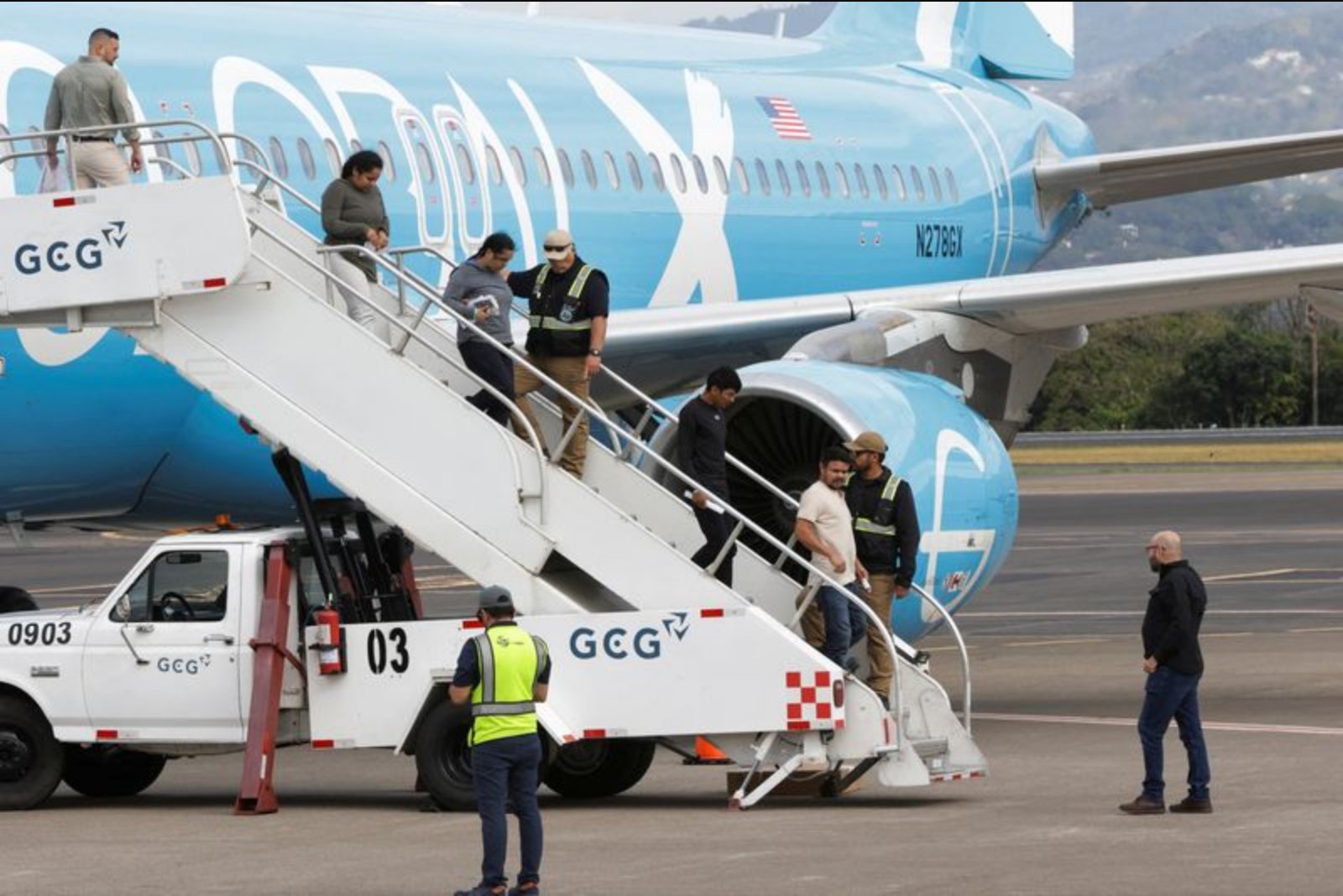
Costa Rica received 25 migrants deported from the United States under a March agreement that allows up to 25 people per week to be transferred from the U.S. to Costa Rica. The migrants, from eight countries, will be assisted by Costa Rican migration police and the International Organization for Migration (IOM) during their initial stay, while the U.S. provides financial support. The policy is part of a broader U.S. effort to deport migrants to third countries and has drawn criticism over costs and humanitarian concerns.

Key Points

  • Costa Rica received 25 migrants deported from the United States under a March agreement; the group included citizens of Albania, Cameroon, China, Guatemala, Honduras, India, Kenya and Morocco.
  • Under the pact, Costa Rica will accept up to 25 people per week; the United States will provide financial support and the IOM will supply food and accommodation for the first seven days.
  • The policy is part of President Donald Trump’s effort to expand deportations to third countries and has drawn criticism over costs and potential humanitarian and logistical challenges, with a Senate committee report citing high per-person costs to U.S. taxpayers.

SAN JOSE, April 11 - Costa Rica on Saturday took in the first group of migrants deported from the United States under an arrangement the two countries signed in March, local authorities said.

The Costa Rican General Directorate of Migration and Foreigners reported that the group comprised 25 individuals who hold citizenship in Albania, Cameroon, China, Guatemala, Honduras, India, Kenya and Morocco.

In a statement, the Costa Rican agency said, "Upon entering the country, the migrants will receive primary care from the Professional Migration Police, with the cooperation of the International Organization for Migration (IOM)." Under the terms of the agreement, Costa Rica will accept up to 25 people per week. The United States will provide financial support and the IOM will arrange food and accommodation for migrants during the first seven days of their stay in the country.

The transfers form part of U.S. President Donald Trump’s stated efforts to expand a mass deportation program that includes removing noncitizens to third countries that are not their nation of origin. U.S. officials have argued that third-country deportations are needed in cases where migrants’ home governments refuse to readmit them.

However, the policy has attracted criticism from Democrats and human rights advocates, who argue it can leave migrants stranded in nations distant from their homelands without language ability or family connections. Critics raise humanitarian concerns about placing people in unfamiliar environments.

In February, Democrats on the Senate Foreign Relations Committee published a report that said deportation agreements with foreign governments have cost American taxpayers millions of dollars - at times more than $1 million per person removed - and have yielded little benefit, according to the committee's findings.

The arrival in Costa Rica marks the operational start of the March agreement's transfer mechanism, with local migration authorities and international partners coordinating initial reception and short-term support. Beyond the logistical details outlined in official statements, the long-term outcomes for those who are transferred under the arrangement were not detailed in the initial announcement.


Contextual note: The implementation includes weekly limits, short-term humanitarian support, and U.S. financial backing as described by Costa Rican authorities and referenced reports.

Risks

  • Fiscal risk - The agreement may impose significant costs on U.S. taxpayers, with a Senate committee report saying such deportation agreements have at times cost more than $1 million per person, affecting public finance and government budgets.
  • Humanitarian and operational risk - Critics warn that transferring migrants to countries far from their homes can leave them stranded without language skills or family ties, creating challenges for humanitarian aid and migrant services sectors.
  • Diplomatic and policy uncertainty - The approach depends on cooperation from third countries and could face political pushback, affecting immigration enforcement agencies and international coordination mechanisms.

More from World

U.S.-Iran Talks in Islamabad Pause as Key Differences Persist Apr 11, 2026 Pope Leo Calls for an End to the 'Madness of War' as U.S. and Iran Begin Talks Apr 11, 2026 Heavily Secured Serena Hotel in Islamabad Chosen to Host U.S.-Iran Peace Delegations Apr 11, 2026 Trump Says Fleets of Empty Oil Tankers Are Heading to U.S. to Load Up Apr 11, 2026 Retirement Calculus at the Supreme Court: Timing, Health, and the Political Stakes for Justices Alito and Thomas Apr 11, 2026