
Hook / Thesis
Diebold Nixdorf is executing a transformation that matters. The company has moved beyond being a parts-and-service ATM incumbent into a software-led provider of self-service and retail automation solutions. That strategic shift is beginning to show up in the numbers: positive free cash flow, improving margins and product momentum in retail kiosks and self-checkout. At a market cap near $3.0 billion and an enterprise value just above $3.55 billion, the market is still pricing in only moderate upside - offering an opportunity to buy into a compounding story with explicit risk controls.
My trade plan is a straightforward long: enter at $86.36, stop at $68.00 and target $130.00 over a long-term horizon of 180 trading days (roughly six months). This setup balances near-term momentum with a multi-quarter view on margin expansion, recurring services revenue growth and continued FCF generation.
What the company does and why it matters
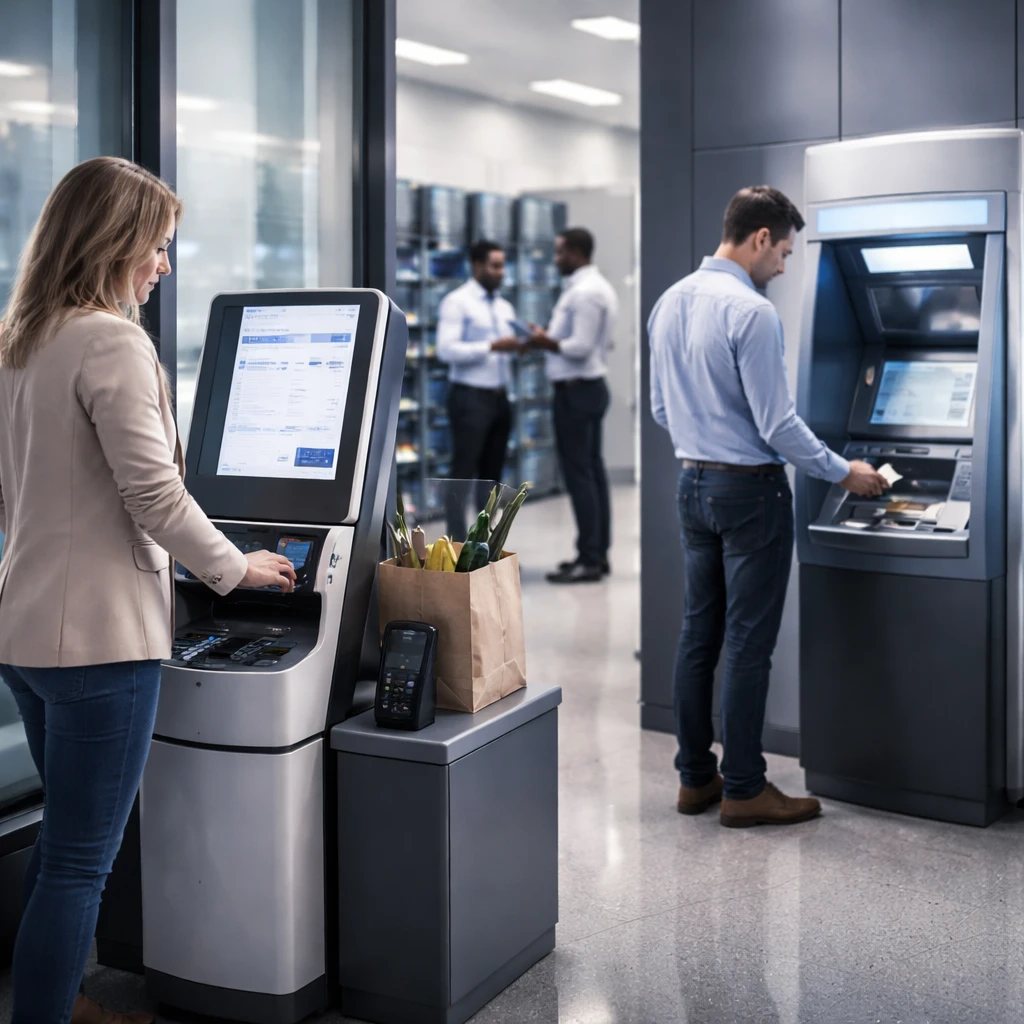
Diebold Nixdorf provides self-service delivery systems and security solutions to financial institutions, retail, commercial and government customers. The business is split across Banking and Retail segments and increasingly driven by software, managed services and higher-value product sales (self-checkout kiosks, self-service software, and secure cash handling devices). The strategic pivot from pure hardware to recurring services changes the earnings profile - shifting cash flow from lumpy product cycles to steadier, higher-margin annuity-like revenue.
Fundamental drivers - why the market should care
- Secular market growth: The hotel self check-in and self-checkout markets are expanding. Industry reports cited an accelerating kiosk market (market growth noted in a 01/19/2026 report) while broader retail automation and ATM managed services markets are forecast to grow materially through the decade. Those end-markets play to Diebold Nixdorf's product and services mix.
- Recurring revenue and FCF: The company reported positive free cash flow and maintained guidance in Q2 2025 while revenue trends showed stabilizing retail product sales. Free cash flow is explicitly reported at $239 million - a meaningful number for a $3.0B market cap company and a foundation for reinvestment or balance-sheet improvement.
- Improving valuation mechanics: At an EV/EBITDA around 9.6 and a P/S of ~0.79, the stock isn't priced for perfection. If the company can convert stronger software/recurring revenue into higher margins, multiple expansion is a credible driver of returns.
Key numbers that support the thesis
| Metric | Value |
|---|---|
| Current price | $86.36 |
| Market cap | $3.006 billion |
| Enterprise value | $3.555 billion |
| Free cash flow | $239 million |
| P/E (ttm) | ~31.8 |
| EV/EBITDA | ~9.6 |
| P/S | ~0.79 |
| 52-week range | $39.96 - $86.57 |
| Q2 2025 revenue | $915.2 million (reported 08/06/2025) |
Valuation framing
On an absolute basis the stock is not cheap but it is reasonable for a company transitioning into higher recurring revenue. Market cap of ~$3.0B and an EV/EBITDA of 9.6 leave room for multiple expansion if management converts hardware sales mix into software and services with better margins. P/S near 0.8 reflects a business that still generates meaningful revenue but whose margin profile is improving; P/E near ~31.8 incorporates the current earnings run-rate but does not fully price in accelerated earnings growth from increased software penetration.
If Diebold can grow earnings from the current EPS of roughly $2.72 to mid-single-digit EPS growth driven by services and product improvements, a path to $130 over 180 trading days is plausible through a combination of top-line growth and modest multiple expansion. The company already shows positive free cash flow and leverage that is manageable - debt-to-equity around 0.85 - supporting investment behind growth while keeping balance sheet risk in check.
Technical/context notes
Technical indicators show momentum - the 10-day SMA is $82.47, 50-day SMA near $77.53, and the stock recently hit a 52-week high of $86.57 on 04/16/2026. Momentum metrics such as MACD are bullish (MACD line 2.686 vs signal 1.751) and RSI near 70 indicates strong buyer interest, though it also warns of short-term overbought conditions. Short interest has increased to roughly 1.16M shares as of 03/31/2026 - days to cover ~4.58 - which creates potential for volatility during sharp moves but also underscores conviction on both sides of the trade.
Catalysts (what could drive the stock higher)
- Recurring revenue growth - Continued migration from hardware to software-led services, boosting margins and recurring revenue contribution.
- Product wins in retail automation - Expansion of self-checkout and kiosk deployments as the market grows (industry reports pointed to a rising kiosk and self-checkout market on 01/19/2026 and throughout 2025).
- Margin expansion & FCF improvement - Converting product revenue into higher-margin services will raise FCF and justify multiple expansion given current FCF of $239M.
- Strategic partnerships or tuck-in acquisitions - Deals that accelerate software or AI capabilities could materially lift growth expectations.
Trade plan (actionable)
Direction: Long
Entry price: $86.36
Stop loss: $68.00
Target: $130.00
Horizon: long term (180 trading days) - roughly six months. Rationale: margin expansion and the conversion of product sales into recurring software/managed services typically play out over multiple quarters; this horizon allows for at least two reporting periods and time for large deployments and seasonally influenced ordering patterns to surface.
Execution notes: Start with a base position at $86.36. If the stock pulls back to the mid-$70s while fundamentals remain intact, consider scaling in. The $68 stop protects against a deeper break in the trend while leaving room for normal volatility; it sits below the recent consolidation zone and provides roughly 21% downside protection from entry.
Risks and counterarguments
- Execution risk: Moving to a software-led model requires salesforce retraining, platform development and customer adoption. Any execution slip could keep margins depressed and delay the transition.
- Competitive pressure: Large incumbents and niche players in retail automation and ATM services - including global electronics firms and cloud-native vendors - can pressure pricing and win share, limiting margin expansion.
- Valuation sensitivity to growth misses: The stock trades at a P/E near 31.8 and EV/EBITDA ~9.6. If growth stalls or guidance is cut, multiples could compress quickly, producing downside faster than fundamentals change.
- Macro and capital spending cycles: Retailers and banks time large hardware investments to broader budgets and economic conditions. A pullback in capex cycles would reduce near-term revenue and potentially delay compounding.
- Short interest and volatility: Rising short interest increases the potential for sharp, sentiment-driven moves. That can be both a tailwind (short squeezes) and a headwind (heavy selling during risk-off periods).
Counterargument - A reasonable alternate view is that Diebold remains primarily a capital goods company with cyclicality that no amount of software repositioning can quickly erase. If revenue from hardware continues to dominate and services fail to scale, the company may deliver modest cash flow but not the structural earnings acceleration a compounder needs. Under that scenario, P/E would be harder to justify and the stock could trade sideways or lower for extended stretches.
What would change my mind
I would become more cautious if any of the following occur: quarterly results show declining service margins or churn that undermines recurring revenue growth; free cash flow turns negative again; management withdraws guidance; or the company announces large unexpected restructuring costs without a credible execution plan. Conversely, I would increase the position if the company reports accelerating service revenue to represent a much larger share of total revenue, demonstrates durable margin expansion and layers on visible, multi-year contracts.
Conclusion
Diebold Nixdorf looks like a classic transition story: the company is turning a deep installed base and product leadership into recurring, higher-margin revenue streams at the same time that end-markets are growing. With $239 million in free cash flow and an EV/EBITDA in the high single digits, the stock has room to re-rate if execution continues. The trade outlined here - entry at $86.36, stop at $68.00 and a $130.00 target over 180 trading days - is a way to participate in the compounding thesis while capping downside with a disciplined stop. This is not a low-risk trade; it is a measured bet on execution, margin expansion and secular tailwinds in retail automation and ATM services.
Key points
- Diebold Nixdorf is shifting to a software-led, recurring revenue model supported by growth in kiosks, self-checkout and ATM managed services.
- Positive free cash flow ($239M) and manageable leverage (debt/equity ~0.85) provide financial flexibility.
- Valuation is reasonable: EV/EBITDA ~9.6 and P/S ~0.79 leave room for multiple expansion if margins improve.
- Trade plan: Long at $86.36, stop $68.00, target $130.00, horizon long term (180 trading days).