
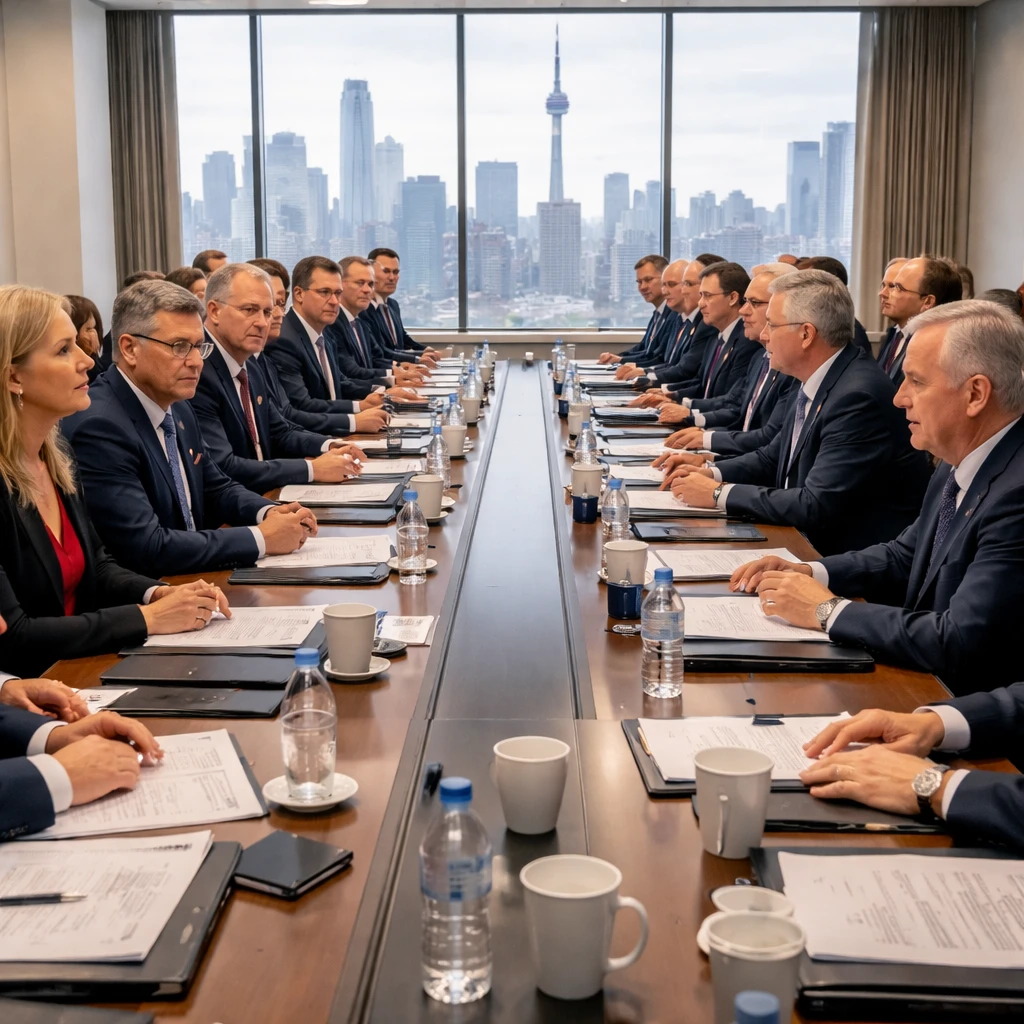
Unifor began formal contract negotiations with Ford Motor Company on Monday, representing 5,150 union members employed at Ford facilities across Canada. The union said it chose Ford to lead the pattern bargaining for the Detroit Three owing to the company’s ongoing commitment to its Canadian operations and a long-established constructive working relationship, according to Unifor National President Lana Payne.
"This will be one of the most consequential rounds of Detroit Three bargaining in decades. Workers are living with the effects of Trump’s trade and investment war at work, in their homes and in their communities," Payne said.
Negotiations are under way at the Sheraton Centre Toronto. Unifor has set a target date of July 10 to reach a tentative agreement with Ford.
The union said its objectives center on advancing members' economic position. Key priorities listed by Unifor include higher wages, strengthened income security, improved pensions, enhanced benefits and workplace upgrades. The union also framed these aims as part of a broader effort to shore up stability in Canada’s automotive sector.
These talks come against a backdrop of uncertainty tied to U.S. tariffs on Canada-made vehicles and parts, a dynamic Unifor says has raised questions for both autoworkers and vehicle manufacturers about production and investment decisions.
"We cannot sit idly by and hope for the situation to get better. Our job is to get the best possible deal for our members now and hopefully provide some sense of stability for them and their families," said John D’Agnolo, Unifor Chairperson of the Ford Master Bargaining Committee.
Unifor has indicated that securing a fair pattern agreement at Ford is its preferred path to negotiating comparable contracts with General Motors and Stellantis. The union said dates for talks with those other Detroit Three automakers have not yet been scheduled.
Negotiations at the Sheraton Centre Toronto will determine both the immediate terms for Ford-represented employees and the framework Unifor hopes to extend across the auto sector in Canada. The union’s timetable and the external pressures it cites - including tariff-driven uncertainty - will be factors for members and industry observers to watch as the July 10 deadline approaches.
Context note: The article reports the positions, timeline and direct quotes supplied by Unifor and identifies the presence of U.S. tariffs on Canada-made vehicles and parts as an influencing factor mentioned by the union. No additional claims, dates or outcomes beyond those stated by the union are introduced here.