
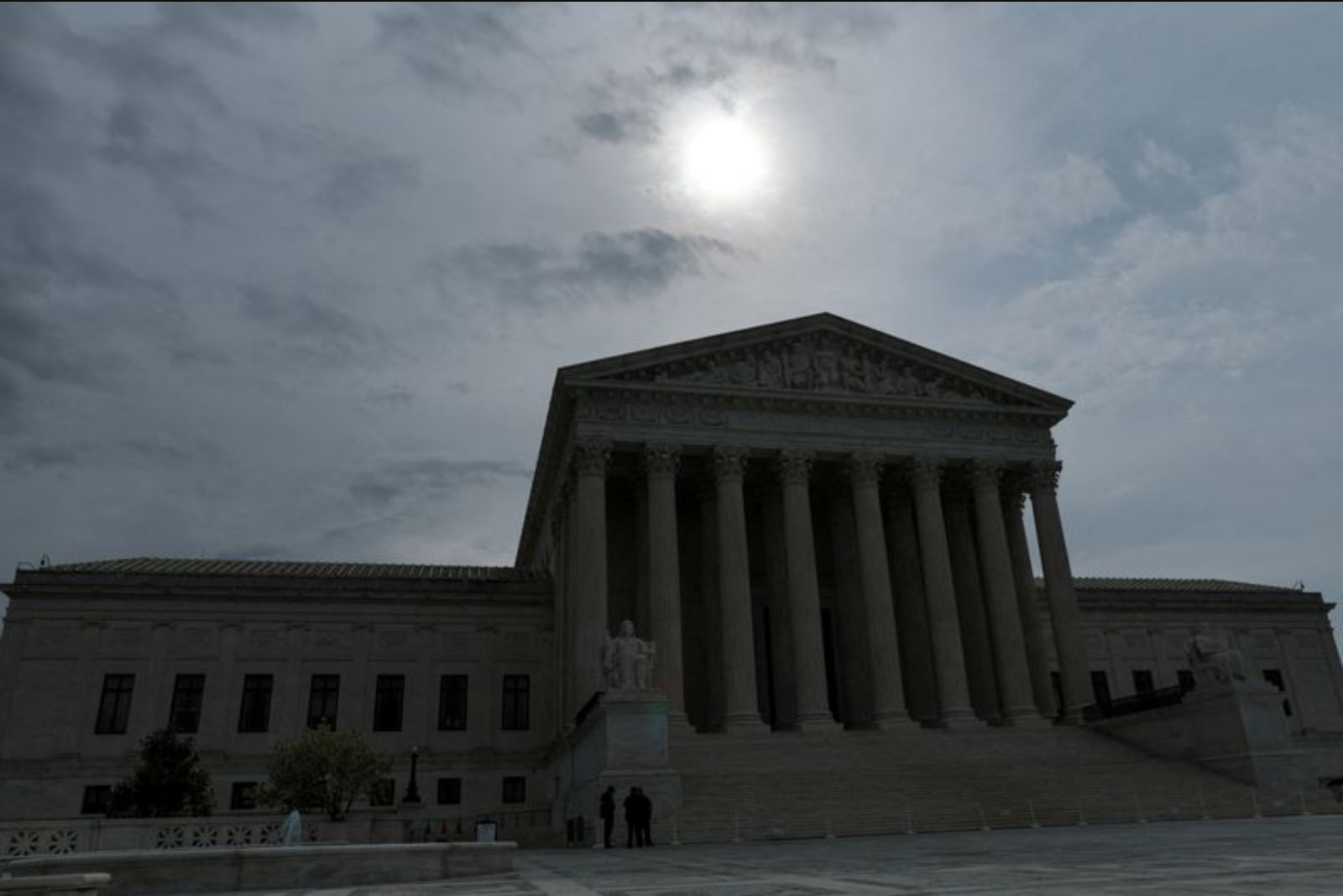
Summary: The Supreme Court on Monday considered whether law enforcement's use of a geofence warrant to obtain cellphone location data surrounding a Virginia credit union robbery contravened the Fourth Amendment's protection against unreasonable searches. The appeal stems from the conviction of Okello Chatrie, who pleaded guilty in 2022 but reserved the right to contest the admissibility of evidence gathered through the geofence process.
The dispute centers on investigative tactics that ask technology companies to search vast troves of user location information for devices that were in proximity to a crime scene. In Chatrie v. United States, prosecutors used a court-approved geofence warrant directing Alphabet's Google to identify devices that had been within roughly 150 meters of a Midlothian credit union during a one-hour period around a May 2019 armed robbery. Google's initial response produced an anonymized list that included Chatrie and 18 other users who had enabled the company's location history feature.
According to documents presented to the courts, investigators had exhausted other lines of inquiry before seeking the geofence warrant after viewing footage showing the robber using a cellphone inside the credit union. Subsequent steps in the probe tied Chatrie to the scene: searches of residences linked to him uncovered two items described by the government as "robbery-style demand notes," a pistol, and nearly $100,000 in cash that included bills bundled in bands signed by the teller targeted during the robbery. Chatrie was later sentenced to nearly 12 years in prison after admitting to brandishing a gun and making off with $195,000.
The legal contest presented to the justices pits an 18th century constitutional guarantee against techniques enabled by 21st century digital platforms. Chatrie's attorneys argue that geofencing amounts to a dragnet search that sweeps up mass quantities of private location information and lacks the particularity the Fourth Amendment requires. They contend the mechanism exposes non-suspects to government scrutiny without the specific, individualized showing that warrants traditionally demand.
Representing the government, lawyers for the Justice Department defended the investigative tool. The government emphasized that Chatrie had opted in to Google's location history service, which, it argued, diminished any reasonable expectation that his location records would remain private. The Department also asserted that law enforcement had probable cause to believe Google possessed information that could identify the robber, potential accomplices, and witnesses.
Google itself, while not party to the litigation, filed a separate brief urging that Fourth Amendment protections be applied robustly in the digital era. The company said it has registered constitutional objections to more than 3,000 geofence warrants and noted that it has moved to alter location history retention so that data is stored on users' devices, limiting its ability to respond to such requests going forward. Court filings in the case indicated that, before policy changes, roughly one in three active Google users had the location history feature enabled - an estimate one judge quantified at about 500 million people.
At the district-court level, Virginia-based U.S. District Judge Mary Lauck found that the geofence warrant in Chatrie's case violated the Fourth Amendment's ban on unreasonable searches. Despite this constitutional finding, Judge Lauck denied the defendant's motion to suppress the evidence uncovered via the warrant, concluding that investigators had acted in good faith and reasonably believed their actions were lawful.
The full Fourth U.S. Circuit Court of Appeals in Richmond affirmed Judge Lauck's rulings, a decision that prompted Chatrie's appeal to the Supreme Court. The high court agreed to decide the constitutional question of whether geofence warrants are permissible, but it declined to take up Chatrie's separate claim that the evidence should be excluded on the ground of the earlier constitutional violation.
The case arrives against the backdrop of an earlier Supreme Court decision in 2018 that tightened law enforcement access to historical cellphone location information. In that 5-4 ruling, the justices held that police generally must obtain a court-approved warrant to secure past location data tied to a suspect's phone. The current case asks the court to define how that precedential framework applies when authorities seek location data not tied to a named suspect but rather to devices that happen to have been near a crime scene.
If the justices rule in Chatrie's favor on the constitutional question, his case would likely be sent back to the district court for further proceedings, a procedural outcome that could affect whether evidence gathered from the geofence ultimately remains admissible. The Supreme Court's decision in the matter is expected by around the end of June.
Context and stakes: The litigation tests the boundaries of privacy expectations for users of digital platforms and challenges the balance between investigative needs and constitutional safeguards. It also touches on the role of private companies in responding to government data requests and the procedural mechanisms courts use to police searches in a data-rich environment.