
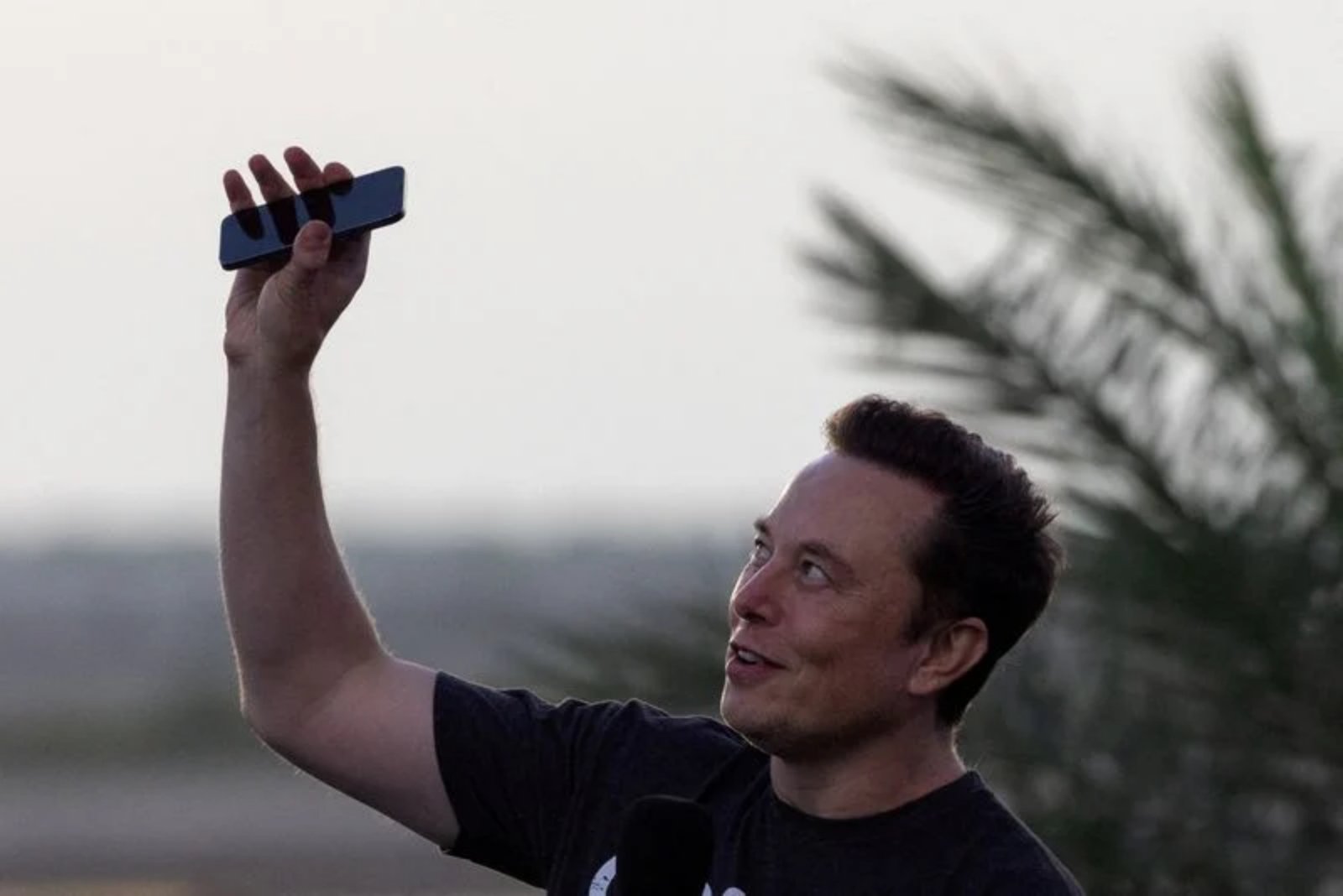
June 11 - A massive initial public offering for SpaceX has pushed Elon Musk into territory no private individual has reached before: trillionaire status. The share sale, which attracted strong investor demand, raised $75 billion and turned the bulk of Musk’s fortune into publicly tradable value tied primarily to his stake in the aerospace, satellite and artificial intelligence business.
The scale of the offering altered the composition of Musk’s wealth almost overnight. Before the IPO, Forbes estimated his net worth at about $780 billion, with the bulk of his future value tied to the privately held parts of his business portfolio. The SpaceX flotation assigns roughly $866 billion to his stake in that company, and when combined with his other holdings the calculations from Forbes and Reuters indicate his net worth will top $1.1 trillion when SpaceX stock begins trading on Friday.
This development comes at a moment when public concern over inequality is elevated and sentiment toward extreme wealth has cooled. Even so, Musk has retained a substantial base of supporters who view his blunt public persona as part of his appeal. At the same time, critics have argued that his concentrated influence raises difficult questions about governance across the businesses in which he is central and about the appropriateness of his political activity.
Investors responded enthusiastically to the SpaceX offering, underscoring confidence in Musk’s capacity to translate ambitious technical programs into commercial outcomes. That faith mirrors the market’s earlier reassessment of Tesla, the electric vehicle company that helped make Musk a global household name. A faction of market participants sees a comparable opportunity in space and AI, betting that Musk’s track record at Tesla can be replicated at SpaceX.
"The second richest person has been hovering around $300 billion, so about less than one-third of what Musk can potentially be worth tomorrow," said Matt Durot, deputy editor at Forbes Wealth. "And only one other person, (Oracle founder) Larry Ellison, has ever been worth $400 billion."
That concentration of wealth around SpaceX is notable. Most of Musk’s paper fortune now rests with the company, leaving Tesla and his other ventures as smaller components of his overall valuation. The IPO therefore not only makes him the first person valued at a trillion dollars but also tightens the link between his status and the fortunes of a single corporate entity.
Musk’s rise to prominence traces through multiple high-profile ventures. He helped popularize electric vehicles through Tesla, a company he took the helm of in 2008, aiming to pair high performance with software-driven features and reshape the auto industry. He expanded his public reach with the $44-billion purchase of Twitter in 2022, a deal that provided a direct line to hundreds of millions of users and amplified his voice on political, social and economic issues.
The breadth of his business interests extends beyond Tesla and SpaceX. Musk has been a co-founder of additional ventures, including tunneling startup The Boring Company and brain-implant developer Neuralink. Across these businesses his influence has become widely discussed in market circles, giving rise to a shorthand some observers use to describe the ecosystem of companies connected to him.
That shorthand—often tied to the idea of an "Elon premium"—captures how investors sometimes price companies on expectations rooted in faith in Musk’s vision rather than only on conventional financial metrics. "Much like Tesla, SpaceX is a bet on Elon Musk," said Matt Kennedy, senior strategist at Renaissance Capital. Kennedy suggested that a market capitalization in the range of $1.5 trillion to $2 trillion would challenge traditional valuation frameworks and instead reflect that premium.
Notwithstanding the enthusiasm, the SpaceX valuation rests on technologies and markets that may require long time horizons to mature. The company continues to be cash-intensive, and some of its most promising capabilities may take years or even decades to reach full commercial viability. That dynamic leaves investors betting not only on engineering and execution but on extended timelines for returns.
In addition to commercial and technical risks, Musk’s public conduct and political involvements have complicated the picture. His acquisition of Twitter and subsequent use of the platform have drawn attention to how corporate leaders can shape public debate. The article’s reporting notes Musk’s role in U.S. President Donald Trump’s Department of Government Efficiency last year as one of the most contentious elements of his public profile. Those political activities coincided with a period in which Tesla saw weakening sales in several international markets in 2025, amid protests and consumer boycotts aimed at the electric vehicle maker.
Observers have flagged the governance challenges that flow from a single individual exerting outsized influence across multiple, publicly traded and privately held companies. The centralization of responsibility and power raises questions about conflicts of interest and the appropriateness of closely tying corporate outcomes to one person’s actions. Over time, Musk’s public contests with regulators, short sellers, other billionaires and members of the press—including repeated flashpoints on social media—have become a recurrent story line.
"He renewed the world’s respect for American ingenuity in automotive engineering," said Bob Lutz, a former General Motors vice chairman, reflecting on Musk’s impact at Tesla.
At the same time, Tesla has faced legal disputes and shareholder unease connected to Musk’s tenure. A notable example cited in the public record is Musk’s 2018 compensation package, once valued at $56 billion, which has been a focal point for criticism and regulatory scrutiny.
Musk’s personal history is included in the account of his ascent. Born in Pretoria, South Africa, he moved through higher education to the University of Pennsylvania, from which he graduated in 1997, and later assumed leadership of Tesla in 2008. Those biographical notes are often raised to explain how an entrepreneur with a varied set of ventures came to be so central to several strategic industries.
Supporters and detractors alike now watch the unfolding consequences of the SpaceX IPO. For adherents, the offering confirms a long-held belief in Musk’s ability to convert ambitious visions into some of the globe’s most valuable companies. For critics, the deal heightens concerns about valuation dynamics tied to personality, governance vulnerabilities and the commercial feasibility of long-term technological bets.
"Elon is the Edison of our time," JPMorgan Chase CEO Jamie Dimon said in a recent conversation with Musk, praising the entrepreneur’s capacity for innovation even as they once stood on opposing sides of legal battles. Dimon later described their relationship as reconciled.
SpaceX’s record-setting IPO has therefore done more than create a headline about personal wealth. It has crystallized existing debates about how markets assign value to visionary founders, about the interplay between business leadership and political engagement, and about the time horizons investors must accept when backing capital-intensive technology ventures.
As SpaceX shares begin trading, market participants and regulators will watch how share price dynamics, governance structures and Musk’s public role evolve. The new market reality places a premium on both operational execution at SpaceX and the ways in which governance frameworks can address the risks that arise when a single individual is so central to multiple corporate fortunes.