
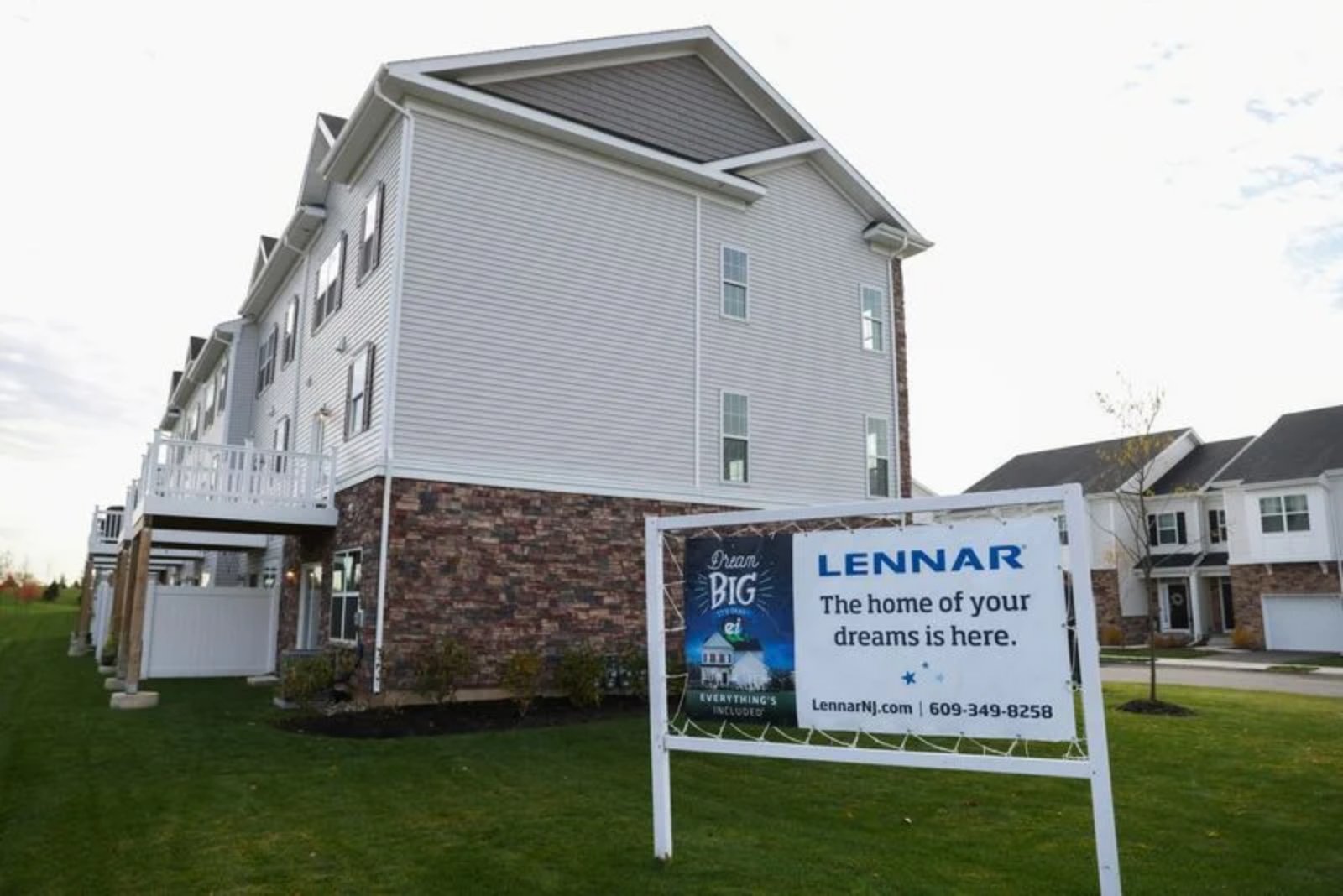
Lennar, the Miami, Florida-based homebuilder, said it now anticipates third-quarter deliveries will fall short of Wall Street expectations amid ongoing weakness in the U.S. housing market. The company’s guidance and quarterly results underscored pressure from elevated mortgage rates, constrained affordability and cautious buyer sentiment.
In the second quarter, Lennar delivered 20,519 homes, a 2% increase from the same period a year earlier. However, average selling price per unit declined by roughly 5% to $371,000, reflecting a softer market and the increased use of sales incentives. Revenue for the quarter ended May 31 fell more than 5% to $7.94 billion, below analysts’ consensus of $8.02 billion.
Excluding special items, second-quarter earnings per share were $1.31, compared with the Street expectation of $1.24 per share. Despite that beat on the adjusted profit metric, Lennar’s shares fell 3.2% in after-hours trading following the firm’s update. The stock has given up nearly half its value since its September 2024 high.
Company leadership highlighted the persistence of several market headwinds. CEO Stuart Miller said the quarter was "defined by the same stubborn headwinds that have challenged the housing market for the past several years - persistently elevated mortgage rates, constrained affordability, and cautious consumer sentiment." Miller also pointed to geopolitical uncertainty and a resurgent inflation reading of 4.2% driven by higher energy prices as additional pressures on the business.
Management said builders have increasingly turned to targeted incentives such as mortgage rate buydowns to stimulate buyer interest. Those measures, combined with ongoing inflation, have put pressure on profit margins.
For the third quarter, Lennar is forecasting deliveries in a range of 20,500 to 21,500 homes. By contrast, analysts were modeling higher deliveries, with the average estimate at 22,353 homes according to data compiled by LSEG.
Clear summary: Lennar reported small year-over-year delivery growth in Q2 but faced weaker pricing and a revenue shortfall versus estimates. The builder now expects third-quarter deliveries below consensus, citing high mortgage rates, affordability constraints and inflationary pressures that have eroded margins and cooled buyer demand.
Key points:
- Second-quarter deliveries: 20,519 homes, up 2% year-over-year.
- Average selling price fell about 5% to $371,000 per unit; revenue declined over 5% to $7.94 billion, missing estimates of $8.02 billion.
- Third-quarter delivery guidance: 20,500 to 21,500 homes versus analysts' average forecast of 22,353 (LSEG).
Risks and uncertainties:
- Persistently elevated mortgage rates and constrained affordability - impacts homebuilders and prospective buyers.
- Cautious consumer sentiment and job uncertainty - may further depress new home sales and related sectors.
- Inflationary pressure, including higher energy costs, which can erode margins through higher input and operating expenses.
The information above reflects the company’s reported results, guidance and management commentary. Where data was limited in the company disclosure, this article notes those limitations rather than speculating beyond the stated information.