
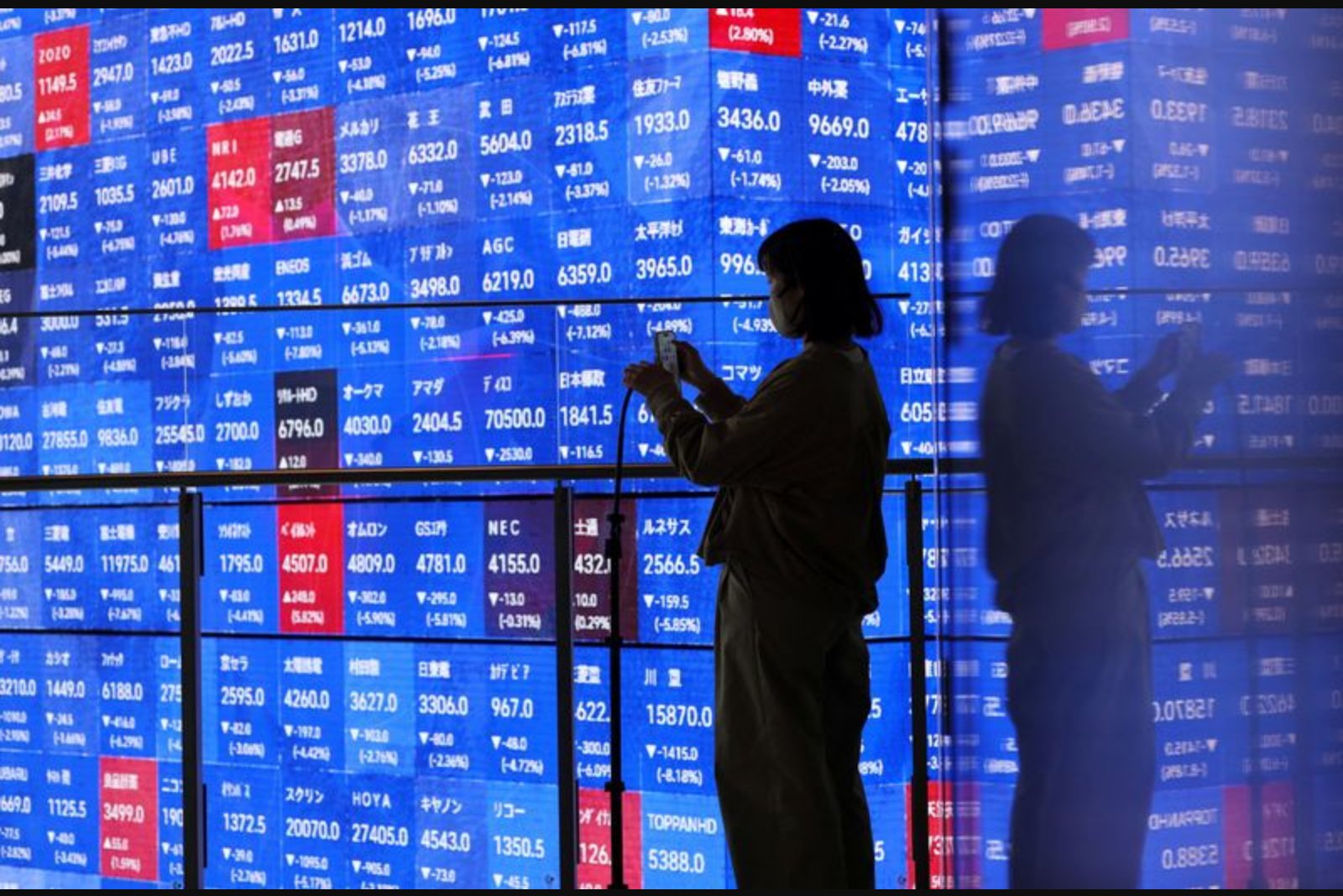
Markets in Asia started the trading day unevenly on Wednesday, with investors treading carefully as geopolitical tensions involving Iran and doubts about parts of the artificial intelligence sector overshadowed the run-up to the Federal Reserve's policy announcement and a slate of earnings from large U.S. technology firms later in the session.
MSCI’s broadest index of Asia-Pacific shares outside Japan slipped 0.2%, marking a second consecutive session of retreat after hitting record highs on Monday. The pullback was concentrated among Taiwanese chip producers. Japanese markets were closed for a holiday.
In U.S. derivatives, S&P 500 e-mini futures inched up about 0.1%. Commodities also reflected the geopolitical strain: Brent crude futures climbed 0.4% to $111.71 per barrel as attempts to resolve the Iran conflict stalled.
Analysts at Westpac noted that market participants were maintaining caution as peace talks made limited progress. "Markets remained cautious overnight as peace talks continued to stall, with Iran seeking the lifting of the U.S. naval blockade of the Strait of Hormuz and mediators expecting a revised Iranian proposal in coming days," Westpac said in a research note.
A U.S. official was quoted as saying that President Donald Trump was dissatisfied with Tehran's most recent proposal because he wants nuclear issues to be addressed from the outset. The Wall Street Journal reported that Trump had directed aides to prepare for the possibility of an extended blockade of Iran.
Wall Street turned lower on Tuesday amid the stalemate in negotiations. The S&P 500 fell 0.5% and the Nasdaq Composite dropped 0.9% as investors assessed how prolonged tensions might affect broader markets.
Technology stocks were pressured further after a report indicated that OpenAI had missed internal targets for weekly users and revenue, raising questions about the ChatGPT parent’s capacity to sustain large-scale spending on data centres. That report put downward pressure on shares of Oracle and CoreWeave.
Investor focus will sharpen later in the day as Microsoft, Alphabet, Amazon and Meta Platforms announce quarterly results - a group of companies whose performance will test the AI-driven rally that has supported tech valuations.
Despite the geopolitical backdrop, Corporate America has shown notable resilience: slightly more than one-third of S&P 500 sectors have already reported results for the period, and 81% of the companies that have reported earnings have beaten analysts' estimates.
Market participants were also looking to the Federal Reserve’s April meeting outcome on Wednesday. This will be Jerome Powell's final meeting as Fed chair. Traders were fully pricing a pause in policy action; Fed funds futures indicated a 100% probability the central bank would stand pat, according to the CME Group’s FedWatch tool, and did not expect policy moves until late in 2027.
ING analysts commented that with inflation affected by the war environment, the Fed could adopt a hawkish tilt without making overt moves, while largely remaining in a wait-and-see mode. They added that the meeting could also raise questions about incoming Kevin Warsh and Powell’s longer-term intentions.
On the macro front, the yield on the U.S. 10-year Treasury rose modestly, gaining 0.6 basis point to 4.346%. The U.S. dollar index, which tracks the greenback against a basket of six currencies, edged up 0.1% to 98.67, extending a two-day advance.
Markets were also processing the surprise exit of the United Arab Emirates from OPEC. While expectations are that the remaining members of the oil-producer group will largely remain aligned, traders weighed the implications of the UAE's departure.
"On any other given day, this news may have seen the Brent price move down $5 to $6 off the bat, given the UAE accounts for around 10% of OPEC output," said Chris Weston, head of research at Pepperstone Group Ltd in Melbourne. "However, with the UAE’s production facilities currently close to capacity, it is perhaps no surprise that Brent front-month futures quickly erased the initial drop."
Precious metals and cryptocurrencies showed mixed moves. Gold slipped 0.3% to $4,581.40. In the digital asset space, bitcoin was essentially flat at $76,471.21, while ether eased 0.3% to $2,289.16.
Summary
Asian markets opened lower as renewed concern over the Iran conflict and questions about AI-sector performance dampened sentiment ahead of the Federal Reserve meeting and major U.S. tech earnings. Energy prices rose on stalled peace talks, while U.S. futures and Treasury yields showed minor moves. Corporate earnings to date have largely exceeded expectations, but attention remains on the Fed's decision and the earnings of AI-linked tech companies.
Key points
- Geopolitical tensions involving Iran and stalled peace negotiations contributed to cautious trading and lifted Brent crude to $111.71 a barrel - sectors impacted: energy, shipping and global trade.
- Reports that OpenAI missed internal targets pressured certain tech-related stocks and raised scrutiny of AI spending; upcoming earnings from Microsoft, Alphabet, Amazon and Meta will further test the sector - sectors impacted: technology and data centre infrastructure.
- The Federal Reserve meeting is expected to result in a hold on interest rates, with markets fully pricing no changes until late 2027; this focuses attention on monetary policy leadership and tone - sectors impacted: financials and fixed income.
Risks and uncertainties
- Escalation or a prolonged stalemate in the Iran conflict could further disrupt oil flows and push energy prices higher, affecting inflation and transport costs - most directly impacting the energy and logistics sectors.
- If AI-related firms fail to meet internal or market expectations, sentiment toward technology and data-centre reliant companies could deteriorate, weighing on tech equities.
- Although a Fed hold is priced in, any unexpected hawkish tone or comments on leadership could unsettle bond markets and the dollar, creating volatility in financial and currency markets.