
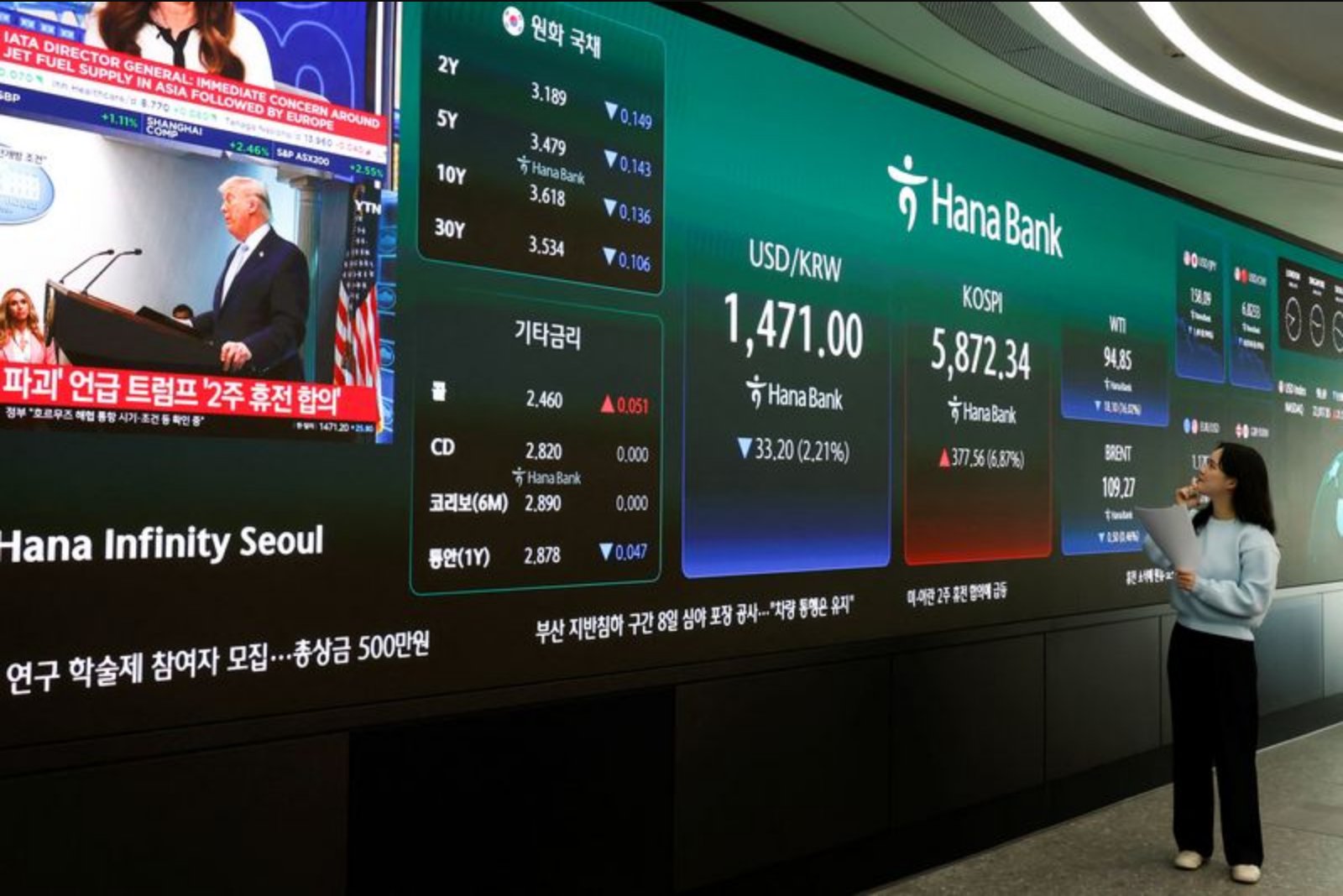
SINGAPORE, April 10 - Asian equity markets saw modest advances early on Friday, yet the upside was constrained as market participants assessed the resilience of this week’s U.S.-Iran ceasefire and eyed fragile prospects for direct Israel-Lebanon talks. Iran pointed to continued Israeli attacks on Lebanon as a central obstacle in its agreement with the United States, creating caution among traders.
MSCI’s broadest index of Asia-Pacific shares outside Japan rose 0.5%, paced by a 1.9% gain in South Korea’s Kospi. Japan’s Nikkei 225 added 1.5%. Meanwhile, S&P 500 e-mini futures, having been lower earlier, moved back to trade flat.
"The U.S.-Iran ceasefire led to a sharp recovery in Asian markets but the risk-on sentiment got tested yesterday," said Rupal Agarwal, Asia quant strategist at Bernstein in Singapore. "We believe this could be the beginning of the end and is presenting an opportunity for investors to focus on pre-war trends and fundamentals," she added. "We recommend adding back some beaten-down names."
On Thursday, the S&P 500 rose 0.6%. MSCI’s benchmark of global equities registered modest gains after Israeli Prime Minister Benjamin Netanyahu said he is seeking direct talks with Beirut - comments that came a day after the war’s most deadly bombardment killed more than 300 people in Lebanon and put the U.S.-Iran ceasefire at risk.
Brent crude climbed 1% to $96.83 a barrel as Asian trading resumed. The move followed a missile launch by Hezbollah at Israel, which set off air raid sirens in parts of the country, including in Tel Aviv.
The Strait of Hormuz remained largely closed to shipping, with marine traffic at well below 10% of normal volumes on Thursday as Iran reinforced control over the strategic waterway that typically carries one-fifth of global oil and gas shipments. The closure of the strait during the six-week Iran war produced a sharp shock to global markets as oil prices surged and energy supplies tightened.
U.S. President Donald Trump commented on the situation in a post on Truth Social, saying Iran was doing a "very poor job" of allowing oil to pass through the strait. "That is not the agreement we have!" he wrote, highlighting Washington’s frustration as market repercussions mounted.
Financial market moves were also shaped by U.S. data and expectations for monetary policy. The U.S. dollar index, which tracks the greenback against six currencies, was up 0.1% at 98.92 after government figures showed weekly jobless claims increased by 16,000 to 219,000, while continuing claims fell by 38,000 to 1.794 million - the lowest level since May 2024. The Core PCE price index rose 0.4% for a second consecutive month, producing a year-on-year gain of 3.0%.
The yield on the U.S. 10-year Treasury was slightly higher, up 0.6 basis point at 4.285%. Fed funds futures reflected traders bringing forward expectations for the Federal Reserve’s next 25-basis-point rate cut to April 2027. The implied probability that the Fed will remain on hold at that meeting declined to 49.6% from 64% on Thursday, when markets were more inclined to expect easing later in the year, according to the CME Group’s FedWatch tool.
In credit markets, private credit faced fresh pressure when Carlyle disclosed in a shareholder letter on Thursday that investors have sought to withdraw more than 15% of assets from its flagship private credit interval fund.
Crypto markets were weaker: Bitcoin fell 0.7% to $71,903.27, while ether was down 1.0% at $2,191.81.
Is CG a bargain right now? The fastest way to find out is with our Fair Value calculator. We use a mix of 17 proven industry valuation models for maximum accuracy. Get the bottom line for CG plus thousands of other stocks and find your next hidden gem with massive upside. See Undervalued Stocks