
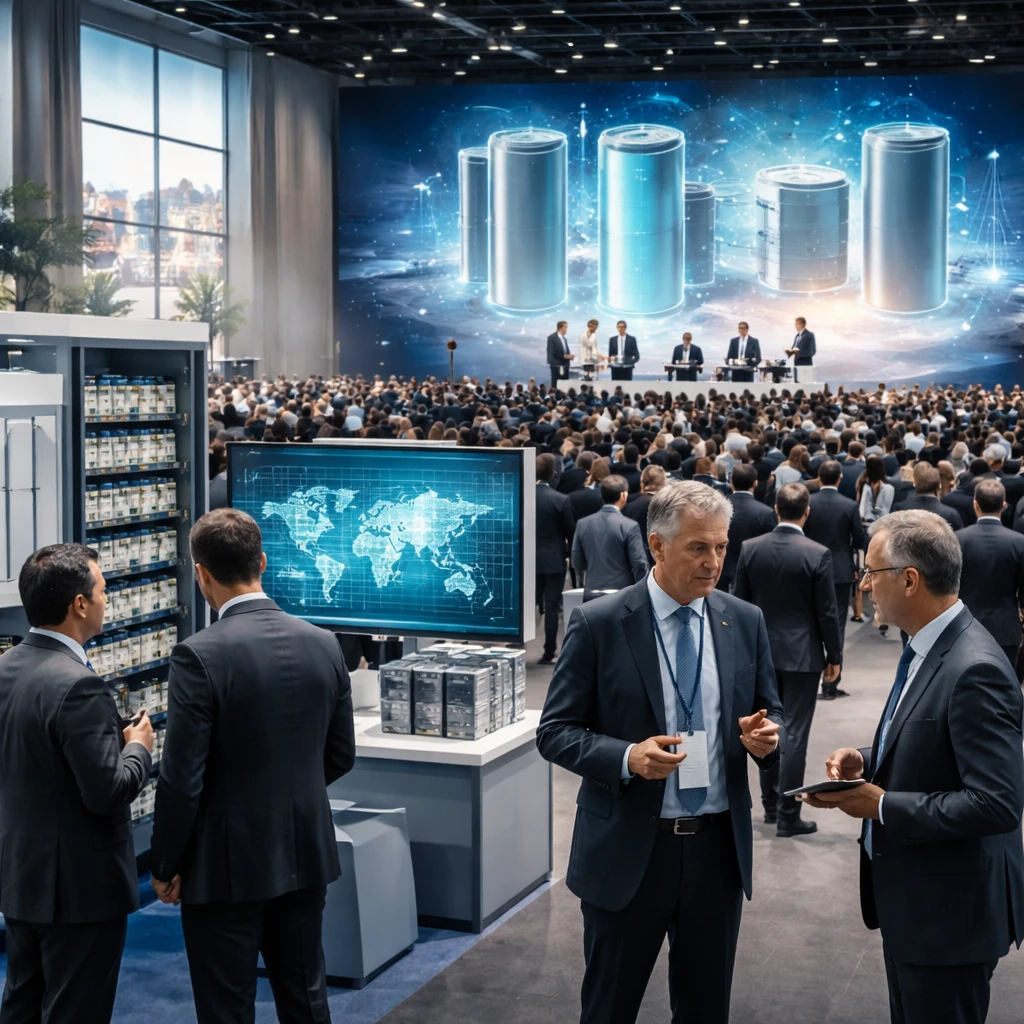
LAS VEGAS - Executives and analysts in the lithium sector told delegates at this week’s conference that the industry is growing more confident about a market recovery as brisk demand for stationary battery storage begins to counteract softer sales in some electric vehicle (EV) markets.
Speakers at the Fastmarkets Global Lithium, Battery and Critical Materials Conference said regulatory shifts in the United States and elsewhere have damped EV purchases in key markets, coinciding with a phase of excess production that drove lithium prices sharply lower. But that downturn has been at least partially offset by a surge in demand for energy storage systems used in power grids and data centers.
Raju Daswani, chief executive of consultancy Fastmarkets, told attendees that the phase of 'market overcorrection is over' and described energy storage as a new core growth engine for lithium. Fastmarkets estimates that demand for lithium from battery storage systems is expanding at about 40% annually, a pace Daswani said provides a steadier underpinning for the sector when compared with the more variable, consumer-driven EV market.
"This is a fundamental change and it adds a robust foundation if you compare it to a far-more volatile consumer-driven electric vehicle demand picture," Daswani said at the conference in Las Vegas.
Organizers said attendance at what is considered the world’s largest annual meeting of lithium investors, producers and consumers increased by roughly 10% this year, to about 1,100 participants. The tone at the gathering was notably more upbeat than at the 2025 event, reflecting a recovery in lithium values since then - prices have more than tripled from their lows.
Producers at the conference argued that demand in the coming years will be more evenly split between EVs and stationary energy storage. Jérôme Pécresse, who leads Rio Tinto’s aluminum and lithium division, said he expects lithium demand over the next two years to be significantly more balanced between the two end markets. Rio Tinto is pursuing plans to increase lithium production capacity by 2028.
Albemarle, the world’s largest lithium producer, told conference attendees that it is seeing steady, broad-based growth in battery storage demand in contrast to the uneven demand pattern for EVs. Eric Norris, Albemarle’s chief commercial officer, said on the sidelines that grid storage demand is geographically more evenly distributed, making it an attractive and stabilizing source of growth.
Industry participants also pointed to emerging commercial activity around specific projects. For example, ioneer announced a non-binding letter of intent with Hyundai Engineering and a South Korean government-affiliated entity to support the company’s Nevada lithium project, signaling continued investment interest in new supply chains.
Calls for government support
Despite improving market fundamentals, a number of executives urged governments to do more to shore up processing capacity outside China, which currently dominates much of that segment. PLS chief executive Dale Henderson said there remains an unresolved question about what governments are prepared to pay to ensure secure supplies of processed lithium and nickels for Western markets.
"What are governments willing to pay for security of supply? There’s a tax to be paid for that, and it hasn’t been paid yet," Henderson said.
On the same sidelines, Audrey Robertson, the U.S. assistant energy secretary, encouraged industry attention to technological innovation that could reshape processing methods for lithium and other critical minerals. Robertson said the way lithium is processed today is likely to change within a five-year horizon, underscoring the potential for new technologies to affect market dynamics.
Market context and implications
Conference commentary framed the shifting demand profile as a structural development in which energy storage - supported by needs to harden grids and by growth in artificial intelligence infrastructure - provides a steadier, more geographically dispersed source of consumption. That, industry participants said, contrasts with EV demand, which they described as more sensitive to regulatory changes and consumer cycles.
Speakers noted that the industry has moved past a period in which overproduction compounded the impact of softer EV sales, and that the combination of stronger storage demand and higher prices has altered the immediate outlook for producers.
While optimism has returned, several executives made clear that policy and investment decisions will be crucial to translating current market momentum into a durable, geographically diverse supply chain for processed lithium.