
World food prices rose in August to their highest level since late 2022, the United Nations' Food and Agriculture Organization (FAO) said on Friday, citing a combination of extreme weather, potential El Nino effects and disruptions to trade caused by conflict.
The FAO Food Price Index, which measures monthly changes across a basket of internationally traded food commodities, averaged 133.3 points in August, up from July's revised 130.8. The August figure is the strongest monthly reading since November 2022, though it remains about 17% below the record peak reached in March 2022 following Russia's full-scale invasion of Ukraine.
"August's increase in global food prices is a warning that the risk premium is returning to food markets: climate shocks, geopolitical tensions and disrupted trade logistics are converging to tighten supply expectations," FAO Chief Economist Maximo Torero said in a statement.
The agency reported month-on-month rises across its main commodity benchmarks in August. FAO's cereals price index climbed 2.2% to reach its highest level since May 2024, while the vegetable oil index inched up 0.6% to its strongest reading since June 2022. The FAO's sugar benchmark posted the largest monthly movement, jumping 11.9% to a one-year high.
Weather conditions in Europe - notably extreme heat and drought - were cited as factors weighing on maize (corn) and sugar beet harvest prospects in the region, and as having negative effects for livestock output. At the same time, the threat of a strong El Nino pattern has increased concern about palm oil and sugar production prospects in parts of Asia.
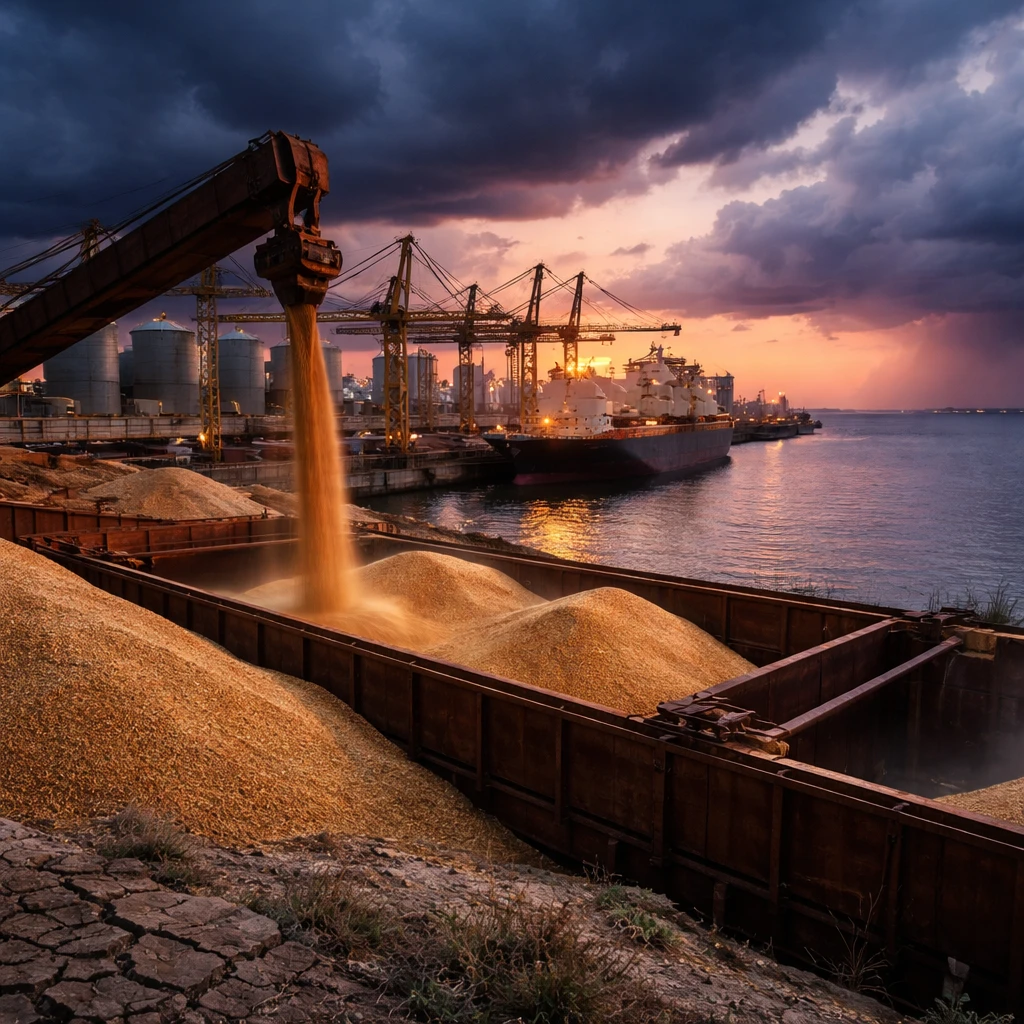
Separately, the FAO highlighted how security developments have affected trade flows. Escalating attacks in the Black Sea have curtailed grain shipments from Russia and Ukraine amid their multi-year conflict, and tensions between the United States and Iran have strained supplies of fertiliser used for crops.
The agency also revised its outlook for global cereal production and stocks. In a separate report, the FAO trimmed its 2026 global cereal production forecast by 3.4 million metric tons from the July estimate, to 2.980 billion tons. That revised total would be 2.0% below 2025, representing the largest year-on-year decline since 2018, though the projected output would still be the second-largest on record.
Forecast world cereal stocks at the close of 2026/2027 were lowered by 1.1% to 947.2 million tons, leaving inventories only marginally above the previous season. The FAO said a reduction in estimated coarse grain stocks more than offset an upward revision to wheat stocks, the latter reflecting an expected build-up in Russian and Ukrainian inventories as a result of shipping disruption.
The FAO's latest updates underline a convergence of supply-side pressures that have driven benchmark prices higher across several food categories. Extreme weather affecting European crops and livestock, the potential for El Nino to curb Asian oilseed and sugar output, and trade complications stemming from conflict have combined to lift the market's risk premium, the agency said.
While the revised cereal production figure still leaves 2026 output at near-record levels, the downward adjustment and the fall in projected stocks point to a tightening margin of available supply relative to demand at the end of the 2026/2027 season.
Market participants and sectors tied to agricultural commodities - including grain and oilseed markets, sugar, vegetable oils and fertilizer supply chains - are likely to track further FAO reports closely as indicators of near-term price and supply pressure.