
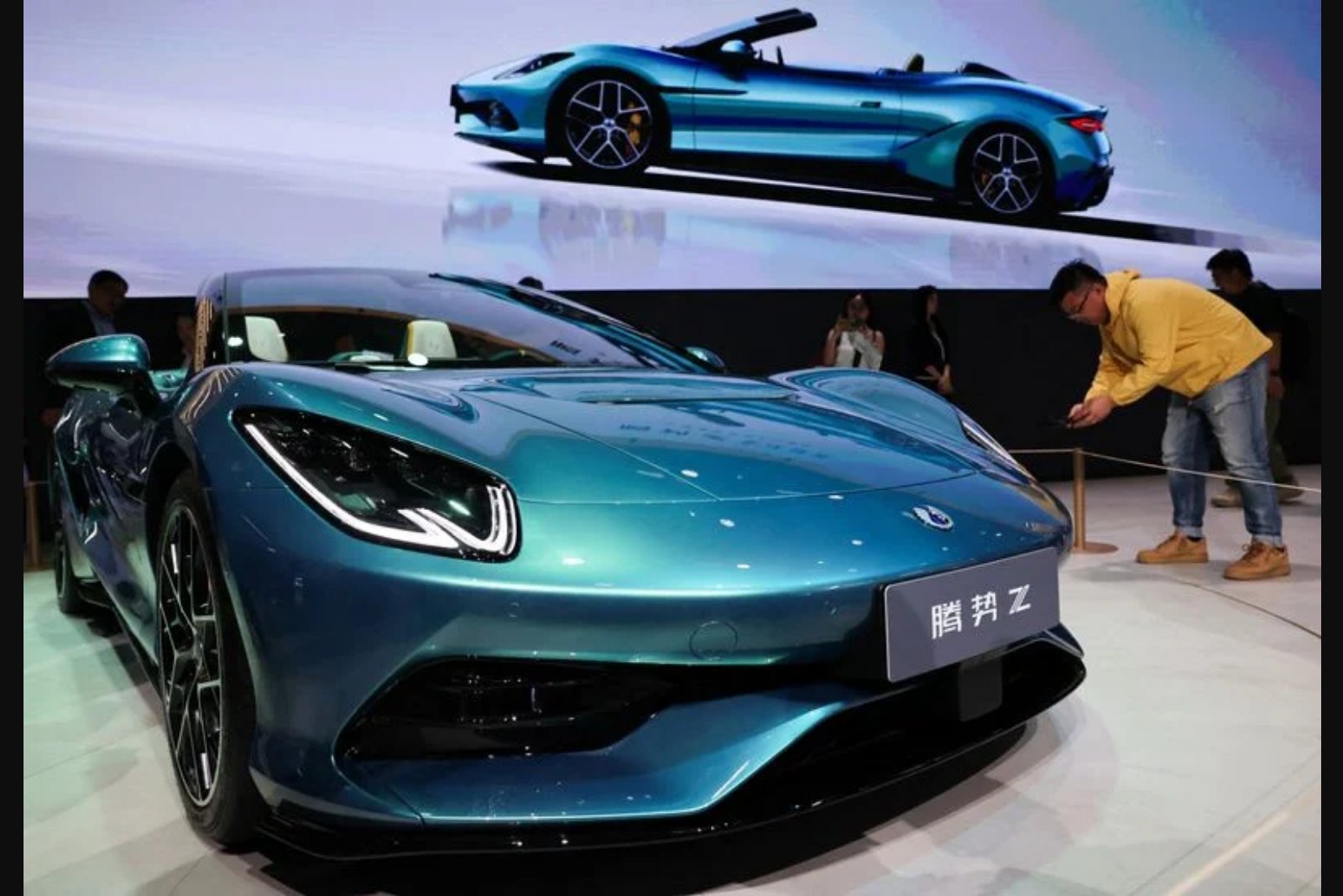
Two weeks after Canadian Prime Minister Mark Carney announced in January that Canada would allow limited electric-vehicle imports from China, some of China’s largest carmakers began formal business activity in Canada. Chery convened its first meetings with Canadian dealers, BYD has engaged location advisors about opening six dealerships, Lotus plans a half-dozen showrooms to sell several hundred cars, and state-owned Changan has a team working on a Canada launch, according to company officials and industry sources.
These moves come even though the Canadian program allows only a small volume of vehicles to enter at a reduced tariff. Canada approved imports of 49,000 cars annually at a 6.1% tariff rate, rising to 70,000 cars over five years. Given that limited allocation and the need to share that volume across multiple entrants, the immediate financial upside in Canada is modest. Yet for the automakers involved, Canada offers strategic value well beyond short-term margins.
Industry executives and consultants characterize Canada as a near-perfect testing ground for eventual entry into the United States. Unlike Mexico, where lower-priced models dominate, Canada’s market mirrors U.S. consumer tastes and regulatory frameworks. That similarity means that lessons learned selling into Canada would transfer directly to the U.S., should market access ever materialize. "Canada is the practice run for the U.S.," said Robert Kerwal, director of automotive solutions at JD Power Canada. Dan Hearsch, global co-leader of AlixPartners’ automotive practice, described the move to Canada as a way to position for U.S. ambitions, likening a later shift to the United States to "flipping a switch."
Executives at Chinese carmakers have acknowledged U.S. aspirations publicly. Chery International president Zhang Guibing told reporters in May at the company’s Wuhu headquarters, "We definitely have the idea of selling cars in the United States. Everyone definitely has that idea." That sentiment was echoed in other company plans: BYD has started regulatory compliance processes to import two passenger cars into Canada, and an advisory firm scouting locations for BYD reported the company is planning six dealerships in Canada this year. Records from Transport Canada indicate BYD began procedures to import one car from Shenzhen and another from Xi’an, cities where it manufactures plug-in hybrids, luxury Denza models and other variants.
Lotus, which is owned by China’s Geely, intends to open about six dealerships in Canada this year to move only a few hundred vehicles, Lotus CEO Qingfeng said in an interview. State-controlled Changan has an internal team focused on a Canadian launch, according to design chief Klaus Zyciora. Chery itself has been road-testing models in Canada to evaluate how cold-climate exposure might affect warranty costs, and company officials say Chery plans to begin sales in Canada in the fourth quarter.
Those dealer and regulatory steps are being taken even though many automotive executives and analysts recognize how small and relatively unprofitable Canada alone can be as a destination for new-model launches. Daniel Ross, director of strategic market insights at Canadian Black Book, said Canada’s market size and exchange-rate dynamics make it "one of the least profitable markets for manufacturers to sell into globally." He added that going into Canada without eventual U.S. access "just doesn’t make financial sense." Large Canadian dealer groups often have U.S. operations, and major U.S. dealers own Canadian outlets as well, so early dealer relationships forged now could ease a later expansion into the U.S.
Competition in Canada will not be limited to newly arrived Chinese brands. Made-in-China vehicles from established North American brands are already present. Tesla, which imported more than 44,000 Chinese-made cars into Canada in 2023, recently began selling a Chinese-made Model 3 in Canada at about C$40,000 - roughly half the price of the U.S.-made version previously sold there. Volvo Car, a Geely unit, has said it has not yet decided whether to export Chinese-made EVs to Canada. Those pre-existing Chinese-made imports will share the small, discounted-import quota with newcomers such as BYD, Chery and Lotus.
BYD’s overseas strategy also highlights the limits of a Canada-only approach. BYD sold 4.6 million vehicles globally last year, with about 23% of sales outside China. BYD executives have said they aim to increase overseas sales to half of the company’s total - a substantial ramp-up that many industry experts say would be difficult without access to the much larger U.S. market. BYD’s executive vice president Stelli Li told Reuters at a London event that BYD was still choosing models for a Canadian launch and might begin sales next year. Li rejected the idea that Canada was simply a staging area for U.S. entry, saying, "I don’t need to practice," and noting she lived in the United States for 15 years.
Despite such corporate assurances, there are material obstacles that currently prevent straightforward entry into the U.S. Chinese automakers face steep U.S. tariffs and a regulatory ban on certain Chinese connected-car hardware and software. U.S. lawmakers are working to codify that ban amid concerns that the U.S. president could negotiate a broader trade deal with China that might compromise these restrictions. Former U.S. President Donald Trump has publicly suggested he might allow Chinese carmakers into the United States if they committed to building factories on U.S. soil. For now, however, the technical and political barriers remain significant.
The potential for Canadian imports to serve as a backdoor to the U.S. market worries U.S. industry groups. The Alliance for Automotive Innovation said the Canada-China trade arrangement "creates a potential backdoor for Chinese brands to enter the U.S. market," and warned that such entry would raise economic and national-security risks. The group also opposes the idea of allowing U.S. factories for Chinese-brand vehicles, arguing that "the market distortions and risks to the auto industry in the U.S. are fundamentally the same whether these vehicles are imported or produced domestically." The White House did not respond to a request for comment.
Canada’s policy shift on Chinese vehicles is taking place against a backdrop of fraying diplomatic ties with the United States. According to officials and observers, Prime Minister Mark Carney has publicly distanced Canada from its previously more conciliatory relationship with its southern neighbor amid trade tensions and other diplomatic strains. Those strains have included aggressive trade actions and public disputes. At the same time, Canadian trade strategy still emphasizes proximity to the U.S. market as a negotiating and commercial advantage with other trading partners.
Industry voices and company executives are already anticipating cross-border consumer behavior. Hearsch of AlixPartners said that while Chinese cars stream into Canada, Americans inclined to buy them will likely look for ways to bring those vehicles across the border into U.S. driveways, predicting "an early run of people who want to buy those cars." Such cross-border purchases are one channel through which demand in Canada could have spillover effects in the U.S., though current legal and tariff barriers complicate that dynamic.
In late April, about 20 Canadian car dealers attended Chery’s events in Wuhu, where the automaker showcased the Freelander 8, a recently unveiled SUV developed with joint-venture partner Jaguar Land Rover. Chery invited the dealers to the Beijing car show and to its Wuhu headquarters to discuss potential business and review Chery’s vehicle lineup. Steve Alizadeh, CEO of Ontario-based Performance Auto Group, which operates 39 dealerships, said he saw opportunity in Chery’s products based on what he had seen at those events.
For companies such as Chery, BYD, Lotus and Changan, the immediate Canadian initiative combines regulatory filings, dealer scouting and product testing in a market that closely resembles the United States. That strategy reflects a long-term view: Chinese manufacturers are building presence and capability in North America now while larger policy questions over U.S. market access remain unresolved. Executives acknowledge that selling in Canada alone offers only limited near-term returns, but they also emphasize the strategic benefit of establishing distribution ties, learning from cold-climate testing and positioning for a possible later move into the much larger U.S. market.
Summary
China’s major automakers have initiated dealership meetings, regulatory filings and scouting in Canada following a January decision to allow limited Chinese EV imports. While Canada’s quota and tariff terms mean immediate profits are small, the market’s strong similarity to the United States in consumer preferences and regulation makes it a strategic stepping stone for potential U.S. expansion. Chinese entrants include Chery, BYD, Lotus and Changan, and existing China-made imports from companies like Tesla already compete for limited Canadian import space. U.S. industry groups and lawmakers have raised concerns that Canada could become a pathway for Chinese vehicles to reach U.S. consumers.
Key Points
- Multiple Chinese automakers - Chery, BYD, Lotus and Changan - have started dealer engagement, regulatory compliance and site scouting in Canada following a policy change announced in January by Prime Minister Mark Carney.
- Canada’s limited import quota - 49,000 cars annually at a 6.1% tariff, rising to 70,000 over five years - offers minimal near-term profitability but is valued for its regulatory and consumer-market similarity to the U.S., making it an operational practice ground for future U.S. ambitions.
- Existing Chinese-made imports from established brands like Tesla and potential future entries from other Chinese-owned marques will compete for the constrained Canadian allocation, complicating commercial returns for newcomers.
Risks and Uncertainties
- Policy and trade barriers in the United States - steep tariffs and bans on connected-car hardware and software for Chinese vehicles - remain unresolved and could block direct U.S. market entry even if Chinese automakers scale in Canada. This affects the broader automotive and trade-policy sectors.
- Canada’s small market size and exchange-rate dynamics make it a low-margin environment; without U.S. access, the financial case for committing substantial resources to Canada is uncertain. This creates risk for automotive manufacturers and dealership economics in North America.
- Political and national-security concerns raised by U.S. industry groups could prompt further regulatory responses or new restrictions, adding uncertainty to cross-border automotive commerce and supply-chain planning.