
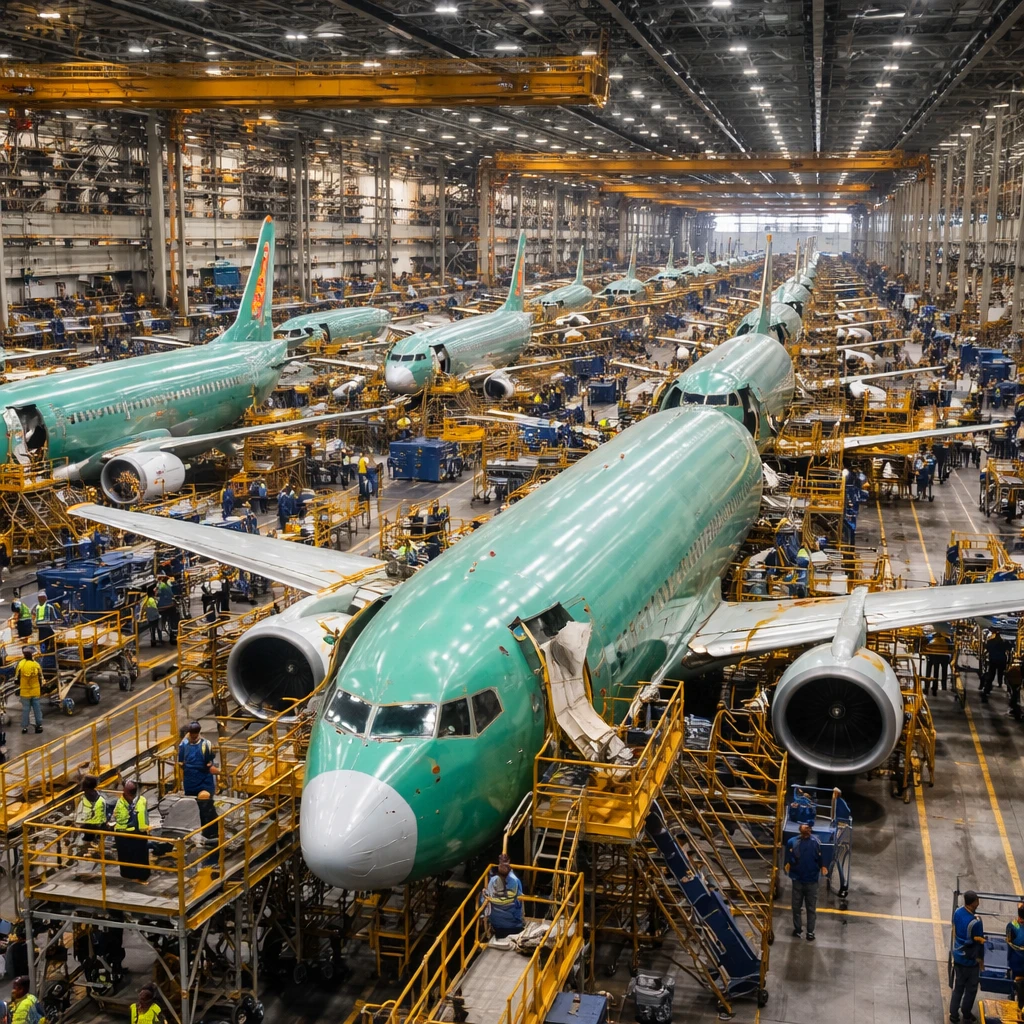
Boeing intends to deliver 500 aircraft from its 737 family during 2026 as it raises production volumes and reduces reliance on its stock of previously constructed MAX jets. The target represents a 12% increase compared with Boeing's 2025 737 deliveries.
The planemaker says it expects to hand over the last 737 MAX 8 that was assembled before 2023 during the current quarter, marking a continuation of the move away from using older, built-but-undelivered aircraft to meet demand.
Boeing also reports that its inventory of earlier-model 787 Dreamliners has been pared down to about five jets. Widebody Dreamliners remain an important component of the company’s revenue mix: Boeing projects overall aircraft shipments will climb by roughly 10% in 2026, and that total includes between 90 and 100 787 Dreamliner deliveries.
To reach the 737 family target, Boeing plans to increase production at its Seattle-area manufacturing facilities and to bring a fourth final assembly line online at its Everett, Washington plant. The company has framed the production rise and additional assembly capacity as the primary levers for hitting the higher delivery number.
The broader market context remains dynamic: Airbus SE is expected to publish its own annual delivery objective in the coming weeks when it reports earnings, which will provide a near-term point of comparison in commercial aircraft deliveries industry-wide.
Summary
- Boeing targets 500 737 family deliveries in 2026, a 12% increase over 2025.
- The company will rely on higher production in the Seattle area and a fourth final assembly line at Everett to meet the target.
- Overall shipments for Boeing are forecast to rise about 10% in 2026, including 90-100 787 Dreamliners; inventory of earlier 787s has been reduced to around five jets.
Context and implications
The decision to draw down the stockpile of pre-built MAX aircraft and to focus on increased production capacity signals a shift in Boeing’s delivery strategy for 2026. The combination of more assembly throughput and the additional Everett line are the explicit mechanisms the company cites for achieving the higher 737 delivery target.
Key points
- Boeing aims to deliver 500 737-family jets in 2026, up 12% from 2025 - impacting the aerospace manufacturing and airline supply chain sectors.
- Overall Boeing shipments are expected to rise about 10% in 2026, including 90-100 787 Dreamliners - relevant to widebody aircraft markets and associated suppliers.
- Production increases will be driven by higher output at Seattle-area plants and a fourth final assembly line at Everett - affecting manufacturing operations and capital deployment within Boeing’s commercial division.
Risks and uncertainties
- Boeing is drawing down its inventory of previously built MAX jets, meaning the company will be more dependent on production ramp-up to meet delivery targets - this directly affects aerospace manufacturers and airline customers awaiting aircraft.
- The company’s 2026 delivery goal is contingent on increasing production rates and bringing a fourth final assembly line online in Everett; meeting those operational changes introduces execution uncertainty for Boeing and its suppliers.
- Near-term industry comparisons are pending, as Airbus is expected to announce its own annual delivery target when it reports earnings in the coming weeks - this creates short-term uncertainty in competitive delivery metrics across the civil aerospace sector.
Note: The figures, targets and operational steps described above are those provided by Boeing.