
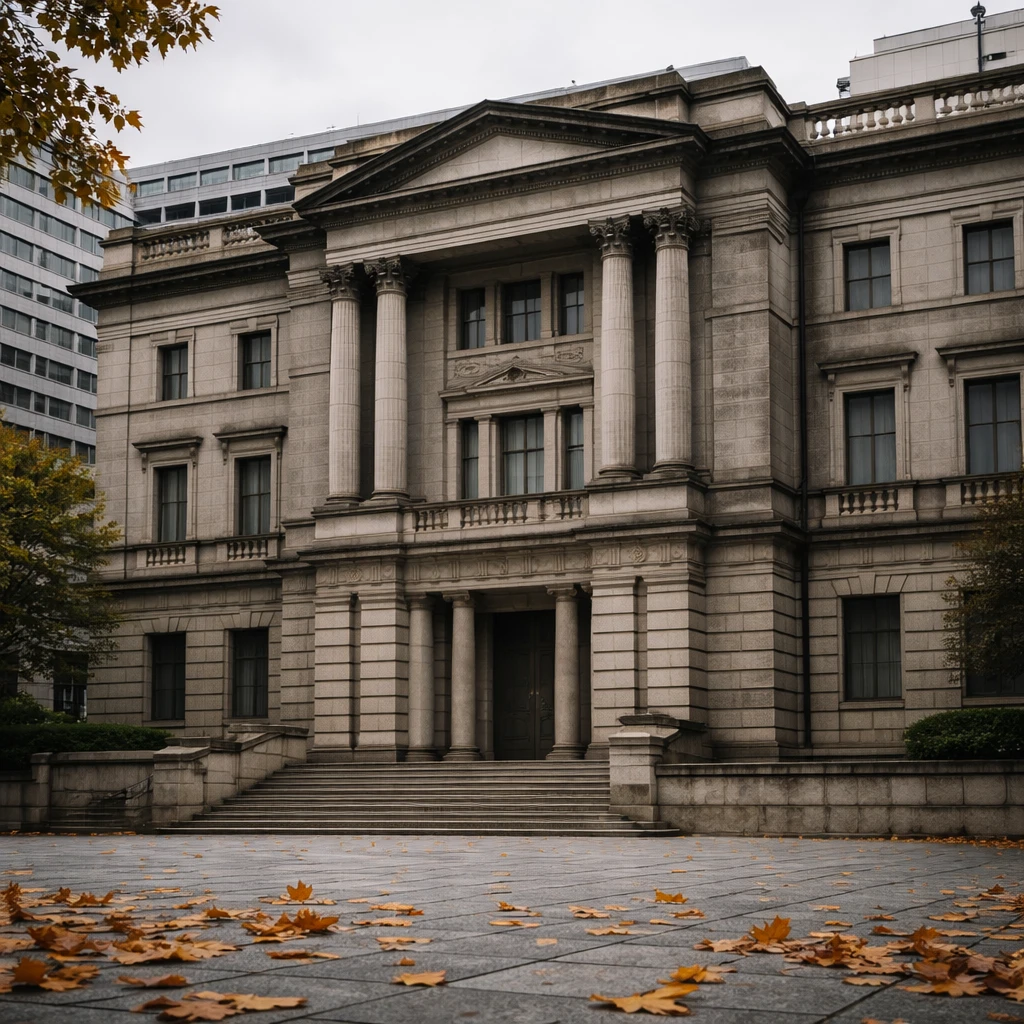
The Bank of Japan moved its policy rate up by 25 basis points to 1% on Tuesday, a step the central bank said reflected a view that downside risks to the economy had lessened even as upside pressures on prices remain. The decision was approved by a 7-1 vote at the Monetary Policy Meeting, and Governor Ueda did not participate because of illness.
Board member Toichiro Asada lodged the sole dissenting vote. Asada opposed the increase on the basis that downside risks to production and employment stemming from the war in the Middle East outweighed the upside risks to prices, the statement said. Asada is one of two board members appointed by Prime Minister Takaichi. The other Takaichi appointee, Ayano Sato, is scheduled to take the seat of Board member Nakagawa in July.
The policy statement accompanying the rate move said, in part, that "the risk of a significant slowdown in the economy appears to have decreased compared with a while ago." The central bank flagged developments in energy costs, noting that pass-through from higher crude oil prices has been "progressing at a relatively fast pace" at the business-to-business level and that there is room for those effects to spill over to consumer prices.
With medium- to long-term inflation expectations continuing to rise, the BoJ judged that underlying CPI inflation could "deviate upward" from its 2% target. Those assessments underpinned the decision to tighten policy by a quarter percentage point, a move described in the statement as consistent with the current economic and price outlook.
The BoJ also altered language describing financial-market conditions in its policy text, saying that "financial conditions have been accommodative" rather than using the term "easy." Deputy Governor Uchida addressed that change at the post-meeting press conference, saying "the change does not signal a shift in the BoJ’s view that financial conditions remain easy."
On government bond policy, the central bank published an interim review of its Japanese Government Bond purchase guidelines and confirmed a pause in reductions to JGB purchases from April 2027. The statement also noted the timing of several policy makers' terms: hawkish members Takata and Tamura have terms expiring in July 2027, and Governor Ueda and the deputy governors face term expirations in March-April 2028.
Implications
- The decision signals a continued focus on inflation risks, particularly those linked to higher crude oil prices and rising inflation expectations.
- Changes in wording around financial conditions and the pause on JGB purchase reductions will be watched closely by bond and financial markets.
- Voting dynamics and upcoming board turnover could influence the Bank of Japan's policy path in the coming year.