
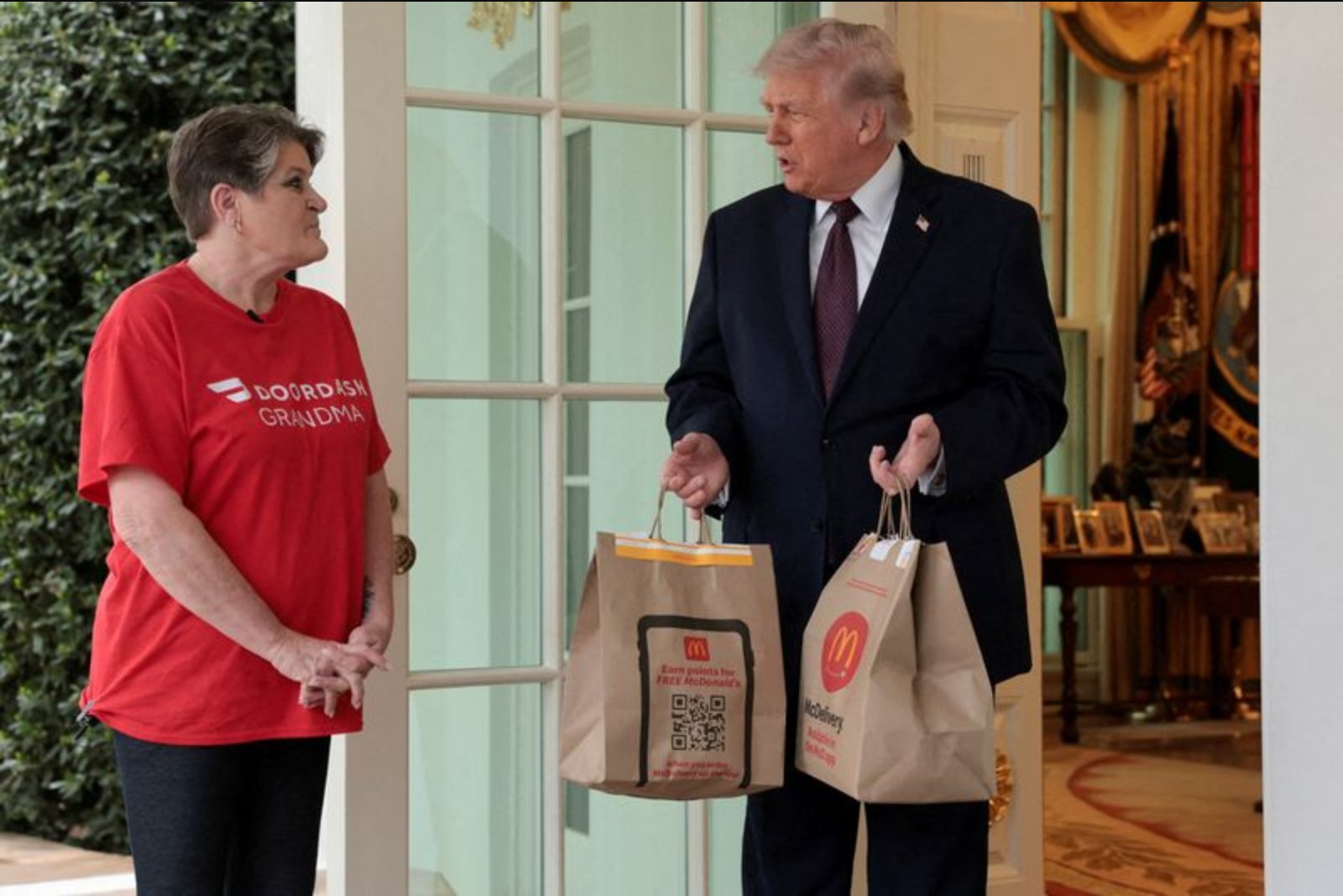
WASHINGTON, April 13 - President Donald Trump hosted a DoorDash delivery to the Oval Office on Monday as part of a public effort to promote his administration's reductions in taxes on tips. A delivery driver from Arkansas, wearing a red "DoorDash Grandma" T-shirt, carried two bags of fast food to the White House entrance while media observed.
The president answered the door and posed for questions from reporters alongside the driver, Sharon Simmons. Simmons told reporters she has saved a significant amount of money after taxes on tips were eliminated in January. As she spoke, the interaction shifted to questions about tipping at the White House and the driver’s experience under the tax change.
When a journalist asked Simmons whether White House staff were good tippers, she replied: "Ummm, potentially." President Trump then interrupted, reached into his pocket and handed what appeared to be a $100 bill to Simmons, saying: "wait" and later, "Thank you, you reminded me."
When asked about the tip later on Fox News, Simmons said: "He took good care of me." She declined to disclose the amount she received, saying: "I don’t talk money."
During the short media event, the president also posed other questions to Simmons. He asked whether men should play in women's sports, to which she responded: "I really don’t have an opinion on that ... I’m here about tax on tips." He asked whether she voted for him; she replied with a smile, "Ummm, maybe."
The White House initiative to highlight the economy has been a priority for Trump aides this year as congressional control is contested in the November midterm elections. However, the administration's efforts to underscore the economy's strength have been complicated by the ongoing U.S.-Israeli war with Iran and a subsequent rise in oil prices. Higher fuel costs have driven up expenses at the pump and have, in effect, offset some of the monetary benefits from a suite of tax reductions enacted in last year's Republican-backed tax-cut legislation.
Those tax changes included cuts affecting tips, Social Security retirement payments, overtime pay, car loan interest and state and local tax bills, according to the administration's messaging. In response to rising gasoline prices, companies whose business models depend on independent delivery drivers - including DoorDash - rolled out measures last month to try to address the higher fuel costs.
Context and market relevance
The president’s staged delivery sought to make the tax change tangible by featuring a frontline worker who said she directly benefited from the removal of taxes on tips. The scene underscored tensions between consumer-facing service-sector economics and broader macro drivers such as energy costs and geopolitical developments that influence consumer expenses and firms’ operating costs.