
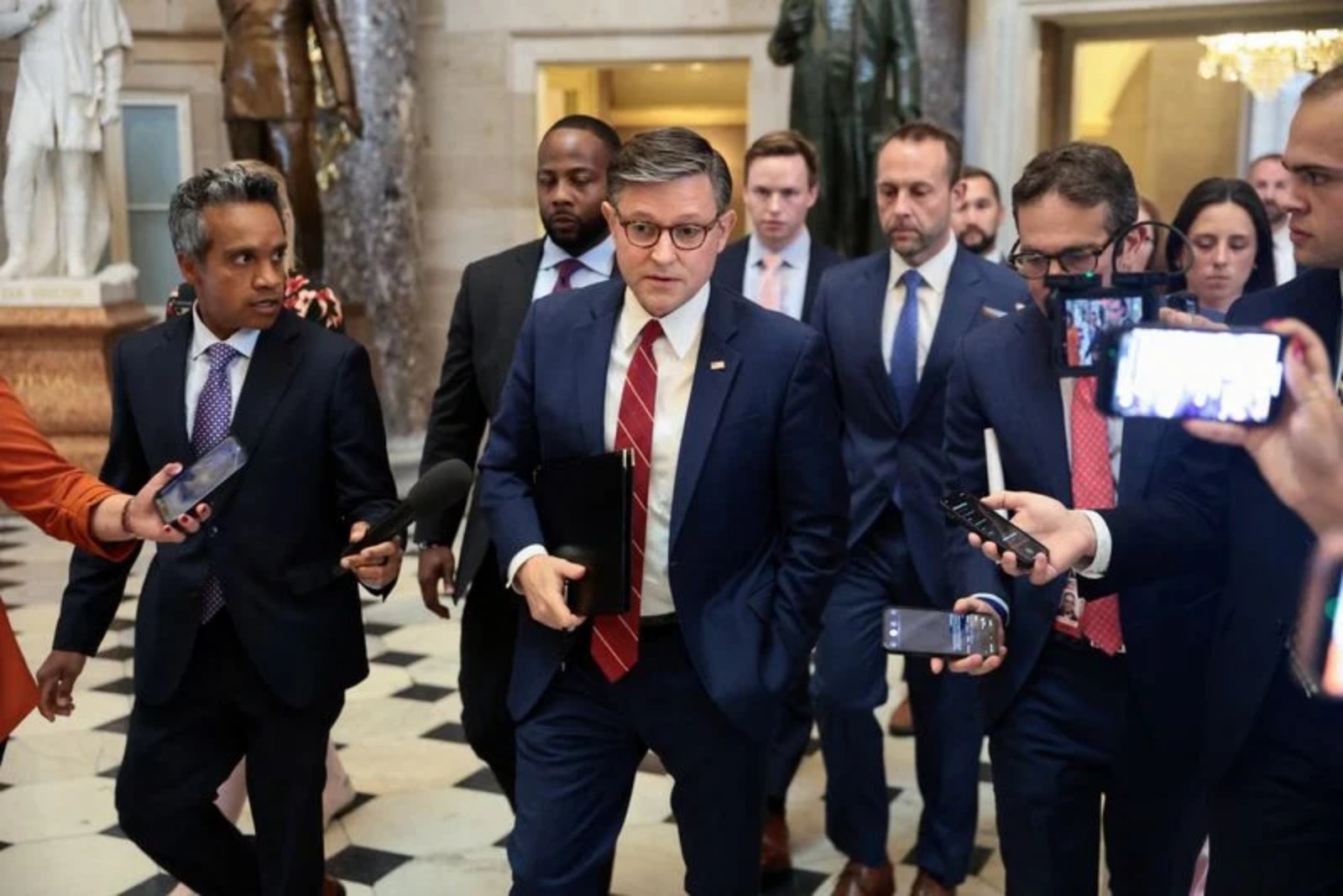
House Speaker Mike Johnson traveled to the White House on Tuesday for a meeting with President Donald Trump aimed at resolving a contentious personnel decision that has jeopardized efforts to extend a key surveillance authority in Congress.
Trump named Bill Pulte, a low-profile mortgage regulator, to serve as acting director of national intelligence. That appointment prompted alarm among lawmakers worried that Pulte could use the post to target individuals the president regards as enemies. Those concerns have intensified the debate over whether to renew a surveillance statute that permits intelligence agencies to collect certain foreign communications without prior court approval.
The surveillance authority at issue - codified in Section 702 of the Foreign Intelligence Surveillance Act - permits intelligence agencies to monitor emails and other communications of foreigners located outside the United States without seeking individual judicial warrants. The statute is set to expire on Friday, creating a compressed timetable for Congress to act.
Reports that Pulte, while leading a mortgage regulatory agency, accessed confidential material to press for mortgage fraud investigations into several people perceived as foes of the president have heightened the political stakes. According to available information, none of those individuals have faced criminal charges in connection with those inquiries.
Johnson’s visit to the White House comes as leaders try to stitch together an agreement that could facilitate passage of the renewal. House Republican Steve Scalise of Louisiana, the chamber’s No. 2 Republican, told reporters that the speaker was "over at the White House working with the president to finalize this agreement on FISA," using an acronym for the Foreign Intelligence Surveillance Act.
The renewal effort hit a roadblock in the Senate last Friday when a procedural motion to bring debate on the measure failed. That vote saw Republican skeptics join Democrats in opposing consideration, marking a setback for the Republican leadership that holds narrow control of both the House and the Senate.
Because both chambers must approve any extension of Section 702, the stalled Senate action and the controversy surrounding the acting intelligence director have complicated prospects for on-time renewal. With the statute’s expiration looming at the end of the week, lawmakers face a compressed window to reconcile differences and address concerns about the potential for misuse of intelligence tools.
Context and next steps
- Speaker Johnson is engaged in direct talks with the president to seek a path forward on the surveillance bill.
- Section 702, which enables monitoring of some foreign communications without individual warrants, expires on Friday.
- The Senate stalled consideration last Friday when a cross-party group voted against bringing the renewal up for debate.