
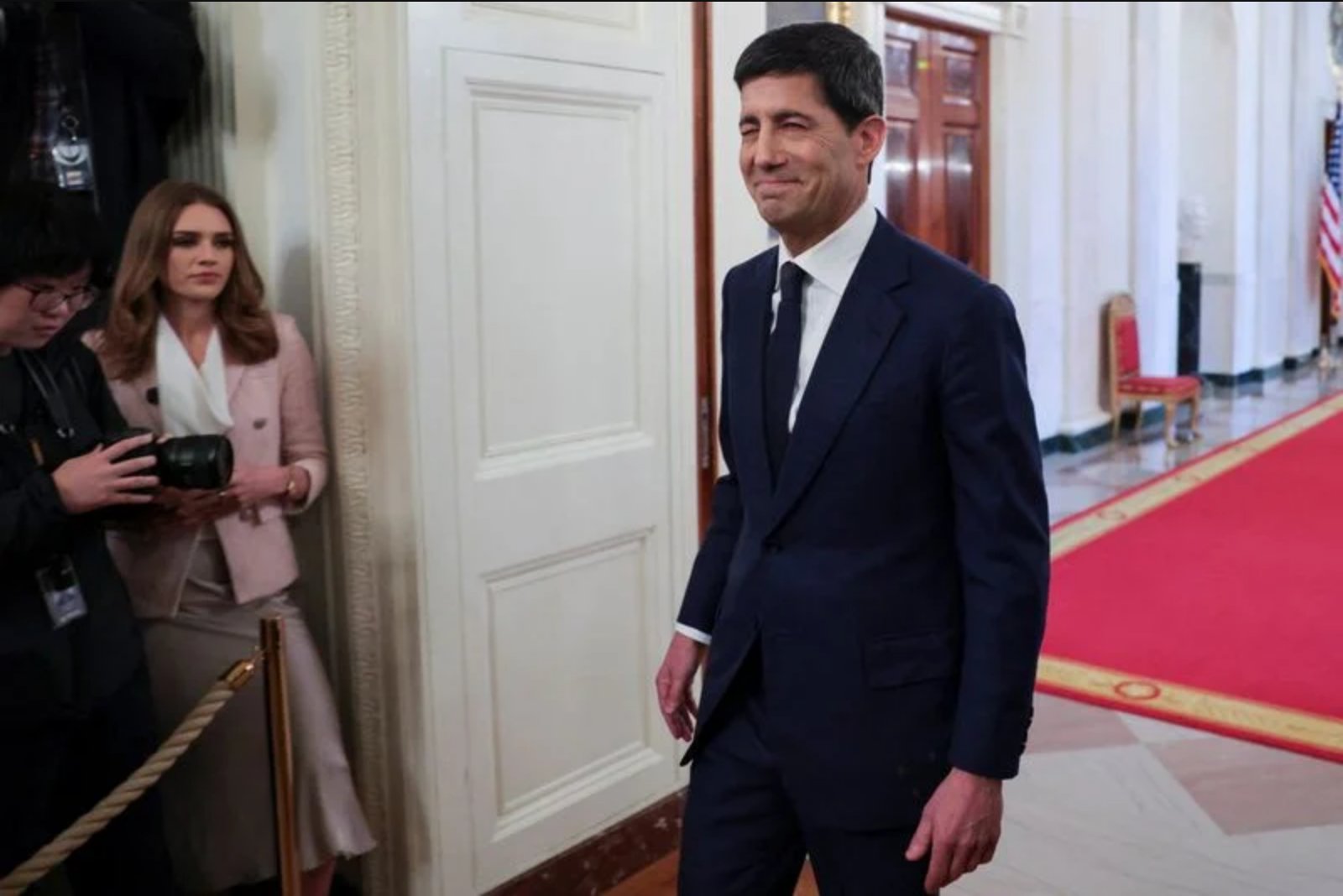
Kevin Warsh, who took over as chair of the Federal Reserve about a month ago, will use a press conference after the Fed's June 16-17 policy meeting to offer his earliest comprehensive public assessment of inflation, employment and the broader economic outlook from the top of the central bank.
Warsh has been a frequent commentator on aspects of central bank policy in recent years, most notably on the Fed's balance sheet and how the institution communicates. But transitioning from those analytical observations to the role of the central bank's public face means his descriptions of price pressures, labor-market tightness and the trajectory for policy will be scrutinized closely by investors and economists alike.
Inflation is central
Inflation remains a focal point for the Fed, trading more than a percentage point above its 2% objective. How Warsh characterizes the persistence or transience of those above-target readings - and whether he signals an expectation that inflation will fall back toward 2% without additional tightening - will shape market expectations about the path of interest rates this year. Many market participants have already priced in the possibility of higher rates in the months ahead, and Warsh's rhetoric is likely to influence those odds.
Two forces now highlighted as potential contributors to ongoing price pressures are recent U.S. import tariff increases and elevated crude prices tied to the U.S.-backed conflict with Iran. What may have been seen as temporary shocks when they first emerged now pose the risk of supporting more persistent inflation than previously assumed. Warsh's treatment of those drivers - including whether he views them as likely to fade or to require policy action - will be pivotal.
Labor market and wage signals
At the same time, the U.S. job market is described as being near full employment, with hiring rebounding and regional Fed reports pointing to rising wage pressures. Those dynamics complicate the inflation picture: a tight labor market can feed price growth, and recent district-level notes hint at such pressures emerging. Warsh will have an opportunity to explain how he weighs those labor-market indicators against other data in forming his policy outlook.
Communications and forward guidance
Warsh has signaled discomfort with some of the Fed's existing communications tools, including the quarterly projections and their accompanying "dot-plot" chart that maps policymakers' rate expectations. He has also expressed a preference for the Fed saying less about near-term interest rate moves. Nonetheless, any changes to those tools would require broad agreement among the Fed's 18 voting policymakers.
Observers expect Warsh to try to calibrate a middle path between providing useful public guidance and avoiding explicit promises about the Fed's next steps. How he draws the line between offering an outlook for the economy and supplying forward guidance on policy will be among the most closely parsed aspects of his first press conference.
What to expect immediately after the meeting
The Fed is widely forecast to leave its benchmark target range unchanged at 3.50%-3.75%, where it has been since December. Along with a policy statement, the Fed will also publish updated quarterly economic projections from its policymakers. Warsh will take questions shortly after those materials are released, giving him a platform to explain the central bank's latest views and the reasoning behind any adjustments in tone or emphasis.
Warsh is not required to publish his individual projections. Had he done so, his dots on the chart might have revealed whether his outlook aligns closely with his colleagues' views or departs from them. The disappearance of a Fed governor who had previously advocated for sharper rate cuts - a reference to the now-absent low-hanging dot - makes that particular contrast moot. Still, how the collective projections align with the policy statement and Warsh's oral framing will matter.
Possible shifts in policy language
One important question is whether the Fed will alter the policy statement's language that currently points to the next likely move being a rate cut. Some policymakers dissented in favor of striking that guidance at an April meeting, and subsequent comments from influential figures within the Fed suggest growing support for moving to more neutral wording. A shift away from signaling cuts as the next step would be consistent with Warsh's stated preference for less explicit forward guidance.
That change, however, could create a communications tension. If the policy statement adopts a more neutral tone while the dot-plot still shows a number of policymakers expecting rate hikes by year-end, markets could read conflicting signals. Conversely, if the median policy projection shows the Fed on hold through 2026 while inflation forecasts are revised higher, observers will question whether the Fed under Warsh risks misreading inflation drivers as transitory - the same critique leveled previously under former leadership.
Warsh's intellectual framing
During his public commentary leading up to his nomination, Warsh outlined several reasons why inflation and therefore interest rates might decline over time. Those included a reduction in the Fed's sizable balance sheet, productivity gains tied to artificial intelligence, and the possibility that official measures of inflation could be overstating true price pressures. How prominently he invokes those hypotheses in his press conference will indicate whether he intends to lean on them to justify restraint on rates or to caution against preemptive tightening.
Some Fed watchers are skeptical that such arguments will persuade markets if incoming data continue to point toward persistent inflation. William English, a former head of the Fed's monetary affairs division, cautioned against the optics of appearing to discount elevated inflation by excluding certain price components to make the headline number appear more favorable. That concern - that the Fed could look as if it is ignoring real price pressures by relying on selective measures - frames a key reputational risk for Warsh.
Market reaction and the burden of proof
Several market participants expect Warsh to stop short of making definitive pronouncements about where inflation is heading, instead insisting that the data should guide policy. Christopher Hodge, chief U.S. economist at Natixis CIB Americas, suggested Warsh may "punt" on a firm inflation forecast while still adopting a neutral-to-hawkish tone. Hodge added he does not think Warsh will rule out eventual rate cuts outright, but said the onus will be on the incoming data to demonstrate whether recent shocks - notably to energy prices - are behind us.
Ed Al-Hussainy, a fixed income and macro portfolio manager, noted Warsh's pronounced commentary on the balance sheet and communications strategy and observed that the Fed chair's views on the central bank's inflation "theory of change" and its current policy posture remain largely unclear. Unpacking those aspects will be a central task of the press conference as Warsh moves from the role of policy analyst to the communicator-in-chief.
Scenarios and stakes
If Warsh emphasizes that recent price spikes are temporary and that inflation will subside without stronger policy action, markets could interpret that as a signal the Fed would be reluctant to tighten further. If, by contrast, he highlights persistent wage pressures and the risk that tariffs and oil may keep inflation elevated, investors could reassess the odds of rate increases. The Fed's own projections and the dots will provide additional context, but Warsh's oral framing may be the most immediate driver of market judgments.
How Warsh balances his desire for pared-back forward guidance against the market's appetite for clarity will shape the tenor of financial markets in the near term. That balancing act encapsulates the primary dilemma facing the new chair: provide enough information to anchor expectations while avoiding commitments that could limit the Fed's flexibility as new data arrive.
Bottom line
Warsh's first press conference is likely to reveal early contours of his approach to inflation and interest-rate policy. Investors and analysts will watch closely for how he characterizes the durability of current inflationary pressures, his assessment of labor-market strength and wage trends, and how much he signals about potential policy moves. His words may set the tone for how the Fed is perceived to be navigating the trade-offs between responding to price pressures and preserving optionality in the months ahead.