
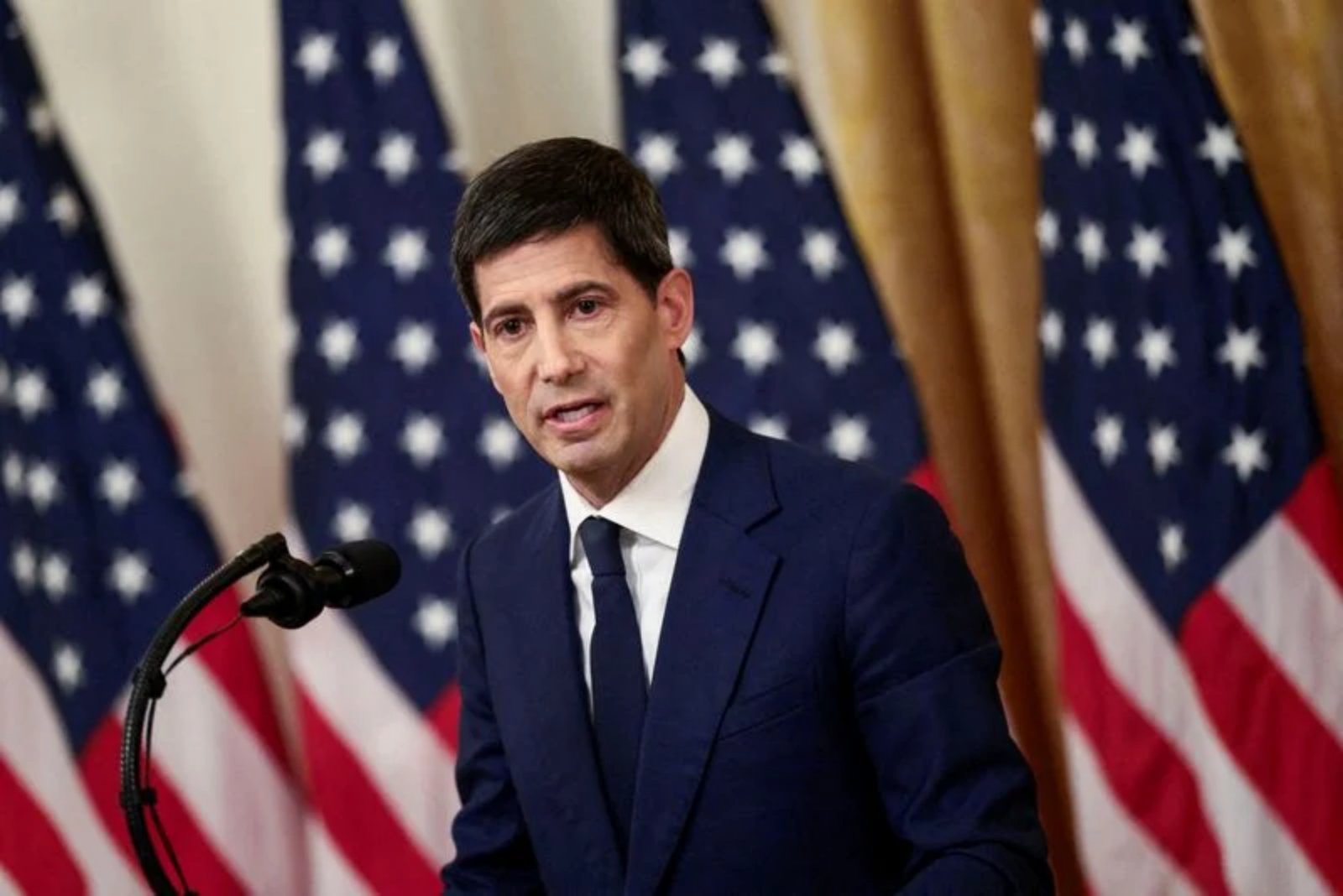
Kevin Warsh campaigned on a clear policy priority before assuming the chairmanship of the Federal Reserve: he believes the central bank's holdings of Treasury and mortgage-backed securities are too large and that reducing them is necessary for the health of the U.S. economy. Now at the helm, Warsh will confront the practical and political difficulties of translating that conviction into policy.
The Fed concludes Warsh's first Federal Open Market Committee meeting on Wednesday, with policymakers widely expected to leave interest rates unchanged as they continue to wrestle with inflationary pressures. He may face questions about the balance sheet at his initial post-meeting press conference, but most market watchers anticipate he will not immediately press for sweeping changes given the current economic backdrop.
Several experienced policymakers and market participants caution that shrinking the central bank's portfolio substantially is not something that happens overnight. William Dudley, the former New York Fed president, described the balance sheet reduction effort as ultimately a "2027-28 story," saying the process will take "a lot of time" to build consensus and to adjust liquidity regulations so the Fed can hold fewer bonds without sacrificing control over short-term interest rates.
What Warsh has argued
At his confirmation hearing in April, Warsh criticized the expansion of Fed asset purchases, arguing these moves have entangled the central bank in policy territory more properly occupied by elected officials. He has said the large size of Fed bond holdings has complicated efforts to set the short-term interest rate, the central bank's principal policy instrument, and that the growth of those holdings had done "quite a bit of harm." Warsh indicated he would coordinate with the Treasury Department to engineer a smaller footprint.
That stance resonates with some observers who voice a broader political concern - particularly among Republicans - about how much discretion over financial liquidity rests with the Fed rather than with elected institutions, according to Derek Tang, an analyst at research firm LH Meyer.
How the Fed's balance sheet grew
Since the global financial crisis of 2007-2009, the Fed has periodically used large-scale purchases of Treasuries and mortgage-backed securities to stabilize stressed markets and to bolster the effect of interest rate policy. In addition, the central bank has built several tools to manage those holdings, fundamentally changing the mechanics of monetary policy.
Total Fed holdings rose from under $1 trillion before the crisis to a peak of about $9 trillion in mid-2022, after which the Fed began trimming its portfolio. Holdings currently stand at $6.7 trillion, and the balance sheet has in recent months inched up modestly due to technical adjustments intended to keep financial system liquidity at adequate levels. Since late last year the Fed has sought to rebalance its holdings toward shorter-dated securities to better align the average maturity of its portfolio with that of the broader Treasury market. Observers acknowledge this work is incomplete but say progress has been made.
Paths to a smaller footprint
There is an emerging view among some officials that the Fed's balance sheet could be reduced by altering the rules that govern how banks manage liquidity. Fed Governor Christopher Waller has suggested such reforms could permit the Fed to shed as much as $500 billion, while Dudley has put that potential figure nearer to $1 trillion. Daleep Singh, chief global economist at PGIM and a former New York Fed and Treasury official, has estimated that liquidity rule changes and other adjustments could produce as much as $1.5 trillion in reductions.
Even at the upper end of these assessments, the Fed would still hold substantially more securities than immediately before the COVID-19 pandemic in 2020.
Proponents of a smaller Fed footprint argue that large official holdings can distort market pricing for Treasuries and mortgage-backed securities, affect government financing costs and have contributed to an unusual loss-making position for the central bank. These are the central complaints Warsh and others are seeking to address.
Stability concerns and trade-offs
Yet trimming the quantity of liquidity banks keep on hand could reduce their capacity to absorb shocks, increasing the likelihood that they would lean more heavily on Fed liquidity facilities in times of stress. "To the extent that we could reduce the government's footprint in private markets, yes, that would be a preferred outcome. The question is, how do you do so without sparking risks to financial stability, and there's never been a good answer to that question," said Singh.
Richard Berner, a New York University professor, expressed sympathy for the view that large central bank holdings can blur price signals in private markets, but he warned that unless the Fed changes the operating regime that governs interest rates and market liquidity, cutting the balance sheet substantially would present a difficult trade-off for money markets and rate control.
Many economists and key Fed officials continue to defend the current "ample reserves" system as one that reliably supports the central bank's control over its rate target. Some officials, including Fed Governor Michael Barr, have suggested that a smaller balance sheet might even necessitate more active interventions to manage market liquidity.
Near-term outlook
All things being equal, Warsh would not be able to unilaterally order the Fed to run down its holdings without accompanying changes to liquidity regulations, because the current operating system for rate control could falter if liquidity became too tight. Liquidity strains late last year prompted the Fed to resume purchases of Treasury bills to rebuild cash levels in the market, and the recent decision to continue technical reserve-management purchases has led some market observers, such as Wrightson ICAP, to conclude that balance sheet restructuring is not a near-term priority.
Wrightson ICAP commented that while it seemed unlikely Warsh would redirect the Fed's portfolio before his first official FOMC meeting, the signal of business-as-usual was reassuring to some market participants.
Bottom line
Warsh arrives at the Fed with a clear objective to reduce the central bank's holdings of Treasuries and mortgage-backed securities. Turning that objective into reality will require rule changes, broad consensus among policymakers, and careful balancing of the risks to financial stability and the central bank's ability to control short-term rates. For now, officials and market watchers expect deliberation rather than dramatic action as the Fed evaluates both near-term economic pressures and the longer-term mechanics of monetary policy.