
Economy June 23, 2026 08:43 AM

US to Provide $17.5 Billion in Low-Interest Loans for 10 Westinghouse Reactors

Funds aimed at bulk equipment purchases to shore up supply chains and accelerate construction of five two-reactor projects

By Hana Yamamoto
Share
Twitter Reddit Facebook LinkedIn

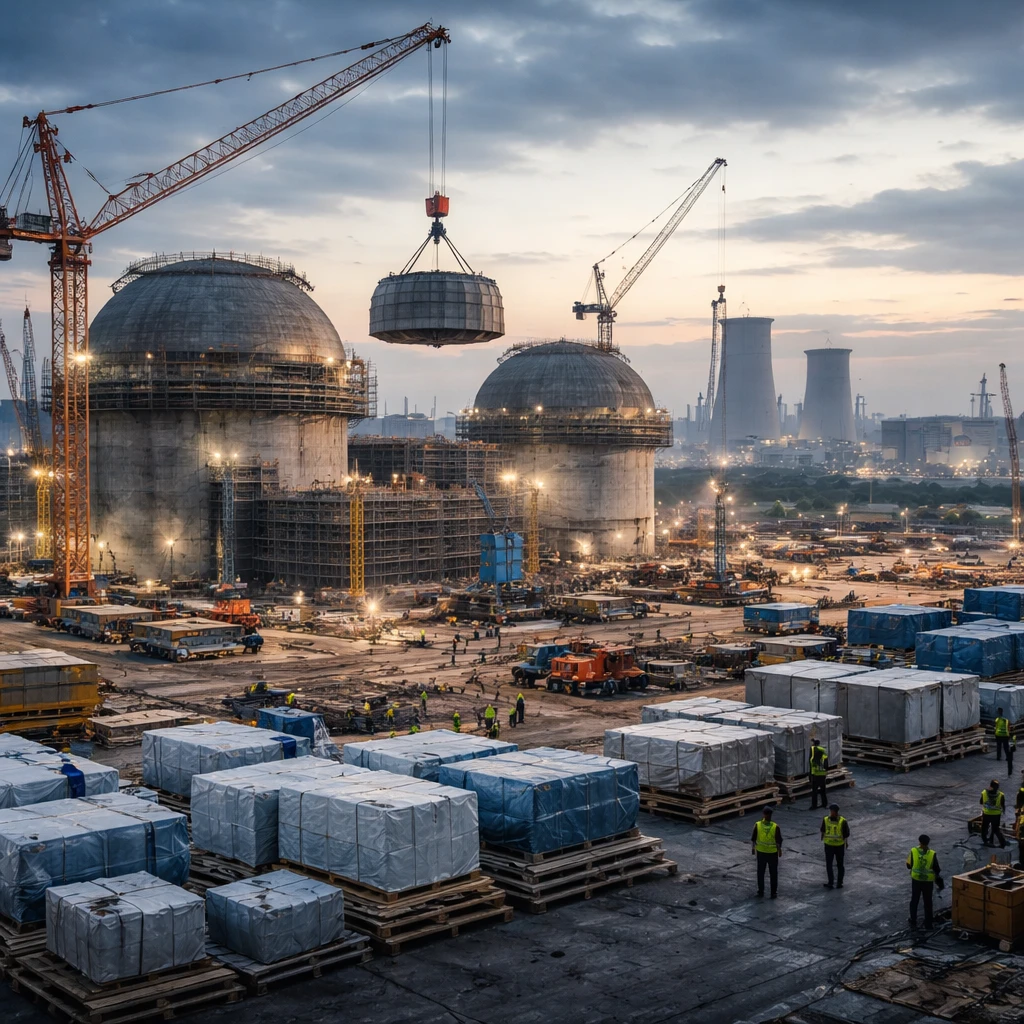
The U.S. Energy Department will offer $17.5 billion in low-interest loans to finance equipment for 10 Westinghouse AP1000 nuclear reactors across five two-reactor projects. The program, announced by the Trump administration and expected to be formalized later today, is designed to shorten construction schedules by as much as three years and to support supply-chain consolidation through early bulk purchases and standardized, fixed-price contracting.

US to Provide $17.5 Billion in Low-Interest Loans for 10 Westinghouse Reactors
Summarize with
ChatGPT Perplexity Claude Grok Gemini

Key Points

  • The Energy Department will provide $17.5 billion in low-interest loans to finance equipment for 10 Westinghouse AP1000 reactors organized as five two-reactor projects.
  • Loans are intended to fund early bulk purchases of specialized equipment, supporting the supply chain while projects complete regulatory approvals; Westinghouse will use a standardized design and fixed-price contracts to manage equipment costs.
  • Seven utilities have submitted formal letters of intent to secure the five available loans and plan to partner with technology companies to share financial risk; sectors impacted include utilities, energy equipment manufacturing, and technology providers supporting AI data centers.

The U.S. Energy Department has announced a program to provide $17.5 billion in low-interest loans to fund equipment for 10 new Westinghouse AP1000 nuclear reactors, arranged as five projects each containing two reactors, according to a report from the Wall Street Journal. The deal is expected to be announced later today.

Officials under the Trump administration say the program is intended to compress construction timetables by up to three years. Under that timetable, the new reactors are projected to begin operations around 2035.

Renewed interest in nuclear generation has been driven in part by rising electricity demand, the administration noted, with growth concentrated in areas such as data centers supporting artificial intelligence. Nuclear power currently contributes roughly 20% of electricity generation in the United States.

The loan package is targeted at financing early, large-scale purchases of specialized equipment. That upfront procurement is meant to strengthen the supply chain while individual projects continue to proceed through regulatory approvals. Westinghouse plans to deploy a standardized reactor design and to use fixed-price contracts as a mechanism to control equipment costs.

The strategy is intended to address problems seen in recent U.S. nuclear projects. The construction of Georgia's Vogtle plant is cited as an example, where costs climbed from $14 billion to more than $30 billion.

Seven utility companies have submitted formal letters of intent to take up the five loans available under the program. Those utilities plan to work with technology companies in order to share financial risk associated with the projects.


Context and operational focus

The measures combine financing support, supply-chain consolidation through early bulk purchasing, and contracting discipline via standardized design and fixed-price agreements. The stated aim is both to mitigate the risk of escalating costs and to speed project delivery without adding new regulatory shortcuts; projects will continue to move through the standard approval processes.

While the announcement frames the loans as a tool to accelerate capacity additions and to backstop specialized equipment procurement, the ultimate timelines and cost outcomes remain tied to regulatory clearance and effective execution by utilities and their technology partners.

Risks

  • Regulatory approvals remain a gating factor for project progress and could affect the timing of construction and operation.
  • Historical cost overruns in U.S. nuclear projects, exemplified by the Vogtle plant's rise from $14 billion to over $30 billion, underscore the risk of escalating expenses despite measures to control costs.
  • The plan relies on partnerships between utilities and technology companies to share financial exposure; the effectiveness of those arrangements could influence project financing and execution.

More from Economy

More than 6 Million Children Signed Up for New Trump Accounts Ahead of July 4 Launch Jun 23, 2026 U.S. Manufacturing Strengthens as Firms Front-Load Orders; Factory Jobs Fall to Six-Year Low Jun 23, 2026 U.S. offers $17.5 billion in loans to back Westinghouse-built large reactors Jun 23, 2026 Wang Yi Urges BRICS to Coordinate on Ebola, AI and Strategic Minerals Jun 23, 2026 Macklem Flags Rising Global Imbalances as a Financial Stability Concern Jun 23, 2026