
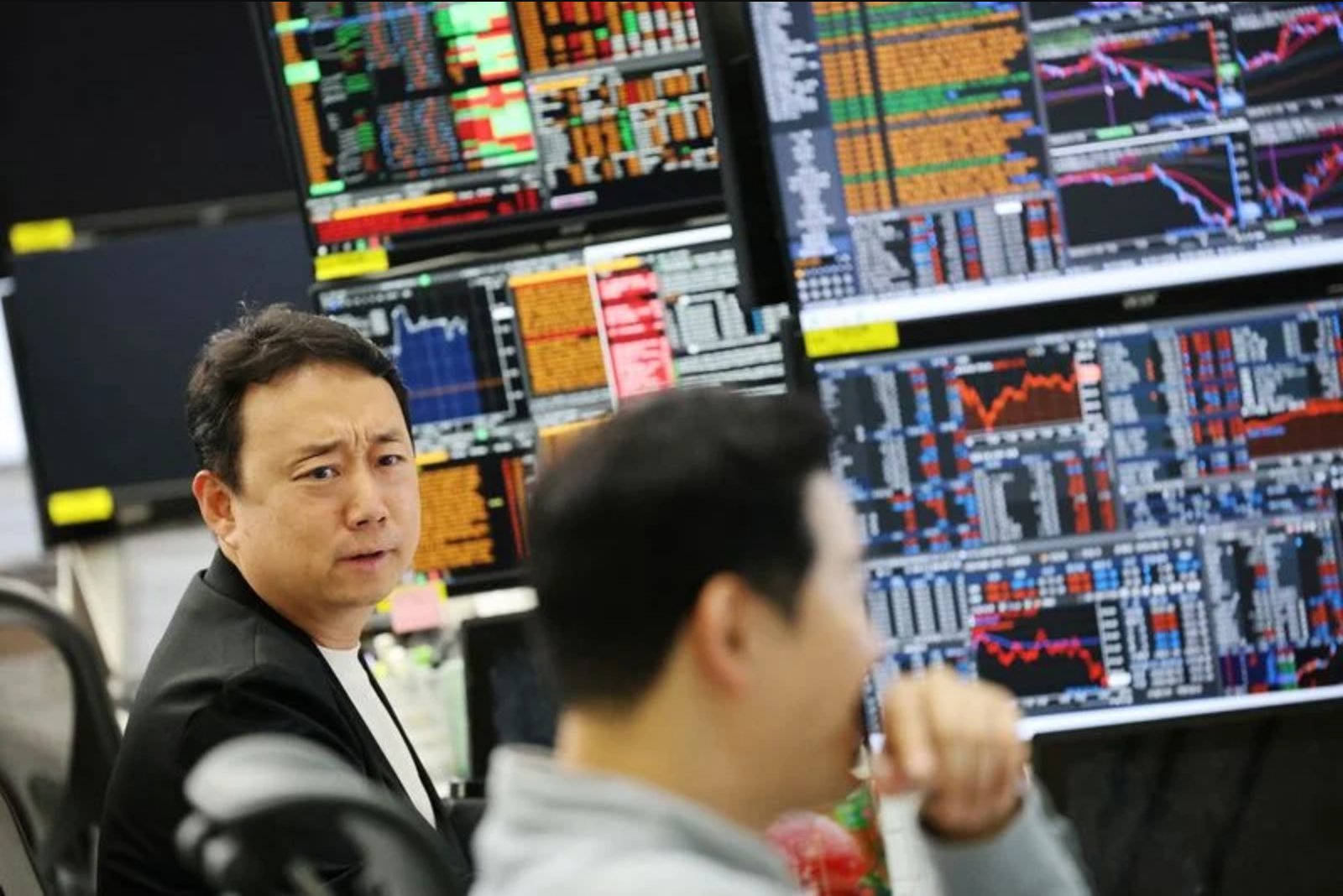
For nearly two decades, Namkoong Taehun stood at the epicenter of major global financial upheavals from his desk in Seoul. He navigated the market shockwaves of the Lehman Brothers collapse, endured the post-Brexit plunge of the British pound, and managed the won's erratic movements following South Korea's 2024 martial law decree. Now, the veteran dealer faces a new and grueling challenge: a 24-hour trading cycle. Starting July 6, South Korea will open its previously closed currency to round-the-clock trading, a move banks are currently testing in advance. Even Namkoong, a veteran of 18 years in the industry, admits the transition is daunting as the country systematically dismantles currency safeguards that have existed since the 1997 Asian Financial Crisis.
The operational shift is stark for dealers like Namkoong, 47, who works as part of a 37-member foreign exchange team at Hana Bank, the nation's largest forex institution by trading volume. "When I first entered the market, it was a 9-to-3 game," he recalled. "You could count the participating financial institutions on one hand." Today, the landscape has transformed exponentially. Surrounded by eight monitors flashing conversion orders and the remnants of a dozen empty coffee cups, Namkoong noted a sharp rise in global inquiries for won assets. "We are anticipating a substantial escalation in our workload," he warned, highlighting the immense pressure now placed on trading floors.
Seoul's economic priorities have completely reversed from the crisis era. A fully open and accessible currency is now a strict prerequisite for the country's bid to be upgraded by index provider MSCI to developed-market status. This designation would dramatically elevate the country's appeal to international capital allocators. However, the transition is not without severe risks for the currency itself. Languishing near a 17-year low against the U.S. dollar, the won is highly susceptible to liquidity gaps. These thin pockets in the market could amplify modest capital flows into disproportionately violent price swings. Ironically, South Korea's stock market, which has achieved record all-time highs this year by doubling the benchmark KOSPI index, is compounding the won's weakness. The surging equity valuations have triggered aggressive profit-taking by overseas funds, who are rebalancing portfolios and cashing out gains.
At the same time, domestic capital flows present a parallel challenge. South Korean investors are pouring money into U.S. equities at an unprecedented pace, draining local liquidity. To manage these capital movements, the government is implementing structural reforms. These include granting offshore investors explicit permits to hold and trade the currency, alongside the establishment of a dedicated offshore won settlement system. A government official responsible for foreign exchange policies emphasized the significance of these changes: "Previously, foreign financial institutions were strictly limited to converting money, but via the new offshore settlement framework, they can directly hold and utilize the won." These tight restrictions had long frustrated global traders, making overnight hedging slow and expensive due to a heavy reliance on derivatives.
Only two years ago, South Korea extended the trading day to 2 a.m. to align with the London market session. Shen Li, head of FX sales for Asia Pacific at State Street in Hong Kong, noted the evolving liquidity dynamics. "Roughly 20% of spot volume now occurs during these offshore hours, heavily concentrated in the London morning," Li explained. "The extension to a full 24-hour cycle has the potential to further enhance the entire liquidity structure." Yet, the broader economic motivation remains the elimination of what analysts call the "Korea Discount." This term describes the tendency for the country's stock market to trade at steep valuations compared to global peers, driven by currency curbs, unpredictable policymaking, and opaque governance within dominant chaebol conglomerates. Despite MSCI recently maintaining the country's emerging market classification, citing accessibility issues and insufficient onshore liquidity, the next review is slated for one year from now. Banks are fully preparing for the non-stop environment. Hana Bank is adding three staff members to its existing three-shift schedule. Woori Bank is doubling its UK-based team to four traders, Shinhan Bank is adding one person in London, and KB Kookmin Bank has added two. The need for constant vigilance was illustrated by Hana Bank's 35-year-old dealer, Shin Jae-min. "Sometimes the intensity spikes without warning," he said while eating dinner late in his shift. "Responding to such surges means working through odd hours without a break."